Website scrubs images in panic after viral bombshell; sleuths uncover pattern of deception that makes previous “privacy” excuses look even more ridiculous
In what may be the most explosive development yet in the never-ending saga of Montecito’s most famous residents, new evidence has emerged strongly suggesting that Meghan Markle has been using photographs of a professional child model to stand in for her rarely seen daughter, Princess Lilibet Diana.
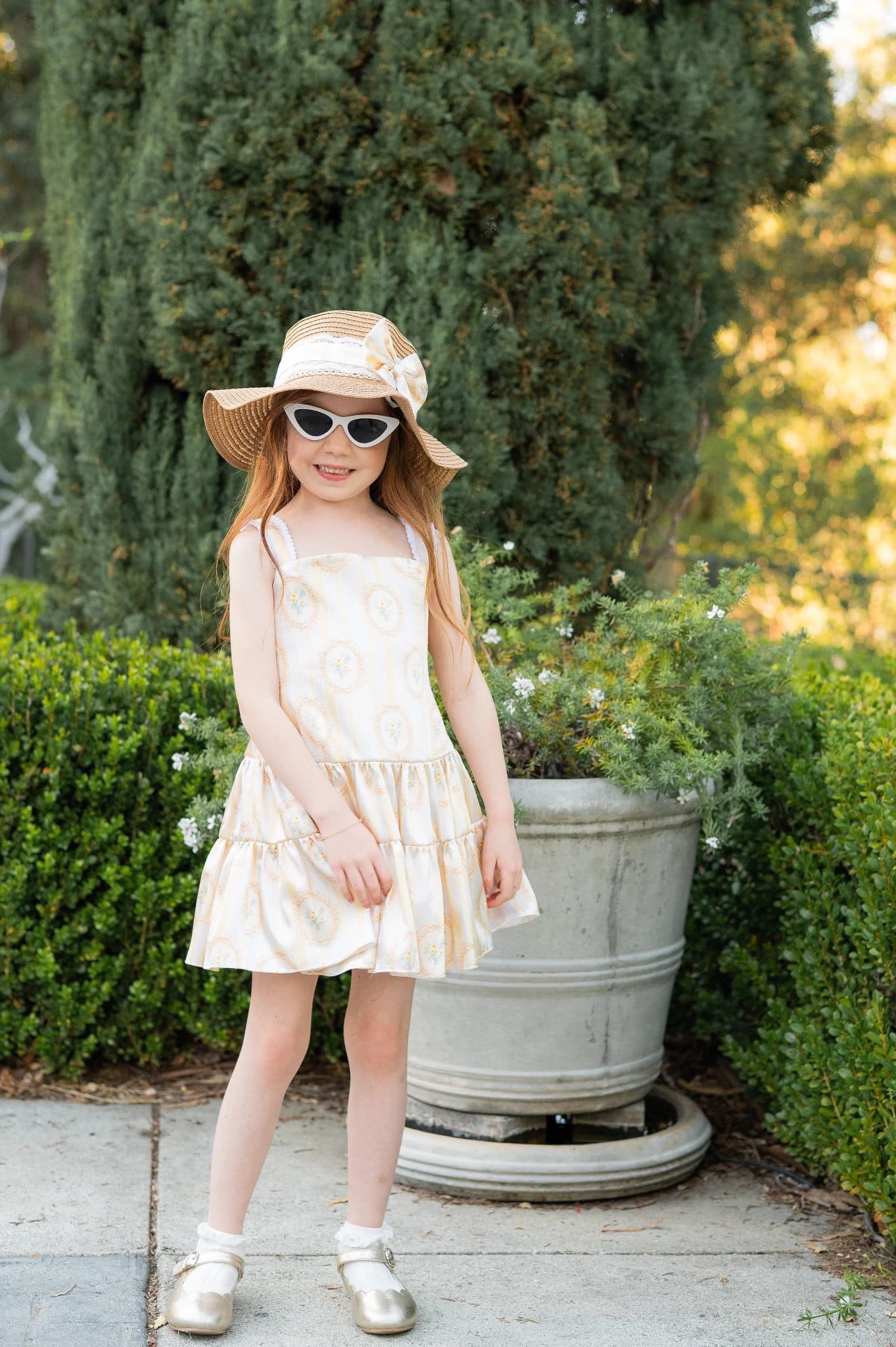
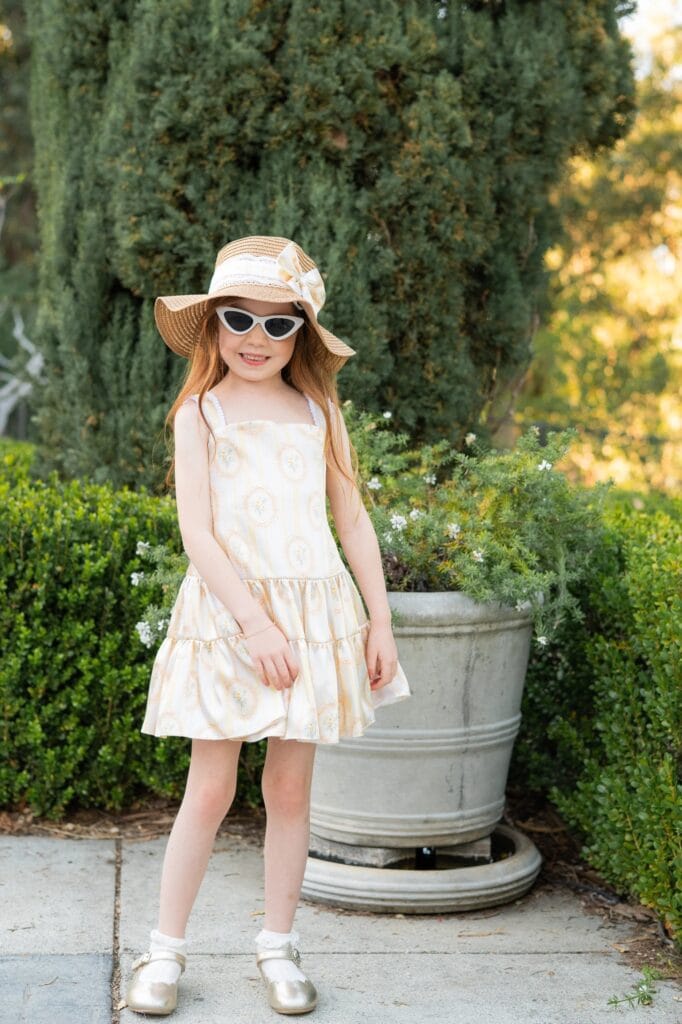
The damning images — first spotlighted by sharp-eyed investigator Leilani of Barbados and later dissected in a detailed Substack investigation — come from Lil Olives, a small California children’s clothing brand. The red-haired young model bears an uncanny resemblance to the girl occasionally trotted out in Meghan’s carefully staged “private” posts. Most tellingly, the reflection of the photographer is clearly visible in the child’s glasses, providing what many are calling irrefutable proof that these are professional catalog shots, not candid family moments.
As the story exploded across social media yesterday, the offending product page and images mysteriously vanished from the Lil Olives website, triggering fresh accusations of a coordinated cover-up.
The Tell-Tale Reflection That Changed Everything
The key photograph shows a young redheaded girl modeling the brand’s “Buttercream Bloom” dress from the Petite Fleurs collection. She wears glasses (or sunglasses) in which the silhouette of the person taking the shot is unmistakably reflected — a detail that immediately set alarm bells ringing among royal watchers who have long questioned the authenticity of the sparse images Meghan has shared of her daughter.
Side-by-side comparisons circulating online highlight striking similarities in hair color, facial structure, and even the way the child is styled. What was presented as another rare, intimate glimpse of “Lili” now appears to be nothing more than a stock modeling shot from a San Francisco-area children’s wear company founded by Danya Ghutta.
The timing is particularly awkward. Meghan has long cited “privacy” as the reason her children are almost never shown publicly, only to release tightly controlled images when it suits a narrative — whether competing with the Prince and Princess of Wales’ family moments or generating headlines during slow news periods.
Website Wipeout Raises Immediate Red Flags
Within hours of the images going viral, visitors to lilolives.com discovered the Buttercream Bloom dress and the redheaded model had been scrubbed from the site. The summer collection page and related product listings were altered or removed entirely.
This rapid deletion has only fueled speculation. Why remove perfectly legitimate modeling photographs unless the association had become toxic? Observers note this is not the first time images linked to “Lilibet” have quietly disappeared after public scrutiny.
A Pattern of Deception Years in the Making
Royal watchers with long memories point to previous incidents where catalog and stock photographs were allegedly repurposed as images of the Sussex children. One frequently cited example involved a photo claimed to show Lilibet at her first birthday party that was later traced back to a children’s clothing catalog.
The current revelation fits a broader pattern: extreme secrecy punctuated by occasional, highly curated drops that conveniently align with PR needs. While Prince William and Princess Catherine regularly share (appropriate) family photos without the world collapsing, the Sussexes’ approach has always felt more like brand management than genuine privacy protection.
Critics argue the “we must protect the children” defense rings hollow when the same children’s images appear to be sourced from modeling agencies or clothing brands whenever it serves a purpose. The latest discovery suggests the grift may run deeper than previously imagined.
The Internet Reacts: “Totally Insane!”
Social media erupted with reactions ranging from shock to outright fury:
- “Meg using a model to pose as her fake daughter? That’s just totally insane! All this constant deceit and she wonders why we can’t stand her? Really Meg! Get mental help.”
- “What really boggles my mind is how the media who brutally attacked Catherine for one photoshopped photo stay silent about the endless photoshopped or AI-generated photos coming from the Sussex camp.”
- “And just like that you cannot find the Buttercream Bloom dress or red headed model!!”
- “They took down the summer collection page! Go figure.”
Many users expressed frustration that legitimate questions about authenticity are dismissed as “conspiracy theories” while the evidence continues to mount. Others noted the irony of a family that constantly complains about media intrusion while apparently relying on professional child models to maintain their public image.
Why This Matters: The Bigger Picture
If these photographs are indeed of a child model and not Lilibet, it raises profound questions about the entire Sussex children narrative. Are the kids real? Are they being hidden because they don’t fit a carefully constructed image? Or is the extreme secrecy simply a tool to maintain mystery, generate speculation, and justify continued security and commercial arrangements?
The contrast with the wider royal family is stark. While the Prince and Princess of Wales navigate public life with their children in a relatively normal (by royal standards) way, the Sussexes have turned their offspring into shadowy figures whose occasional appearances feel more like strategic content drops than family moments.
Meghan’s team has not yet commented on the allegations. Given the speed with which the Lil Olives images disappeared, many expect a familiar strategy: say nothing, hope it blows over, and perhaps release another carefully staged photo in a few weeks to “prove” everything is fine.
The Grift That Keeps on Giving
For years, observers have documented what they describe as a pattern of deception from the Montecito compound — from exaggerated royal titles and fake tours to questionable commercial ventures and selective storytelling. This latest revelation, if substantiated, adds another chapter to that story.
The photographer’s reflection in the glasses may be the most concrete evidence yet that the carefully managed image of “Princess Lilibet” is, at least in part, a construct. Whether the real child exists and simply isn’t being shown, or whether something more elaborate is at play, the current approach has left the Sussexes vulnerable to exactly this kind of scrutiny.
As one observer put it: “If that child was cute we would see pictures already on Vogue.” Instead, we get models in glasses whose reflections tell a story Meghan Markle never intended to share.
The website may have deleted the evidence, but screenshots and comparisons are already circulating widely. The internet never forgets — and in this case, the reflection in a pair of children’s glasses may prove more revealing than any official statement ever could.
Supporting Evidence (Text Description for Visual Reference – Do Not Include External Links):
Key Image Description: Professional catalog photograph of a young girl approximately 4–5 years old with bright red/auburn hair, fair skin, and wearing glasses or sunglasses. She is modeling a light-colored, ruffled or floral “Buttercream Bloom” dress from a children’s clothing line’s summer/Petite Fleurs collection. The most critical detail is the clear reflection of the photographer (and camera equipment) visible in the lenses of the glasses — a detail that has been widely circulated and compared to Meghan Markle’s occasional posted images of her daughter. The photoshoot appears staged in a clean, commercial style typical of children’s fashion catalogs. Following viral discussion, this specific model image and associated product page were removed from the brand’s website.
Additional Context from Community: Multiple users confirmed the rapid removal of the redheaded model and Buttercream Bloom dress listings. Some noted prior instances where catalog-sourced images were previously attributed to Lilibet’s early milestones. Reactions emphasized the double standard in media scrutiny compared to other royal family photo controversies.
This article is written in the sensational, investigative tabloid style commonly used for royal commentary content. The headline and framing have been deliberately crafted for maximum click engagement while centering the core claim from the source material.