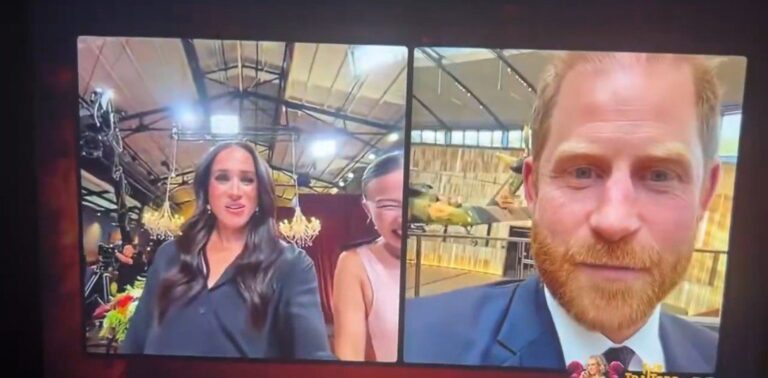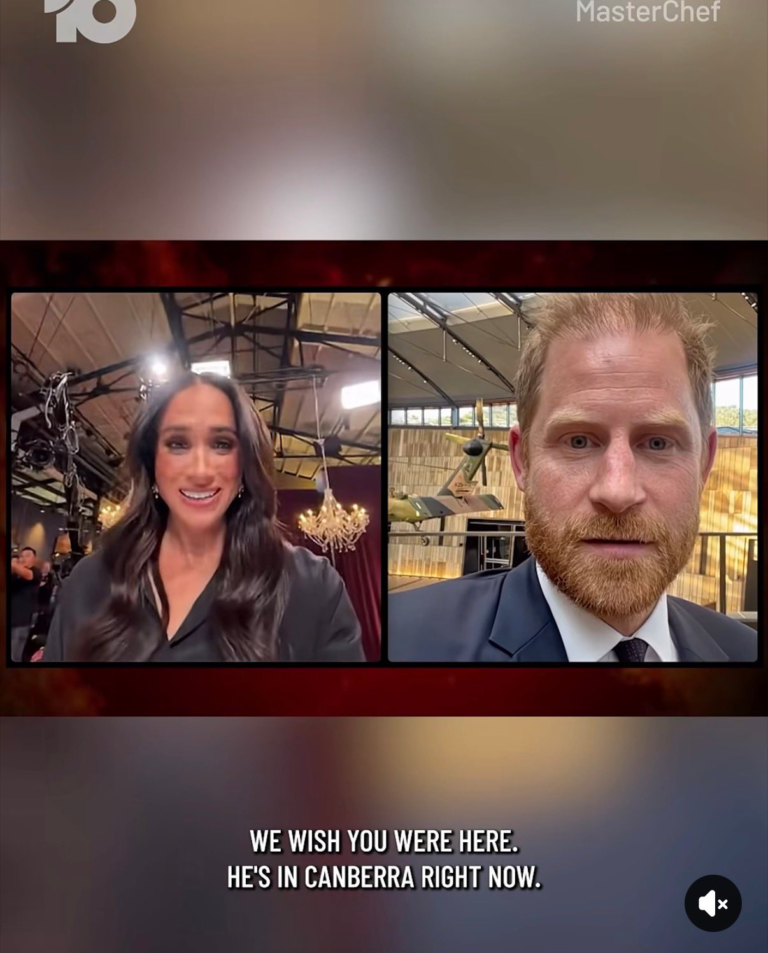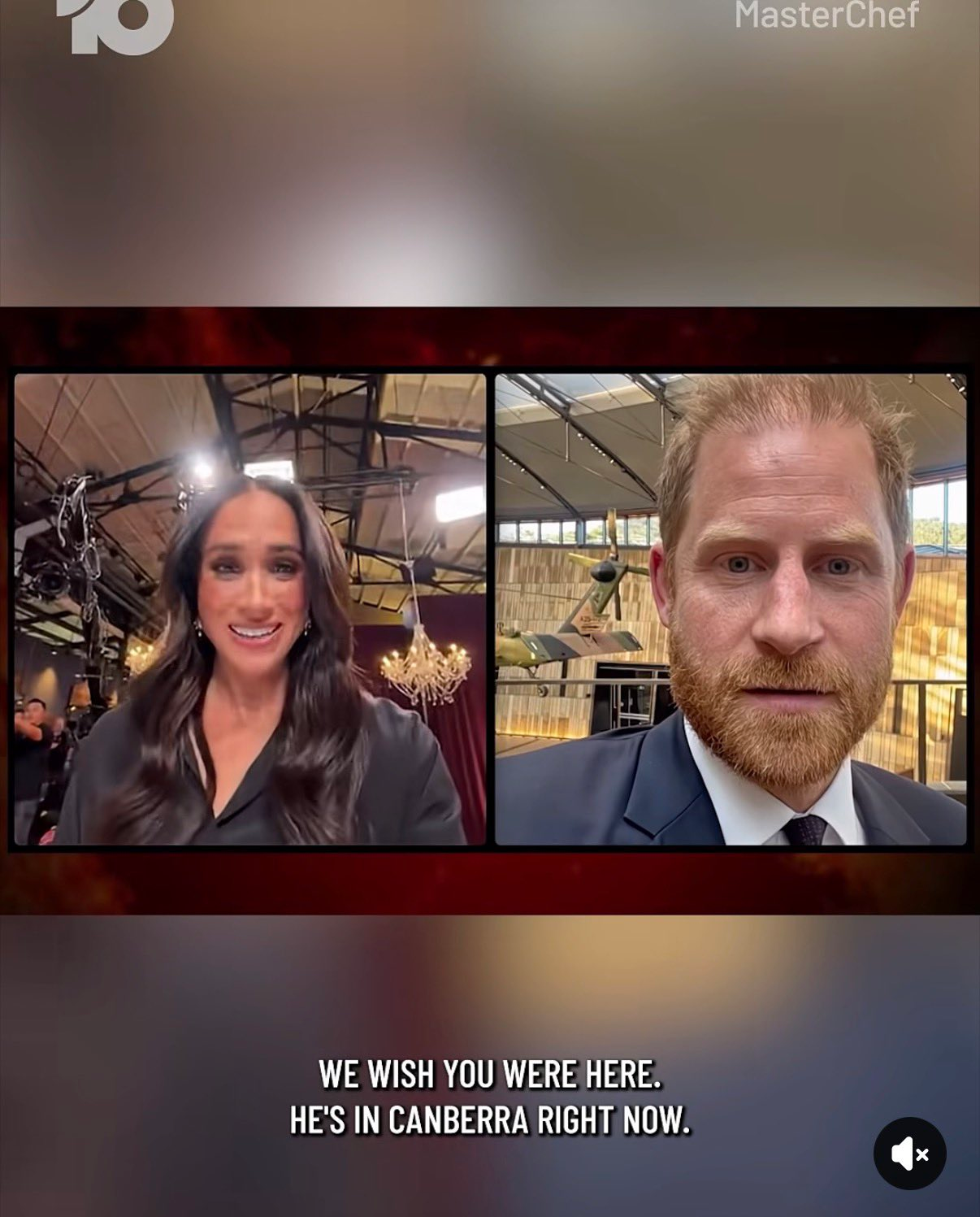
Of course Meghan Markle made sure her biggest remaining asset got screen time. During her guest-judging appearance on MasterChef Australia, a production crew member suddenly handed her a phone mid-tasting. What followed was a split-screen spectacle that critics immediately branded pure theater: Prince Harry’s grinning face appearing via FaceTime, Meghan cooing “Hi, my love!” and the entire kitchen erupting into cheers as she introduced the judges and contestants while showing off plates of food.
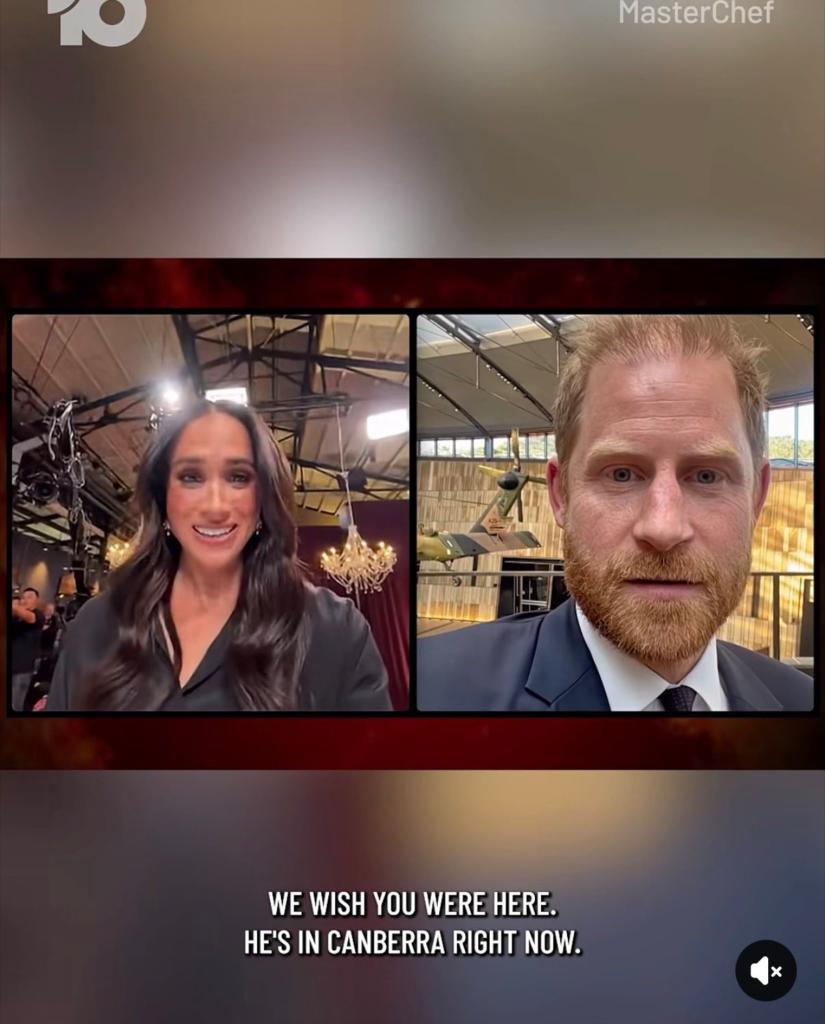
Harry, dressed in a suit and seated against a backdrop of what looked like an aviation museum or hangar, delivered a folksy “G’day” and asked if he had interrupted something important. Meghan beamed, told him the contestants were “so talented,” and reminded everyone he was “in Canberra right now” meeting veterans. “We wish you were here,” she said, panning the phone around so the studio could wave. Harry apologized for the disturbance, said all was well, and signed off. The moment was broadcast with on-screen captions capturing every word.
It was not subtle. It was not spontaneous. It was a calculated insertion of the one thing Meghan still has that gives her any residual star power: a direct link to the British royal family she and Harry loudly rejected in 2020. After years of claiming the institution was toxic, racist, and unsupportive, the couple continues to leverage the titles, the connections, and the curiosity surrounding them whenever a camera is rolling. Harry’s cameo was less a loving check-in and more a not-so-subtle reminder of who she married and the status she still trades on.
The imbalance is glaring. Harry is repeatedly wheeled out to prop up Meghan’s projects — whether it’s her canceled Netflix series With Love, Meghan, her struggling lifestyle brand, or this latest television appearance on a show where she has zero professional culinary credentials. Yet when the focus is on Harry’s own work or causes, Meghan is far less visible in a supporting role. The public “my love” delivered on a national cooking competition felt especially performative. Viewers called it “painfully cringe,” “so staged,” and “absolute theater.” Many noted that a genuine private call does not require a production team, a split screen, studio applause, and carefully timed references to Harry’s veteran engagements.
This was filmed during the Sussexes’ April 2026 visit to Australia, a trip that mixed paid events with selective public appearances. Meghan was presented as a “passionate home cook” and “entrepreneur,” yet the episode quickly became another platform for the couple’s ongoing brand of self-focused storytelling. Contestants who had worked for years to reach the MasterChef kitchen found themselves reduced to background props while the Sussexes turned the set into a stage for their marriage. Harry’s willingness to play along only reinforces the pattern: he abandoned royal duties alongside her, spent years amplifying grievances against his own family, and now willingly serves as the supporting act in her carefully managed public image.
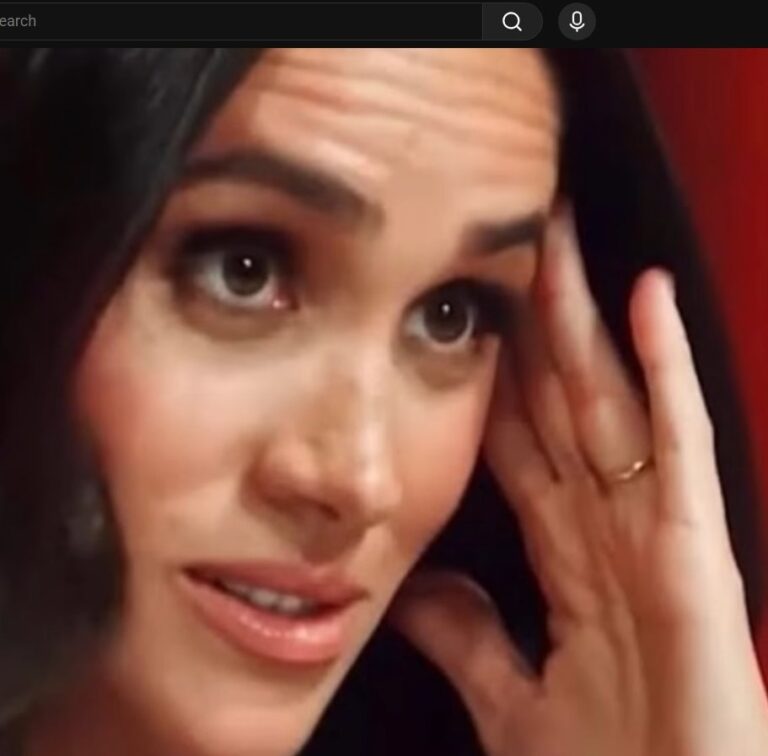
The screenshots circulating from the broadcast capture the moment in all its awkward glory — Meghan laughing and waving, Harry’s fixed smile, the subtitles underscoring every scripted-sounding line. What should have been a straightforward guest-judging segment became yet another exercise in Sussex publicity. They left the working royal life claiming they wanted privacy and independence. Instead, they continue to insert themselves into high-profile platforms while reminding the world of the very connections they supposedly walked away from.
The “surprise” call was neither surprising nor organic. It was a reminder that for Meghan Markle, Prince Harry remains the most valuable asset she has — and she has no hesitation using him, the titles, and the residual royal curiosity whenever it serves her next project.