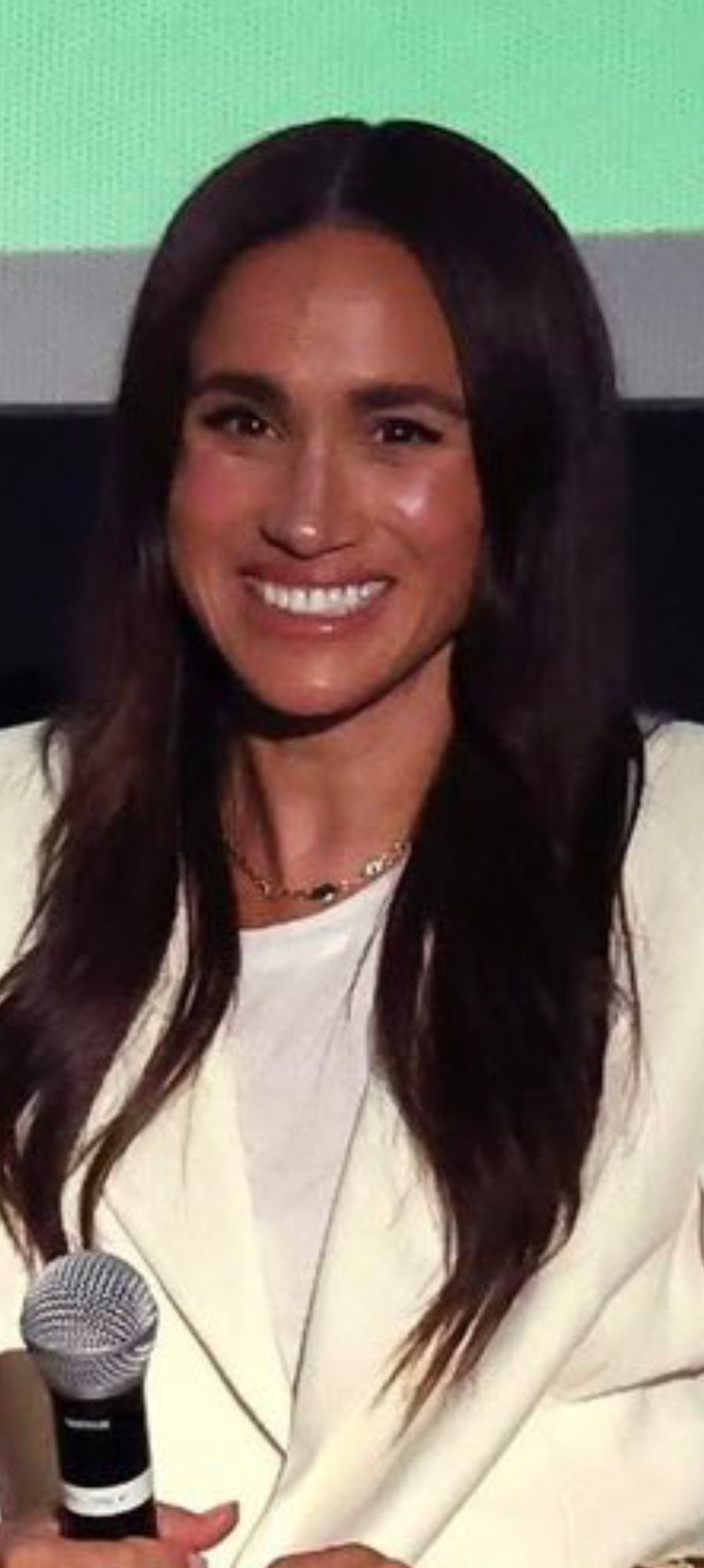
A recent close-up photo of Meghan Markle has exploded online, with critics zeroing in on what they call her telltale purple-tinged nose, the product of alleged daytime drinking, heavy photoshopping of “borrowed” children, and her desperate attempts to play glamorous model at an age many insist is far older than the official record. The image shows the Duchess of Sussex grinning broadly while clutching a microphone, dressed in a pale blazer, looking every bit the aging Hollywood aspirant still chasing the spotlight.
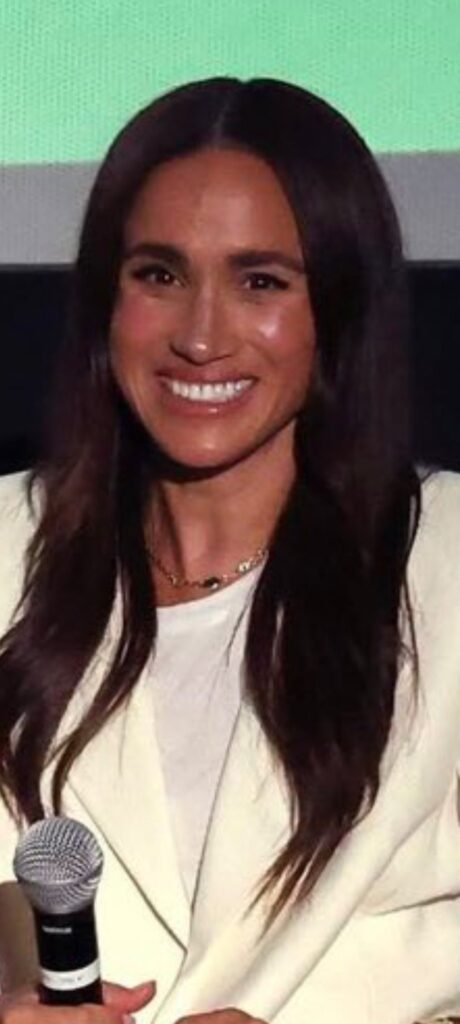
Observers immediately piled on. “Yes I do believe your nose is turning PURPLE, from all the day drinking and photoshopping pics of borrowed children,” one widely shared post declared, mocking her for posing like a model in friend Kelly McKee Zajfen’s kitchen while still pushing the “fake mommy of moonbumps” narrative. At a claimed 52 (official records put her at 44, born August 4, 1981, though skeptics have long questioned that), the criticism landed hard: stop the act.
This latest pile-on arrives amid a familiar pattern. Just days earlier, Markle and Prince Harry flooded social media with carefully curated “summer holiday” photos from a UK trip, including rare family shots with Archie, 7, and Lilibet, 5, at places linked to Princess Diana. Critics immediately flagged the images as suspiciously staged, the children appearing oddly distant or “borrowed,” with little natural interaction and heavy digital smoothing. The same online corners that have spent years dissecting the “moonbump” theory—claiming both pregnancies involved prosthetic bellies and surrogates rather than genuine gestation—saw the new photos as fresh evidence of an elaborate performance.
Harry and Meghan’s defenders dismiss it all as conspiracy. Yet the couple’s track record of selective truth-telling, grievance-fueled media projects, and relentless self-promotion makes the skepticism understandable. From the Oprah interview’s unverified racism claims, to the Netflix series and Harry’s bitter memoir Spare, the Sussexes have repeatedly traded on royal proximity while attacking the institution that once elevated them. Their As Ever lifestyle brand and recent MasterChef Australia guest-judge appearance (filmed during an April Australia visit and aired in late July) have been met with eye-rolls and boycott calls: the woman who once complained about royal constraints now courts every camera available.
Harry fares no better in the public reckoning. Once the “spare” who walked away from duty, he has spent years in court fighting for taxpayer-funded security he no longer qualifies for after stepping back from royal roles—a battle he lost on appeal. Reports this year describe him longing for the old life in Britain while remaining tethered to Meghan’s California orbit and its endless content machine. The pair’s financial model—documentaries, books, brand launches—has repeatedly underperformed relative to the hype, leaving many to conclude the entire enterprise rests on manufactured drama and carefully managed imagery.
The purple-nose photo and the borrowed-children accusations are only the latest symptoms. For years, skeptics have pointed to shifting facial features, sudden wardrobe and kitchen-set aesthetics, and a near-total absence of unfiltered, long-form public appearances with the children. Markle’s close friendship with Kelly McKee Zajfen has produced its own stream of staged domestic moments, further fueling the sense that much of what the public sees is curated performance rather than genuine family life.
In the end, the online fury is less about one flushed nose or one kitchen photoshoot and more about accumulated distrust. Harry and Meghan left the royal fold promising authenticity and independence. What followed has looked to many like a prolonged confidence game: grievance as currency, images as product, and two children kept largely out of view except when a carefully lit carousel serves the brand. Whether the nose is truly purple from daytime cocktails or simply lighting and makeup, the larger picture remains the same. The Sussexes continue to sell a story that fewer and fewer people are buying.