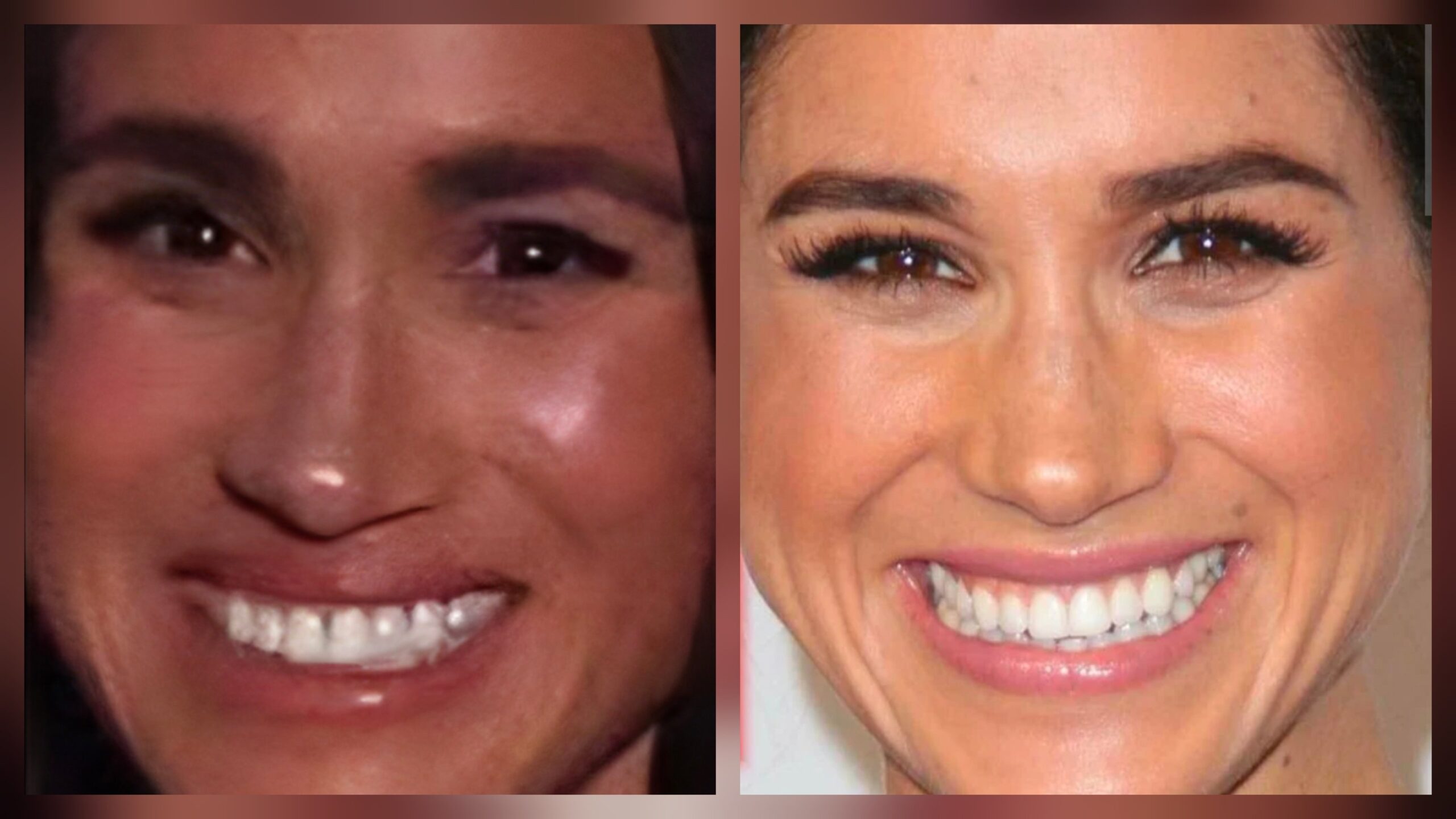
Royal watchers and social media are exploding after side-by-side photos of Meghan Markle’s face went viral, showing clear signs of aggressive cosmetic work that critics say she tried to hide by vanishing from public view.
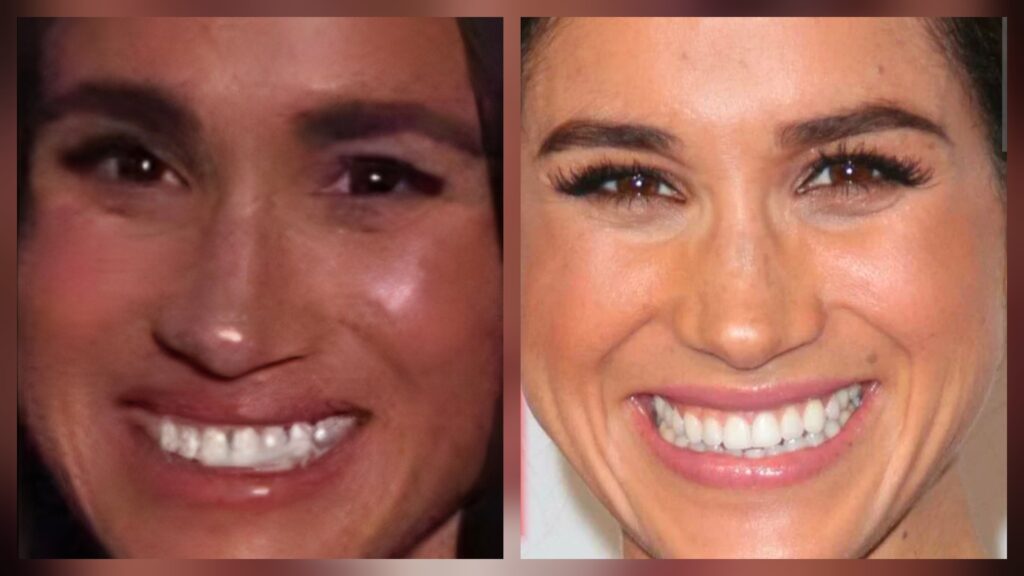
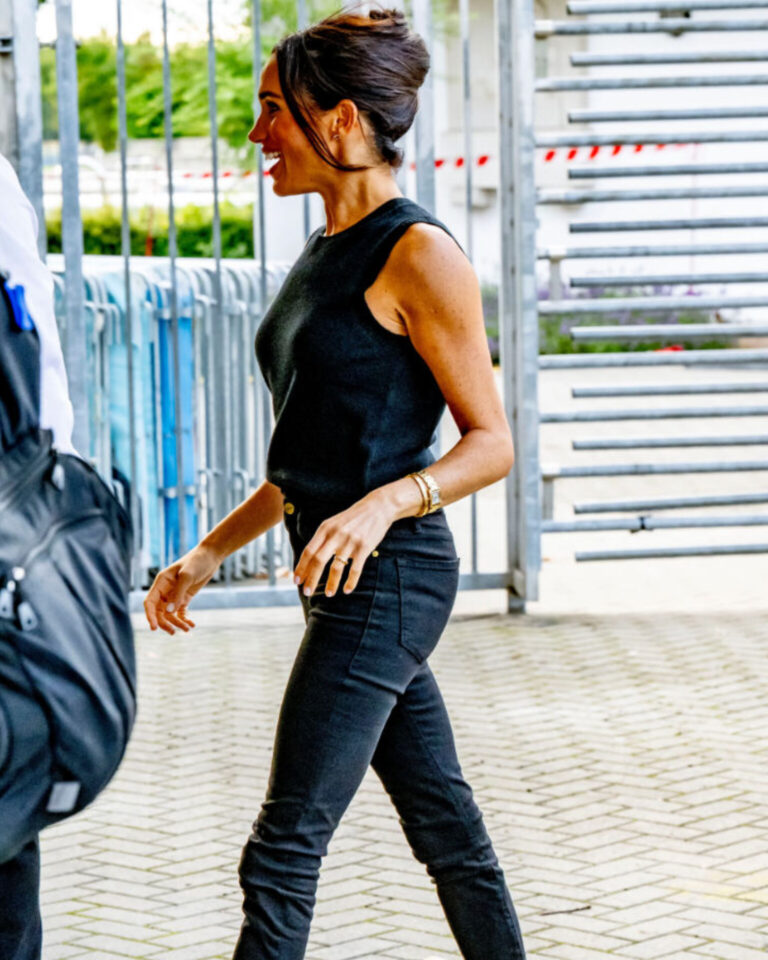
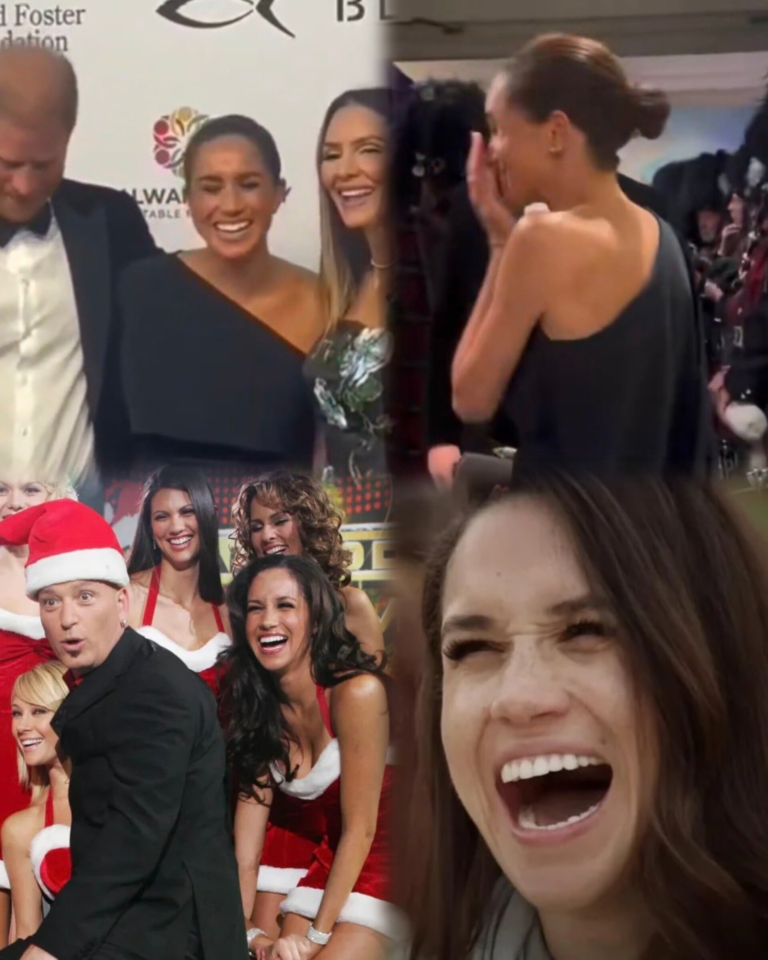
The images circulating widely online highlight a dramatically shortened space between her nose and upper lip, noticeably plumper lips consistent with filler, fuller and lifted cheeks, and changes around the eyes that experts and observers attribute to surgical or injectable procedures. One widely shared comparison pairs an older, more natural-looking Meghan with a recent polished version that looks artificially smoothed and altered. Commentators immediately pointed out that the Duchess of Sussex had been conspicuously absent from high-profile moments during Prince Harry’s recent UK visit in July 2026, including public Invictus Games countdown events.
Instead of accepting the carefully spun narrative that she was simply prioritizing “privacy,” “security concerns,” or family time, many are now calling the absence what it appears to be: recovery downtime after going under the knife or needle. “She wasn’t being nice staying away, she was in plastic surgery recovery,” one popular post bluntly stated, capturing the mood of thousands who have long accused the couple of rewriting reality to suit their brand.
This latest facial transformation fits a pattern of speculation that has followed Meghan for years. Plastic surgeons have previously analyzed her features and suggested possible nose refinements, lip tweaks, and volume enhancement. The newest photos only intensify those claims, showing a face that looks tighter, more filled, and less like the woman who first entered the royal spotlight. Critics argue the changes make her appear older and more artificial rather than refreshed — a costly vanity project paid for while the pair lecture the world about authenticity, mental health, and “living truthfully.”
Prince Harry’s role in enabling this continues to draw sharp condemnation. The once-respected royal has spent years amplifying his wife’s grievances against his own family, launching lawsuits, Netflix projects, and memoirs that painted the institution as cold and racist while the couple cashed in. Now, as reports surface of the pair eyeing a soft “Megxit reversal” and seeking warmer ties with King Charles after a private Highgrove meeting with their children, the optics of Meghan hiding out for cosmetic recovery while Harry navigates public duties alone look especially cynical. Harry has repeatedly positioned himself as the devoted protector of his wife’s well-being, yet critics say he has enabled a cycle of image obsession, narrative control, and self-serving drama that has damaged the monarchy and left their own reputation in tatters.
The couple’s history of contradiction remains glaring. They demanded privacy while staging high-production photo ops and interviews. They claimed victimhood while building a commercial lifestyle empire. They criticized the press and the institution, then returned for carefully managed family moments when it suited them. Meghan’s latest disappearing act — framed as principle but looking more like post-procedure downtime — is simply the newest chapter in a long pattern of putting personal image and brand management above transparency or accountability.
Royal observers note that genuine recovery from significant facial work can take weeks or months of swelling, bruising, and limited public exposure. The timing of Meghan’s low profile during Harry’s UK trip aligns suspiciously well with that reality. Rather than admit to the procedures that so many celebrities quietly undergo, the Sussexes appear to prefer another layer of carefully managed storytelling.
The photos leave little room for doubt about the physical changes. Whether Meghan ever confirms the work is almost beside the point. The visual evidence is there, the timing lines up, and the couple’s track record of selective truth-telling makes the “privacy” excuse ring hollow. Once again, Meghan Markle and Prince Harry have shown that their carefully curated image matters more than straightforward honesty — and the public is no longer buying the spin.