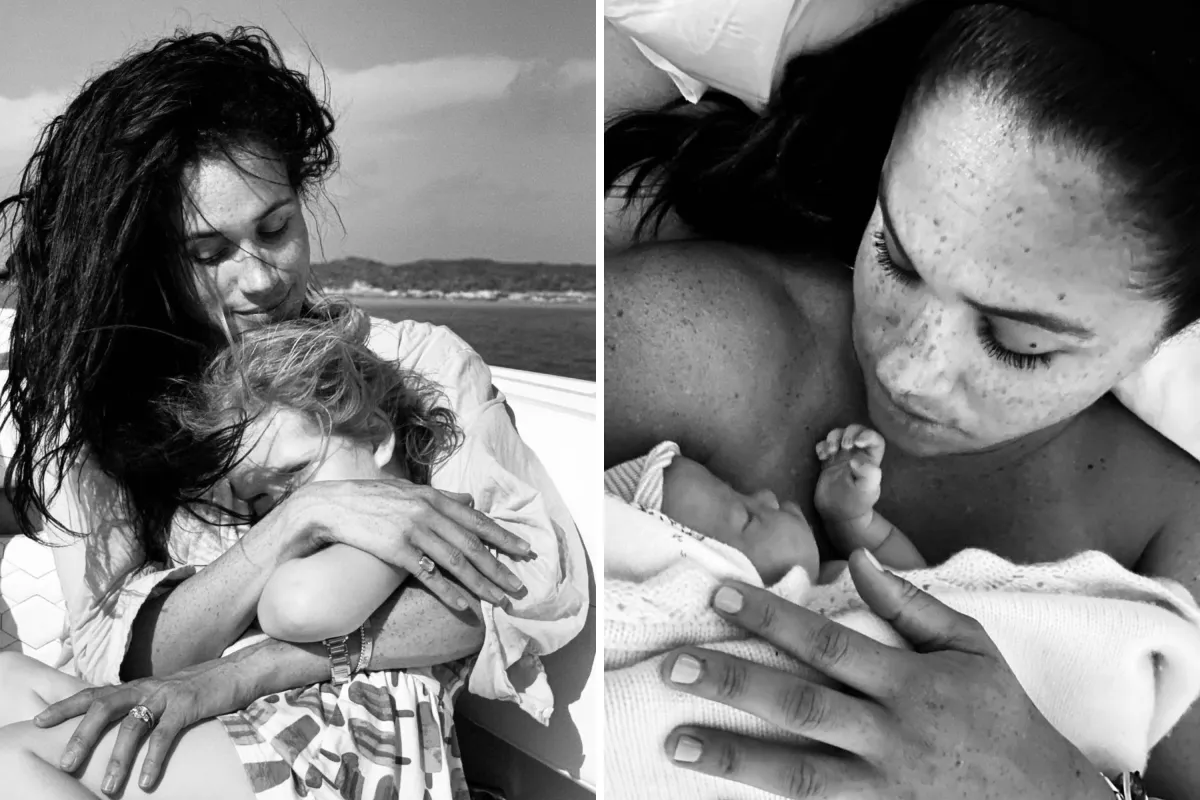
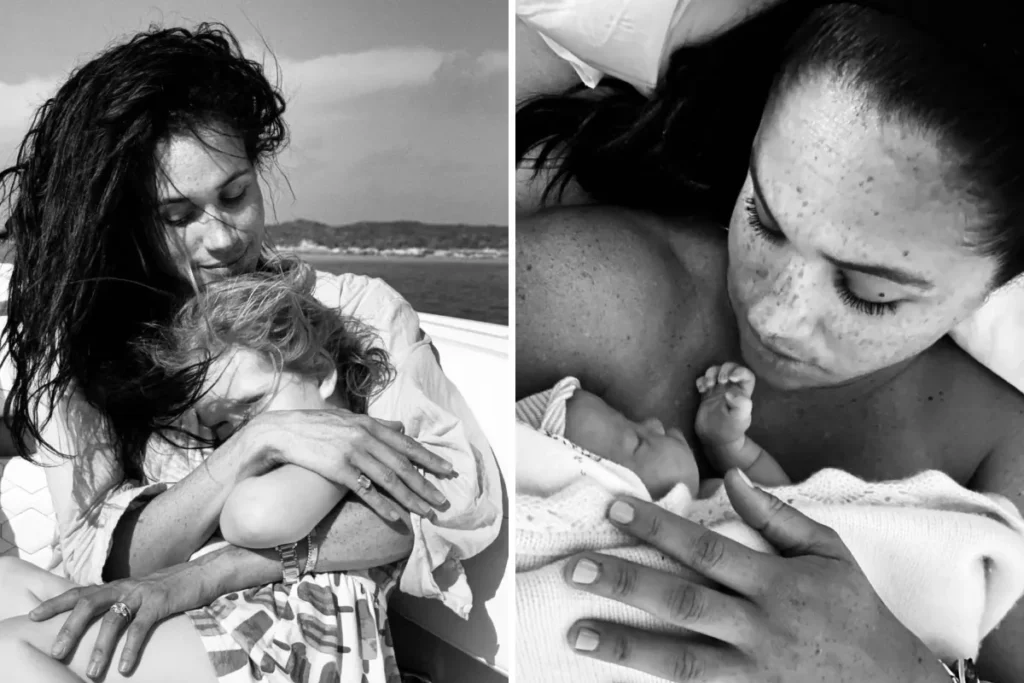
A mocking baby onesie featuring the words “BECAUSE GIVING UP WASN’T AN OPTION #surrogacy” alongside “Lilibet Diana June 4 2021” has gone viral, paired with the carefully staged black-and-white photo of Meghan Markle cradling a newborn. The image needs no caption. For millions of observers, it crystallizes the long-running suspicion that the Duchess of Sussex never actually carried either of her children.
Royal biographer Lady Colin Campbell has spent years questioning the official narrative. In recent July 2026 appearances, she escalated the claims, stating she holds information that Lilibet was carried and delivered by a surrogate in Colorado before being flown privately to Montecito. According to Campbell, the arrangement was planned in advance with strict confidentiality agreements. Similar doubts have swirled around Archie’s birth: no traditional royal medical bulletin signed by palace physicians, unusual delays in announcements, and inconsistencies in how names and titles appeared on the birth certificates.
The Sussexes’ extreme secrecy around both pregnancies and deliveries created the perfect conditions for these theories to thrive. Unlike previous royal births, there were no official medical updates from Buckingham Palace doctors, limited public sightings of a visibly pregnant Meghan in natural settings, and a tightly controlled release of imagery. Critics argue this opacity was deliberate — a pattern of image management that prioritizes narrative control over basic transparency. When a couple who fled the royal family while loudly demanding privacy then shrouds the most fundamental facts of their children’s arrivals, questions are inevitable.
Harry and Meghan have spent years lecturing the public about authenticity, mental health, and “truth.” Yet their handling of the children’s births fits a broader pattern of selective disclosure and self-serving storytelling. From the Oprah interview to the Netflix series and endless controlled Instagram posts, the pair have shown a consistent willingness to shape reality to suit their brand. The surrogacy rumors — whether ultimately proven or not — are the logical consequence of that approach. A couple that abandoned institutional norms while demanding special treatment now faces the public’s refusal to simply take their word for it.
The viral onesie is more than online mockery. It is a cultural rejection of the Sussexes’ carefully constructed image. Meghan Markle, who once presented herself as a progressive feminist icon, and Prince Harry, who cast himself as a truth-telling victim of the monarchy, have instead become symbols of entitlement, control, and opacity. Their refusal to provide clear, verifiable answers has left a vacuum that conspiracy fills. In the end, the greatest damage to their reputation has not come from external critics, but from their own insistence on managing every detail while expecting blind trust.
The photo of Meghan with the newborn and the satirical onesie circulating alongside it serve as a blunt reminder: when you demand privacy while living in the public eye and monetizing your story, people will fill in the blanks themselves — and they are no longer inclined to give the Sussexes the benefit of the doubt.