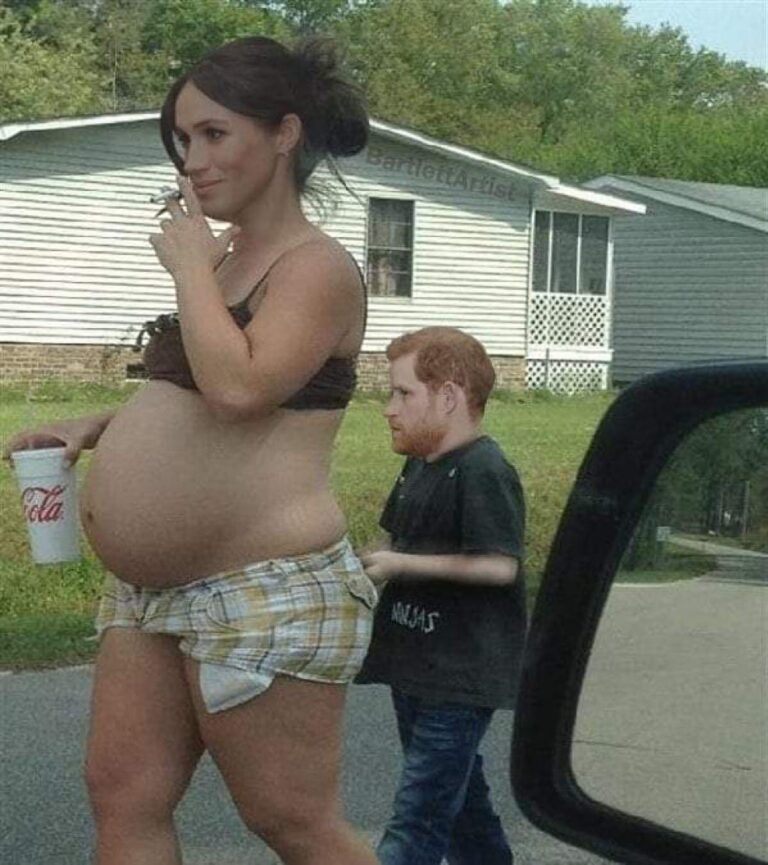
Look at this selfie. Meghan Markle, sprawled out like she hasn’t a care in the world, capturing the perfect image of someone who has never once had to truly grind for anything. Viral posts are calling her exactly what she is: a lazy witch who’s spent her entire adult life hopping from one wealthy man’s wallet to the next. And the evidence stacks up higher than the Sussexes’ rejected Netflix pitches.
Before the tiaras and the endless self-pity tours, Markle’s “career” was modest at best. She started as a briefcase girl on Deal or No Deal, holding signs and smiling for the camera. Small guest spots followed. Then came Suits, the role she still milks for credibility. Series regular? Sure. Major impact? Not according to the numbers circulating among those who’ve actually timed the episodes. Claims put her total screen time at a laughable 138 minutes across seven seasons — roughly two hours and change of actual work for a “star” who somehow positioned herself as Hollywood royalty. Co-stars and online trackers have pointed out she wasn’t even in every episode, averaging well under two minutes of airtime when she did appear. For someone who later lectured the world on feminism and hard work, that’s an embarrassing output.
But Markle never needed to clock real hours. She had rich men. First came Hollywood producer Trevor Engelson. They dated for years, married in a Jamaican beach wedding in 2011, and she lived the industry-adjacent life while he built his production career. When that marriage ended in 2013, the pattern continued. Enter Prince Harry — fifth in line to the throne at the time, with the ultimate royal bank account and security detail funded by taxpayers.
Harry, ever the useful idiot in this story, fell hard. The couple’s early days in Canada alone cost Canadian taxpayers over $500,000 in security according to recently released RCMP records, with the bill peaking during their courtship and Meghan’s final Suits filming in Toronto. Critics have rightly demanded answers: why should ordinary people bankroll a private romance that later turned into a full-scale exit from royal duties?
Once married, the pair’s playbook became clear. They leveraged the monarchy’s prestige for a multimillion-dollar Netflix deal and Spotify podcast, then spent years complaining about the very institution that gave them global fame. Their Archewell Foundation has faced delinquency notices from California regulators, questions over board composition (just the two of them), and sharp drops in donations. Tangible, high-impact charity work? Sparse. Photo-ops and vague statements? Endless.
Meghan’s defenders scream “racism” or “misogyny” at every criticism. The reality is simpler and uglier: a woman who has consistently attached herself to men with money and status, contributed minimal independent output, and then painted herself as the victim when the free ride got complicated. Harry, for his part, abandoned his family, his military legacy, and his duty to enable this lifestyle. Together they have turned grievance into a brand while living in a Montecito mansion far from the hard work they claim to champion.
The photo says it all. Lounging, content, forever looked after. Meghan Markle didn’t build an empire. She collected rich men. And Prince Harry, the latest in the line, has paid the highest price — his reputation, his family, and any remaining public goodwill. The witch’s spell is finally wearing off.