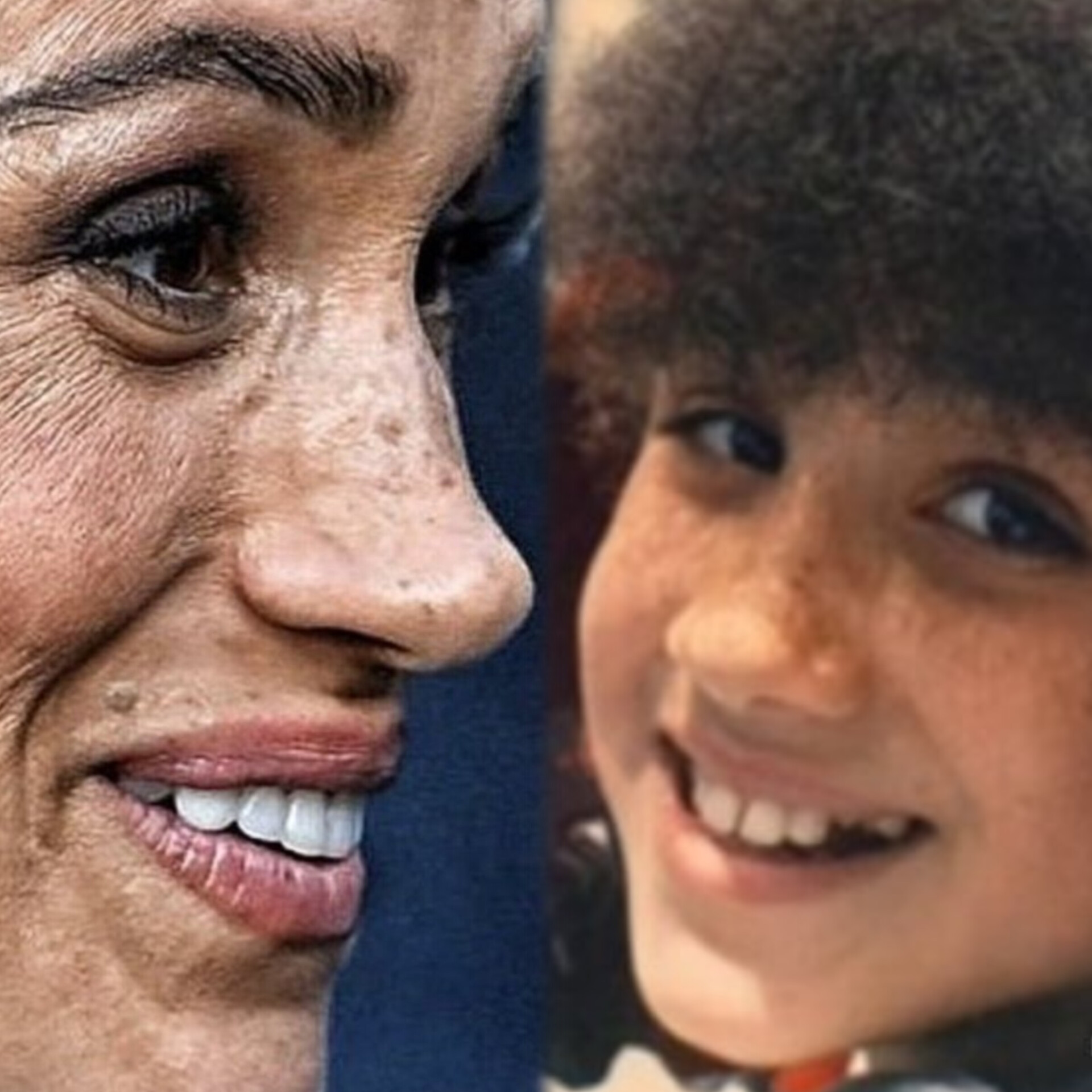
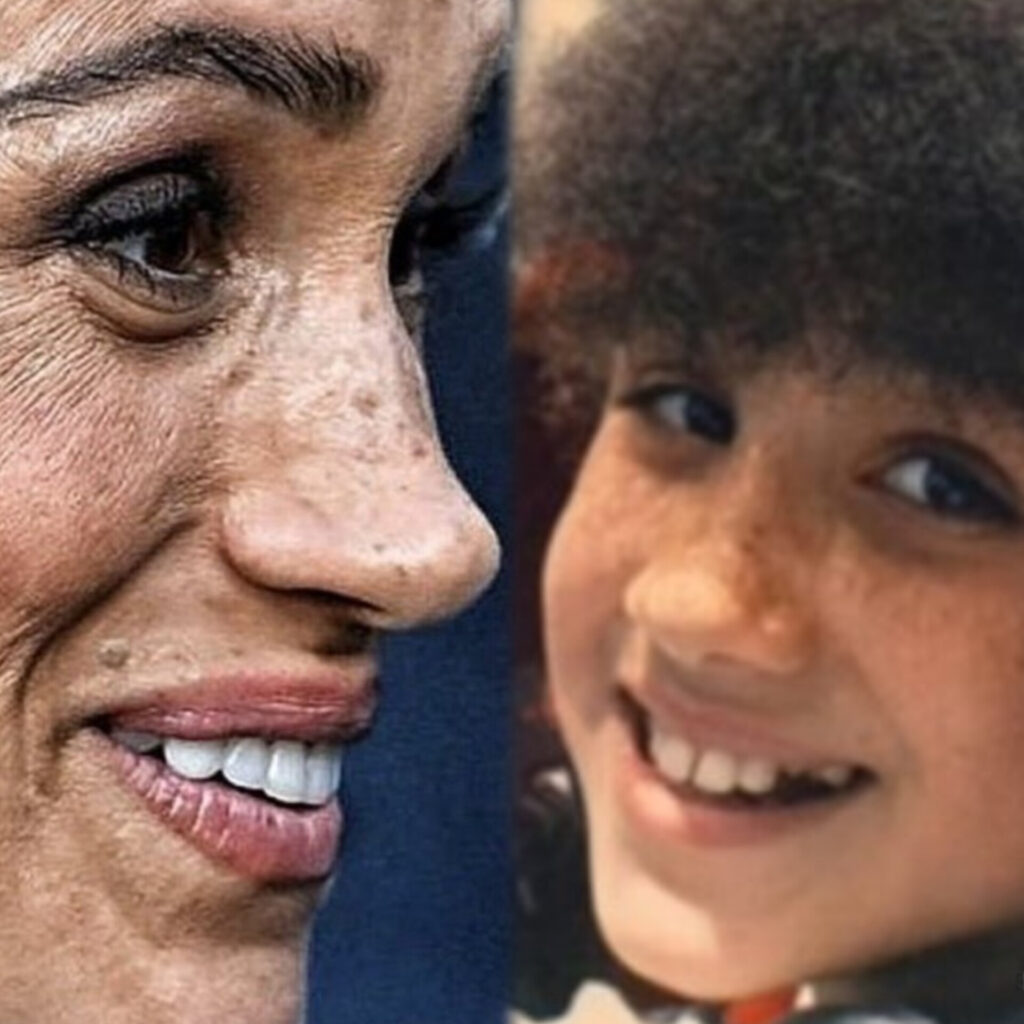
Meghan Markle has perfected the ultimate chameleon act. Side-by-side photos circulating widely show a freckled little girl with a full head of natural curly, afro-textured hair smiling brightly — the clear visual marker of her mixed-race heritage through her African-American mother, Doria Ragland. Fast-forward to today and the same woman appears in a wide-brimmed hat, smoothed features, and carefully styled look that critics say has her morphing straight into Julia Roberts territory. The transformation is so complete that many observers now call it the deliberate erasure of any visible African heritage.
This is the same Meghan Markle who, alongside her husband Prince Harry, has spent years accusing the British royal family and much of the media of racism. In their infamous 2021 Oprah Winfrey interview, the couple claimed “concerns” were raised about how dark their son Archie’s skin might be and painted themselves as victims of institutional prejudice. They have repeated versions of this narrative in Harry’s bitter memoir Spare, their Netflix series, and countless subsequent statements. Yet while they weaponize race for sympathy, book deals, streaming money, and public attention, Meghan has steadily presented a smoother, more Hollywood-friendly image that downplays the very heritage she claims makes her a target.
The irony is brutal. Meghan is the daughter of a Black mother and a white father, Thomas Markle. She has spoken about her biracial identity when it suits her. But critics argue the current polished presentation — the straightened or smoothed hair, the refined features, the carefully curated aesthetic — functions as a soft erasure of that background. At the same time, she and Harry continue to position themselves as the foremost victims of royal racism, collecting applause (and revenue) from audiences who see only the “trailblazing” mixed-race duchess and ignore the selective self-presentation.
Prince Harry has been an eager partner in the project. Once a popular working royal, he has spent the years since their exit from senior roles attacking his own family, airing private grievances for profit, and maintaining a lifestyle that still leans on the very institution he claims mistreated them. Recent disclosures about Canadian taxpayers covering hundreds of thousands of dollars in security costs during the couple’s earlier visits only fuel the perception of entitlement. The pair live in a sprawling Montecito mansion, pursue commercial deals, and lecture the world on trauma, racism, and mental health while showing little interest in the quiet dignity or consistency that might give their claims weight.
The result is a pattern that many find exhausting and hypocritical: cry racism when convenient, soft-pedal or visually minimize Black heritage when the Hollywood aesthetic serves better, and keep the outrage machine running for clicks, contracts, and relevance. People of color who continue to rally behind the couple are, in the eyes of growing numbers of critics, being used as props in a long-running publicity strategy rather than genuine allies in any meaningful fight against prejudice.
Meghan Markle did not invent personal reinvention. Plenty of public figures change their hair, style, or presentation over time. What sets this case apart is the simultaneous demand that the world treat every criticism as racism while the subject herself appears to have edited out the most obvious visual markers of the identity she claims is under attack. The photos make the point more sharply than any opinion column: the little girl with the natural curls and the woman under the oversized hat look like they belong to different chapters of a carefully managed story.
Harry and Meghan have turned private royal friction into a global brand built on grievance. The latest visual evidence of Meghan’s transformation only sharpens the central charge against them: the race card is played when it pays, and the heritage it supposedly defends is allowed to fade when a Julia Roberts glow-up looks more marketable.