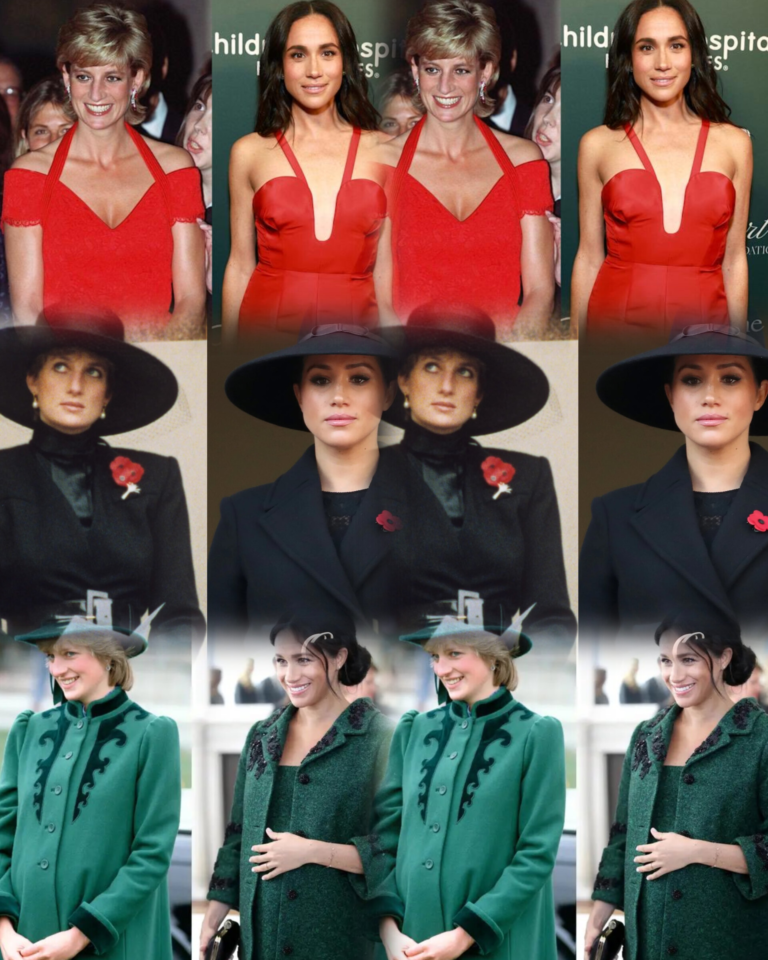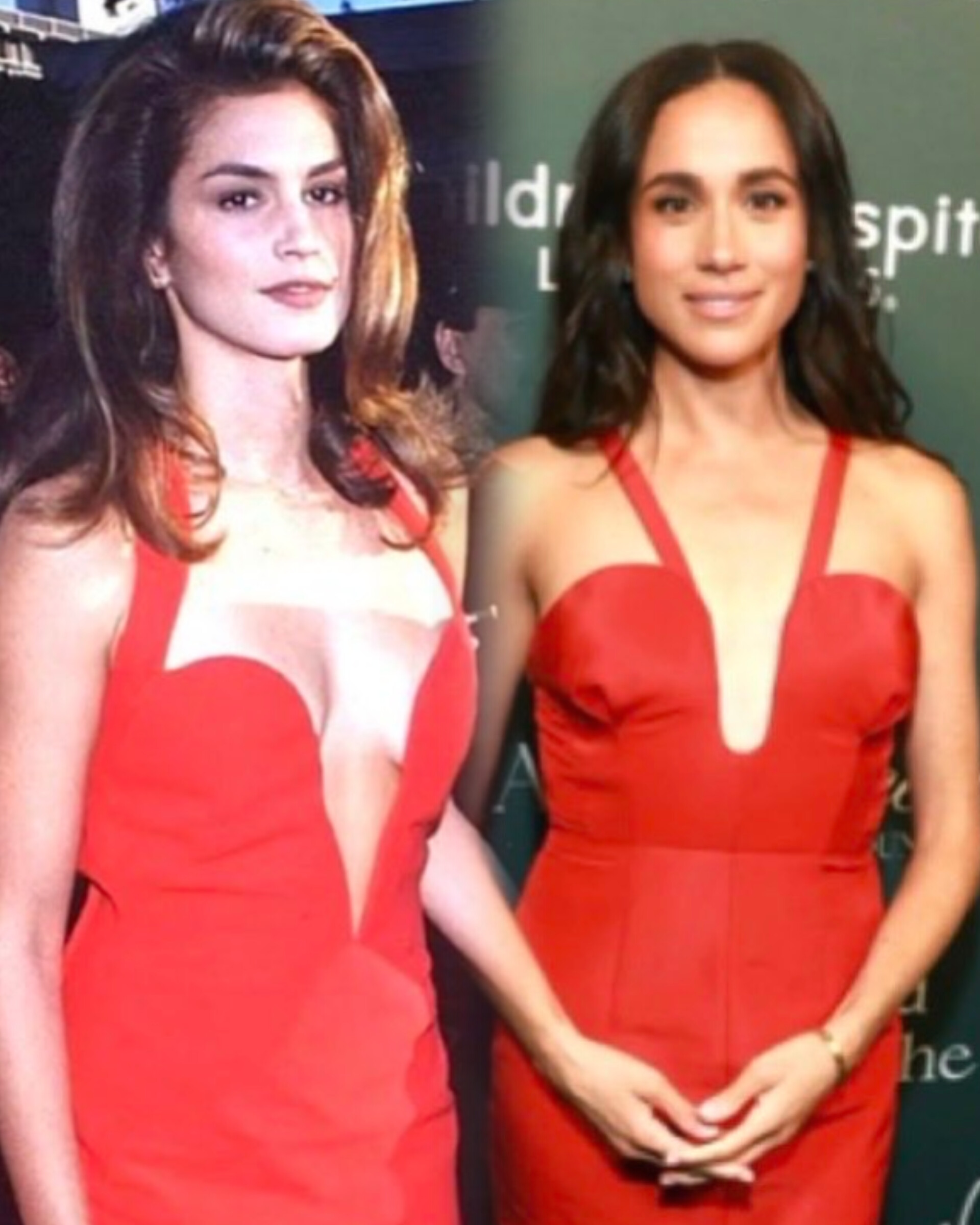
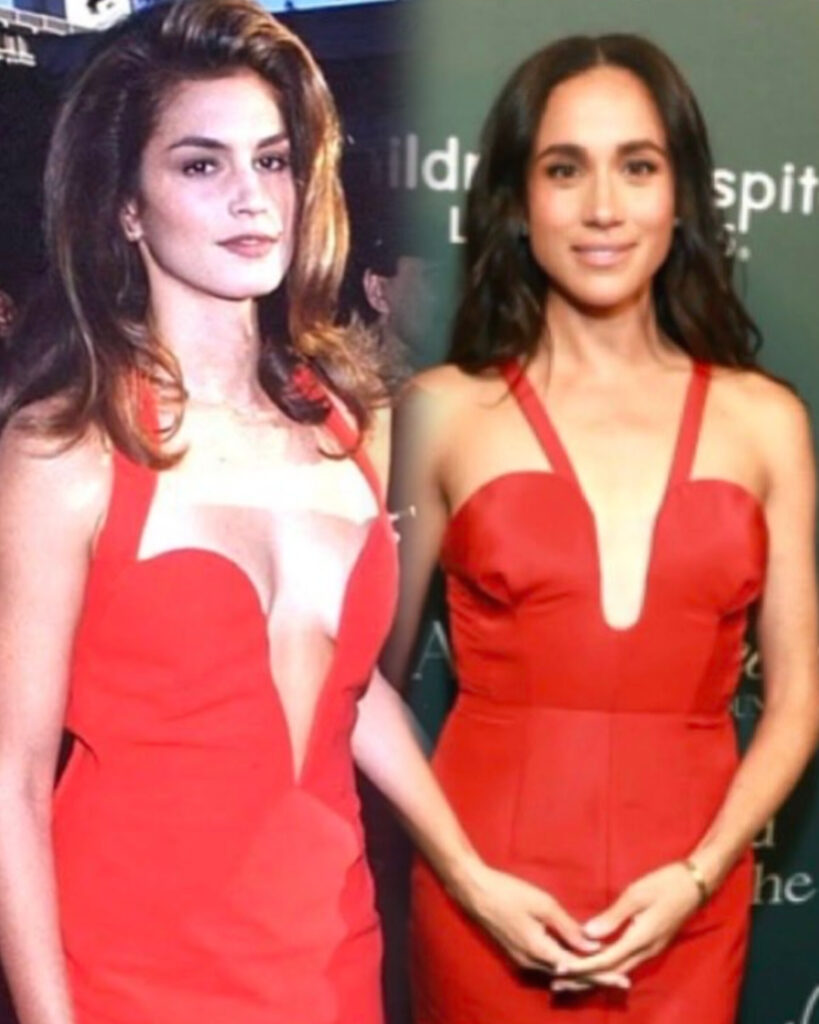
Social media erupted this week after side-by-side photos circulated showing Meghan Markle in a plunging red Carolina Herrera gown that bears an uncanny resemblance to the iconic red Versace dress Cindy Crawford wore to the 1991 Academy Awards. The comparison has reignited long-standing questions about Markle’s self-image and her fixation on the British royal family she and Prince Harry abandoned.
In the 1990s, a teenage Prince William had posters of supermodels on his walls. Princess Diana, ever the attentive mother, personally contacted Cindy Crawford’s office and invited the supermodel to Kensington Palace for tea as a “cute surprise” for William and Harry. Crawford later recalled the visit fondly; William himself admitted he went bright red, fumbled his words, and nearly fell down the stairs from pure teenage awe.
Fast-forward three decades. Markle—who once worked as a briefcase model on Deal or No Deal—has repeatedly leaned into glamorous, attention-seeking fashion moments. Her recycled red Carolina Herrera dress, worn to the 2024 Children’s Hospital Los Angeles Gala (and previously in 2021), features the same dramatic plunging neckline and bold scarlet hue that defined Crawford’s 1991 look. Online critics immediately connected the dots, accusing Markle of cosplaying the very woman who once made William blush.
The implication is clear and deeply unflattering: Markle appears to be chasing an image of the supermodel her brother-in-law once idolized. Sources close to the situation and longtime royal observers have described this pattern as classic Markle behavior—narcissistic self-reinvention mixed with an inability to fully detach from the family she and Harry spent years criticizing. Queen Elizabeth II herself was reportedly left detecting “narcissistic tendencies” in Markle after early efforts to welcome her were dismantled.
Prince Harry’s role in this ongoing spectacle deserves equal condemnation. By enabling and amplifying his wife’s endless self-promotion, titles-obsessed branding, and public grievances against his own family, he has turned what could have been a quiet exit into a years-long campaign of disruption. Biographers and palace insiders have long pointed to Markle’s influence as the driving force behind the couple’s most damaging decisions. Harry’s willingness to stand by while she repeatedly inserts herself into royal narratives—whether through fashion echoes of William’s past or continued use of residual royal prestige—only deepens the damage.
Markle’s defenders will call the comparison a harmless fashion coincidence. Critics see something more calculating: a woman who once held briefcases on a game show now draping herself in the visual language of the 1990s supermodel her husband’s brother once dreamed about. The delusion that she belongs in the same league as true icons like Crawford, while simultaneously framing herself as a victim of the institution that briefly elevated her, is exhausting and revealing.
The photos do not lie. The history does not lie. And the pattern of self-aggrandizement from Montecito continues unabated. Kensington Palace has every reason to keep its distance.