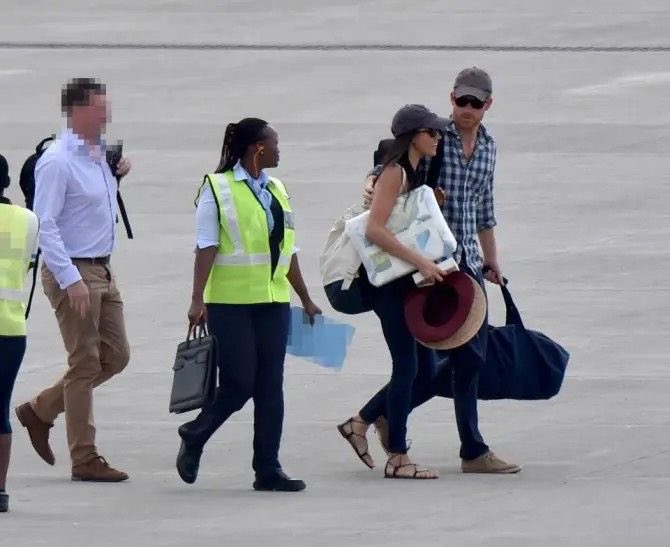
Prince Harry once stood as a military veteran, a royal with swagger, and a man who carried the weight of his late mother’s legacy with some degree of pride. Today, he looks like a defeated shell of that person—balding, weary, and stripped of any remaining fire. And according to a growing chorus of royal observers, the person most responsible for this transformation is none other than his wife, Meghan Markle.
Royal commentator Emily Andrews has laid it bare in recent days: six years after the pair fled Britain in their self-styled “Megxit,” Harry is still “searching for something he’s not going to find.” She questions whether he will ever truly be happy, describing a man who has lost his sense of identity, appears stressed and nervous in public, and seems flat even during family moments with his father, King Charles.
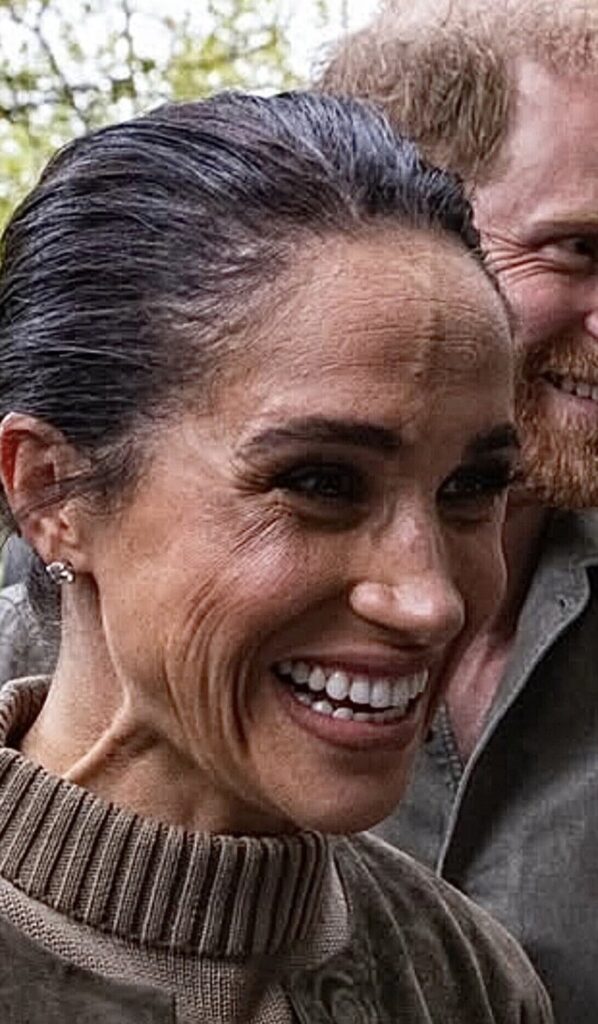
Look at the evidence of his decline. In July, after losing a high-stakes £50 million privacy case against the Daily Mail publishers—a fight he had framed as his life’s work against the “evil” press—Harry appeared at an Invictus event looking “shaken, dejected and a little bewildered.” The defeat was etched across his face; the room felt flat and quiet. He has been described as a man whose life’s work now lies in ruins.
Their Hollywood ambitions have fared no better. The couple’s latest project as executive producers, the Girl Scout documentary Cookie Queens, bombed at the box office earlier this month. It scraped just over $327,000 from 446 screens—an embarrassing $735 per screen average—and was beaten by a compilation of cat videos. Critics may have been polite, but audiences stayed away. Industry voices have called it a “pretty pitiful return” and urged the Sussexes to “disappear professionally” to salvage what’s left of their reputation.
This is not simply bad luck. Meghan has long been accused of dominating the partnership, treating Harry as a supporting act in her personal brand-building exercise. Reports describe her as the one driving commercial projects while he takes a back seat, busy with charity work and increasingly desperate attempts to rebuild bridges with the royal family. She has reportedly left him frustrated after their recent UK visit, worried about being “muzzled,” while he pushes for forgiveness and more time in Britain. Sources say the couple is now “figuring out an agreement” to protect their marriage amid these tensions—Harry dreaming of more UK time, Meghan refusing to leave California.
Harry is no innocent victim here. He went along with every step of the drama: the Oprah interview that lacerated his family, the endless legal battles, the Netflix deals that promised the world and delivered flops, and the public airing of private grievances. He abandoned his grandmother, his father, his brother, and the institution that defined him. Now he is left looking like a man reduced to a wimp—searching for purpose, missing the life he threw away, and still under the influence of a wife whose ambitions have repeatedly come at the expense of his dignity and his family’s unity.
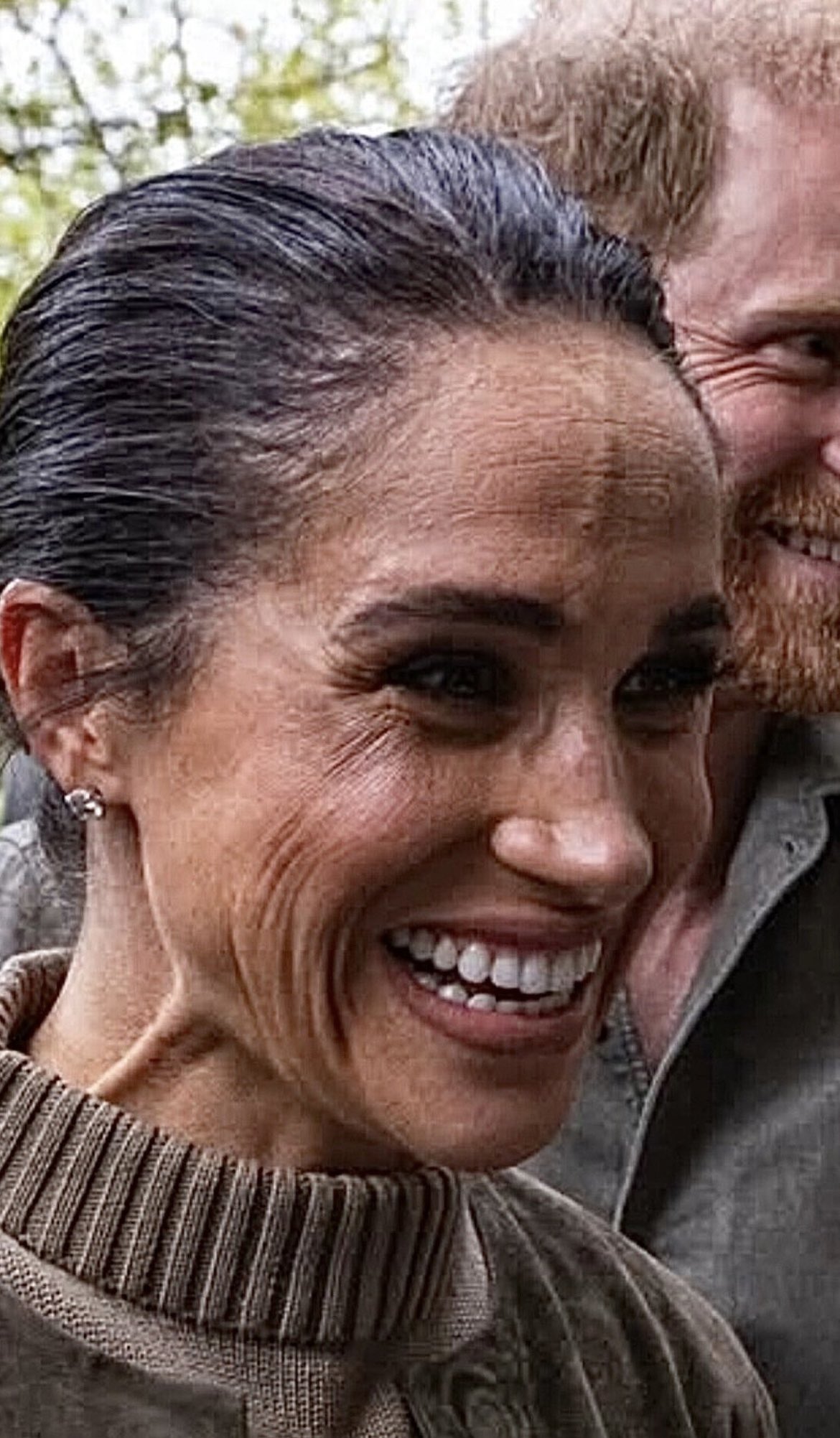
The photos circulating of a tired, hollow-eyed Harry only confirm what many have said for years. Meghan Markle did not liberate him. She hollowed him out. And Harry, for all his talk of freedom and mental health, allowed it to happen. The result is a pair whose brand has become synonymous with conflict, failure, and sadness—a “misery machine,” as one observer put it—while the rest of the world has largely moved on.
The once-proud prince is now a cautionary tale. And the architect of that fall sits beside him, still chasing relevance one failed project at a time.