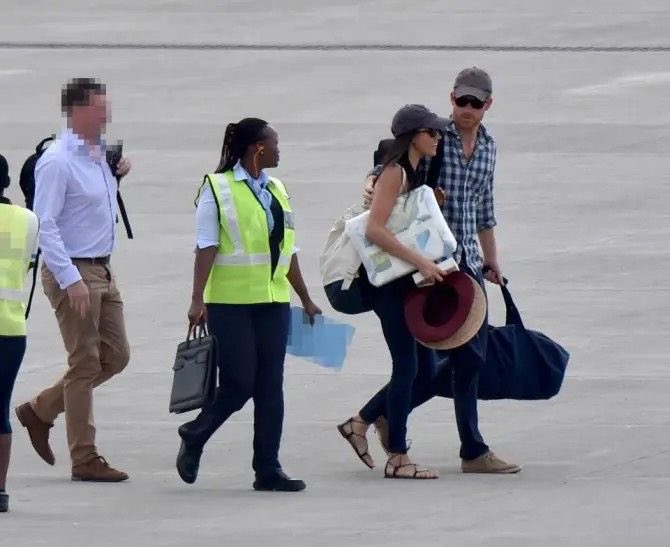
An unflattering close-up of Prince Harry — red-faced, mouth agape, looking nothing like the dashing royal the world once adored — has exploded across social media, crystallizing what many have long suspected about Meghan Markle’s “fairy-tale” marriage. Eight years after their lavish 2018 Windsor wedding, the image serves as a brutal reminder: no title, no Netflix deal, and no Montecito mansion was ever worth the personal and public wreckage the pair have left in their wake.

Critics are openly asking the question the photo demands: is this what Meghan Markle wakes up to every morning? And more pointedly, was trading genuine royal duty, family loyalty, and public respect for a life of grievance-mongering and failed commercial ventures ever a fair exchange?
The timing could not be more damning. Just days after reports confirmed that Harry and Meghan are abandoning their California dream and relocating to the UK for an “extended period” with their children, the couple’s American experiment stands exposed as a costly failure. Their once-lucrative streaming deals have withered. Netflix did not renew its original high-value agreement; Spotify executives infamously labeled them “fucking grifters” after a single underwhelming season of Meghan’s podcast. Lifestyle ventures, including Meghan’s jam and product launches, have been widely mocked as amateurish and commercially limp. Their California riches and Hollywood relevance are fading fast.
Now they are crawling back across the Atlantic — not as triumphant independents, but as private individuals whose children have been enrolled in British schools while the couple scramble for a foothold near the very institution they spent years attacking. King Charles was reportedly informed only days in advance. Prince William and Princess Catherine are said to be deeply concerned about a potential rival court and the couple’s history of disruption. Sources describe the move as selfish and destabilizing at a time when the working royals have steadied the monarchy through illness and duty.
This is the same pair who made the late Queen Elizabeth’s final years more difficult with public claims, a tell-all memoir that airing family laundry, and an Oprah interview that painted the institution in the worst possible light. They demanded privacy while monetizing every grievance. They insisted on security from the British taxpayer while living in one of America’s safest, wealthiest enclaves. They positioned themselves as victims of racism and media hostility even as they courted cameras and launched commercial brands that repeatedly underdelivered.
The unflattering photo circulating now — the one that has prompted the sharp observation that “no royal title is worth waking up to this every morning” — captures more than a bad camera angle. It captures the human cost of a marriage and a public strategy built on entitlement, bitterness, and relentless self-promotion. Eight years on, the once-glamorous couple look exhausted by their own choices. Harry, once the people’s prince, has been reduced in the public eye to a figure of pity and frustration. Meghan, who arrived with acting ambitions and a carefully curated image, is widely viewed in Britain with deep distrust — recent polling has shown only around one in five Britons hold a positive opinion of her.
Their defenders still claim critics are simply “jealous.” The evidence suggests something far simpler and more damning: the public has watched the couple discard duty, fracture a family, alienate their original base of support, and fail to build a sustainable independent brand. The California experiment is ending not in glory but in retreat. The titles remain, but the goodwill, the commercial momentum, and the moral high ground do not.
Meghan Markle and Prince Harry have spent years insisting the problem was everyone else — the press, the palace, the public. The unflattering image and the forced return to Britain suggest the problem was always closer to home. No amount of carefully staged anniversary photo dumps or lifestyle branding can paper over the reality that their grand exit has come full circle as a quiet admission of defeat. The monarchy they left behind continues its work. The Sussexes are still searching for relevance — and for an audience that has long since moved on.