After years of calling Britain toxic, the Sussexes are moving back next door to the family they spent six years tearing down. The Palace was not consulted. William is not speaking to them. And the “quiet family life” story does not survive contact with their record.
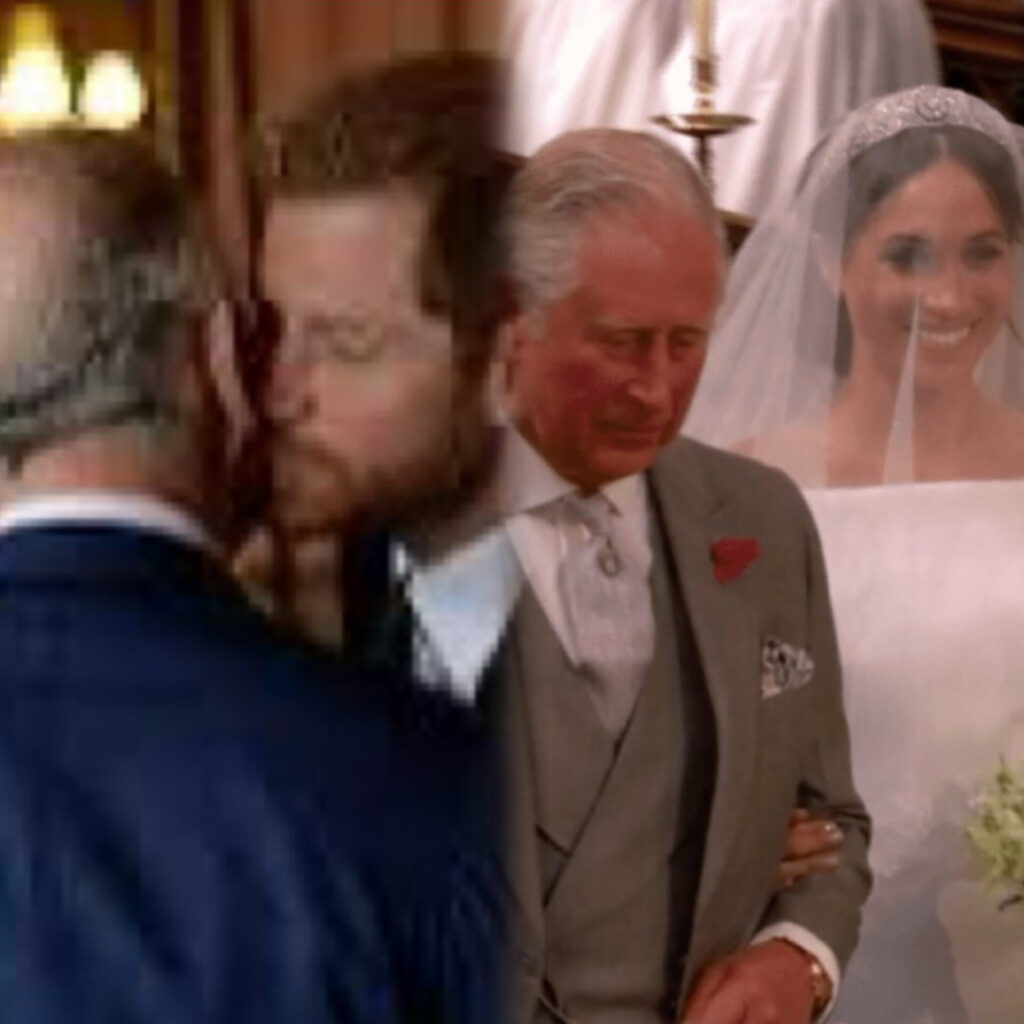
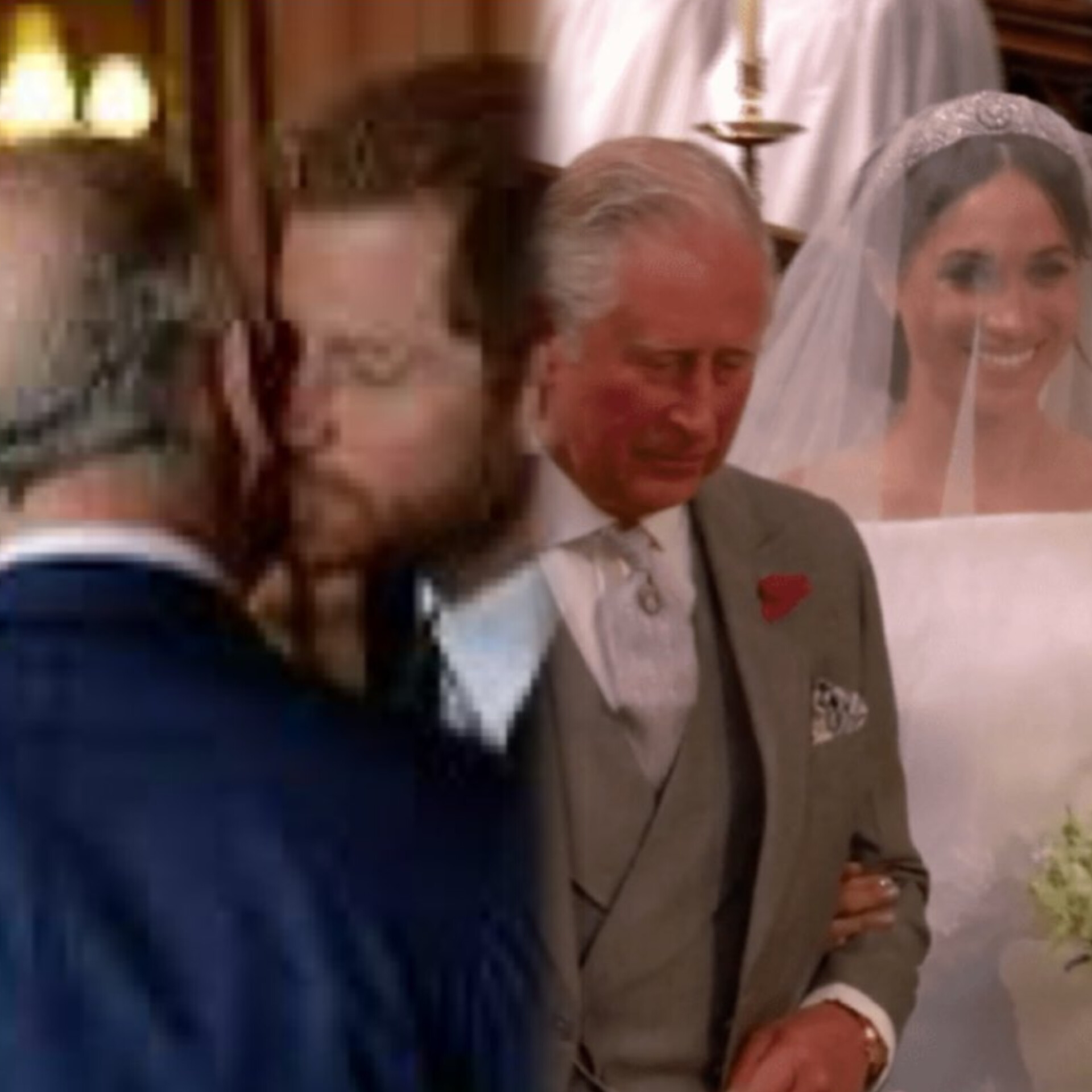
The photographs keep circulating for a reason. One shows King Charles walking Meghan Markle down the aisle in 2018. The other shows a father embracing his son. They look like reconciliation. They are being used as cover for something colder: a pair who spent half a decade monetizing contempt for the monarchy now inserting themselves back into its orbit — on their timetable, on their terms, and without warning the institution they spent years attacking.
That is the story behind the shock announcement that Prince Harry and Meghan Markle are relocating from Montecito to Britain this month with Prince Archie, 7, and Princess Lilibet, 5. The children are already enrolled in a British school for September. The family will occupy a private, non-royal property outside London while keeping the California mansion and the Portugal holiday house. They will not resume working royal duties. They will pay for their own security. And King Charles, according to multiple palace briefings, only learned of the plan on Sunday, 16 August — weeks after he hosted them at Highgrove and was told nothing.
If that sequence is accurate, it is not a family reunion. It is a fait accompli.
They Did Not Ask. They Announced.
The July Highgrove visit was sold as a thaw. Charles and Queen Camilla saw Archie and Lilibet for the first time since Queen Elizabeth II’s Platinum Jubilee in 2022. Palace language afterwards was careful and warm: the King welcomed more private time with his son and grandchildren. What he was not given, according to royal sources speaking to Entertainment Tonight, Vanity Fair, the BBC and The Telegraph, was any discussion of a return to live in Britain.
Then the story broke on 19 August across British, American and Australian outlets at once. Charles had been informed three days earlier. Prince William and Catherine were not described as part of the decision. A source told Vanity Fair that William and Catherine are “very concerned” the Sussexes will try to revive the “half in, half out” model Queen Elizabeth shut down at the 2020 Sandringham summit. Trust, the source said, “remains a fundamental issue.” William is still not speaking to his brother after Spare. His staff have been told not to discuss Harry or Meghan at all.
That is not a family rearranging furniture. That is two people who already walked out of the firm now walking back in without asking the people who still have to protect it.
The Record They Want You to Forget
Harry and Meghan left senior royal life in 2020 after demanding a hybrid status the late Queen would not grant. They relocated to California, signed enormous commercial deals, and then spent years converting private family conflict into product.
The inventory is public:
- The 2021 Oprah Winfrey interview, timed while Prince Philip was in hospital, in which Meghan alleged she was left suicidal and that an unnamed royal had speculated about how dark Archie’s skin might be. Harry backed the claim. The institution was branded racist on global television without a named accuser and without a process that could answer back.
- The 2022 Netflix series Harry & Meghan, which recast the monarchy as a cold machine that “lied to protect” William and refused to protect them.
- Harry’s 2023 memoir Spare, which accused William of physically attacking him, depicted Charles as weak and self-interested, and treated palace life as material for a bestseller.
- Repeated claims that Britain was too dangerous, the press too “toxic,” and taxpayer-funded police protection so indispensable that Harry could not imagine bringing his wife and children home. He took that fight through the courts — and lost.
Those were not private grievances whispered to a therapist. They were a media operation. Netflix and Spotify paid tens of millions. Spare sold in industrial quantities. The one project that actually worked was the one that dissected the royal family. When they tried to sell jam, lifestyle content and generic uplift, Hollywood cooled. When they sold the Crown as the villain, the money arrived.
That is why the “we just want the children to know their grandfather and attend British schools” line should be treated as a press strategy, not a character reference. People who spend years telling the world a country is racist, unsafe and institutionally cruel do not get to reappear as sentimental parents and expect the file to be closed.
Meghan Markle in particular has treated the monarchy as both a wound and a brand asset. She married into it, then built a public identity on being its victim, then kept the titles, the “Prince” and “Princess” styling for the children, and the residual prestige that still opens doors. Harry, who once had a military career and public affection that did not depend on her narrative, chose to follow that script all the way to Montecito — and now, apparently, all the way back.
Andrew Is a Scandal. The Sussexes Are a Campaign.
The comparison now circulating in Britain is ugly and, on the facts, necessary.
Andrew Mountbatten-Windsor is a disgrace. His Epstein associations, the civil settlement with Virginia Giuffre, the loss of titles and public role, and his February 2026 arrest on suspicion of misconduct in public office have stained the family in a way no communications strategy can polish. He is a liability because of what he is alleged to have done and whom he chose as friends.
He is not, however, running an international content business built on discrediting the institution. He is not cultivating Hollywood, streaming platforms and American television to keep the wound open. He is not positioning children, school places and proximity to a sick king as a new chapter while the old chapter is still in paperback.
Harry and Meghan are a different kind of problem. They have the platform, the lawyers, the production companies, the victim vocabulary and the proven willingness to use family intimacy as leverage. Moving within reach of Highgrove, the press pack and the working household of the Prince and Princess of Wales does not retire that machinery. It relocates it.
Royal commentator Hugo Vickers has already warned of a “grisly” period in which the Sussexes will be perceived as a rival court — not because they have official duties, but because cameras will treat every school run, charity drop-in and “private” engagement as a parallel monarchy. Meghan has been linked to talks for a role on Guy Ritchie’s Netflix series The Gentlemen, which films in the UK. The lifestyle brand continues. The titles remain. The grievance archive remains searchable.
A scandal can be isolated. A campaign follows the principals wherever they live.
The Security Hypocrisy Writes Itself
For years Harry’s public position was stark: the United Kingdom was not safe enough for Meghan and the children without state-funded protection. He said he could not see a world in which he would bring them back. Courts disagreed that a non-working royal was entitled to the same automatic police cover as the working household. That should have settled the practical question.
Instead, the family is returning anyway — and briefing that they will fund security privately. If Britain was uninhabitable without public money, that claim was either overstated then or discarded now because the optics of a school year and a grandfather with cancer are more useful. Either way, the public is being asked to accept a reversal without an explanation that survives six years of interviews.
They also want the moral high ground and the commercial upside at the same time. Independence when it is time to sell a documentary. Proximity when it is time to enroll the children and stand near a throne. That is not principle. That is positioning.
Charles Was Kind. Kindness Is Not a Strategy.
Charles is 77 and in treatment for cancer. He wanted to see his grandchildren. That is human. It is also how this couple operates: find the soft point, take the meeting, withhold the real plan, then let the press discover a move the Palace cannot gracefully reject without looking heartless.
William’s job is different. His job is the institution after Charles. A brother who published the family’s worst rooms for profit, a sister-in-law who helped turn those rooms into a global morality play, and two children who will now be photographed in British uniforms is not a small operational problem. It is a permanent communications crisis living down the road.
The public is being invited to clap for a fairy-tale correction. The wiser reading is simpler and harsher. Harry and Meghan did not spend years attacking the monarchy because they wanted a quiet life in Gloucestershire. They did it because attacking the monarchy was the most valuable product they had. Products need new seasons. A return “for the children,” staged after a tightly controlled Highgrove photo opportunity and sprung on a king who was not in the room when the decision was made, looks less like repentance than like the next installment.
Andrew damaged the family by association with a predator and by his own alleged misconduct. Harry and Meghan damaged it on purpose, on camera, on deadline, and for money. One is a ruined uncle in internal exile. The other two are moving back into the country they spent six years instructing the world to despise — and they expect the rest of us to pretend this is only about school uniforms.
It is not. It is about access, narrative control and the refusal to accept that when you torch the house, you do not get to demand a bedroom because the children miss the garden.