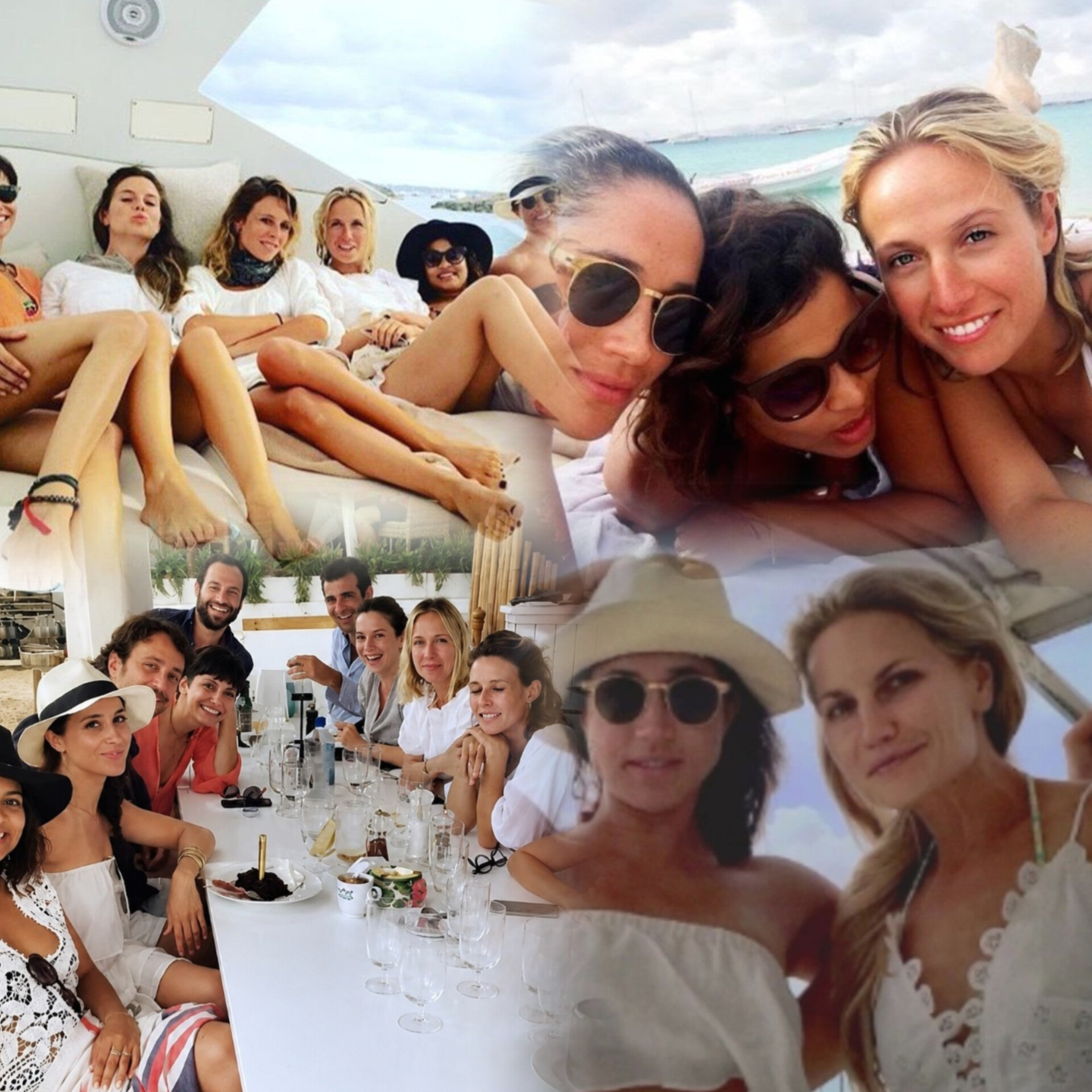
Meghan Markle’s most loyal defenders are doing what they do best: denying reality. A fresh wave of old vacation photos has circulated showing the Duchess of Sussex living it up on Mediterranean beaches and luxury yachts with her inner circle years before she met Prince Harry. Fans immediately insisted “that’s not Meghan.” The problem? Meghan and her own friends posted many of these pictures themselves.
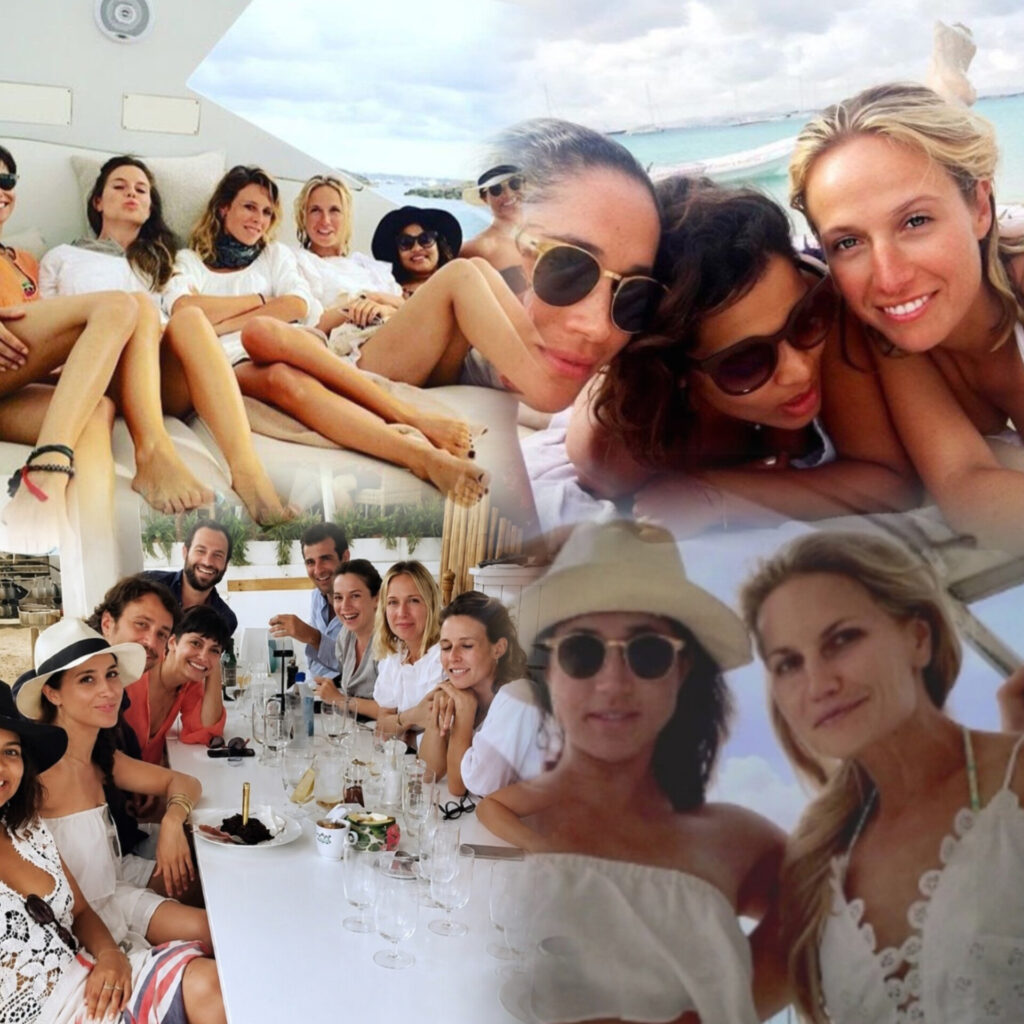
The images are not grainy paparazzi shots from some shadowy past. They are sunny, smiling group snaps from 2016 trips to places like Formentera, Ibiza, and other sun-soaked spots. One widely shared photo shows Meghan lounging with friends on a yacht deck, another captures her on the beach in sunglasses nestled between two companions, and others show her in bikinis during what she once called her “month of wanderlust.” These were not secrets. They appeared on Instagram accounts belonging to Meghan and people in her orbit, including designer Misha Nonoo, who has long been described as the friend who helped introduce her to Harry.
Yet a portion of her online army treats every old photo as a conspiracy. They claim mistaken identity, Photoshop, or “that woman doesn’t even look like her.” This denial persists even when the women in the pictures have tagged themselves or when the timeline matches Meghan’s own documented travels that summer — the same period she began dating Harry after meeting him on back-to-back dates in London.
This is not a new pattern. For years, similar images have been waved away as “yacht girl” smears. Some viral pictures really were misidentifications — a 2010 yacht photo with Prince Andrew showed model Alexandra Escat, not Meghan. Fact-checkers have repeatedly noted that particular claim is false. But that does not erase the real photos Meghan chose to share of herself enjoying the high-end social circuit of yachts, private islands, and wealthy friends before she entered the royal family.
The refusal to accept those pictures reveals something larger. Meghan has spent years constructing a narrative of herself as an outsider who was victimized by the institution she joined. The Oprah interview, the Netflix series, and Harry’s memoir Spare painted a picture of a woman who suffered bullying, racism, and isolation. That story required a carefully curated past: the working actress who stumbled into a fairytale, not the well-connected woman already moving in elite circles with fashion designers, Soho House insiders, and Mediterranean party guests. Admitting the photos exist complicates the script.
Prince Harry bears heavy responsibility here. He did not merely marry Meghan. He amplified every grievance, attacked his own family in print and on camera, and helped turn private royal pain into a commercial product. The couple signed massive deals with Netflix and Spotify, then watched those partnerships shrink or collapse amid public fatigue. They demanded privacy while monetizing the very institution they criticized. Harry’s loyalty has looked less like devotion and more like enabling. He chose to burn bridges with his father, brother, and the late Queen rather than confront the inconsistencies in the story they sold the world.
The damage is measurable. Meghan’s favorability in Britain has sat at rock-bottom levels, with recent polling showing only a small minority holding a positive view. Many Britons still cannot forgive the mockery of royal protocol in their documentary or the decision to air family grievances for profit. The couple’s recent return to the UK has been met with skepticism rather than celebration. Critics argue they treat the monarchy as a brand to be leveraged or discarded, not an institution that requires duty and restraint.
Old friends have begun speaking more openly in some corners of the internet, adding to the discomfort. The same social circle that once posed for those carefree yacht and beach pictures now sits uneasily beside the polished victim narrative. Meghan’s team has long been skilled at controlling the image. These photos, shared years ago by the people in them, are harder to airbrush away.
The photos themselves are not a crime. Plenty of people in their thirties take expensive holidays and post the evidence. What grates is the subsequent rewriting of history and the demand that everyone else play along. Meghan Markle wanted the titles, the platform, and the moral high ground. Prince Harry gave them to her and helped torch his family’s reputation in the process. The pictures keep resurfacing because they puncture the myth. Fans can keep shouting that it isn’t her. The woman in the photos already told the world it was.