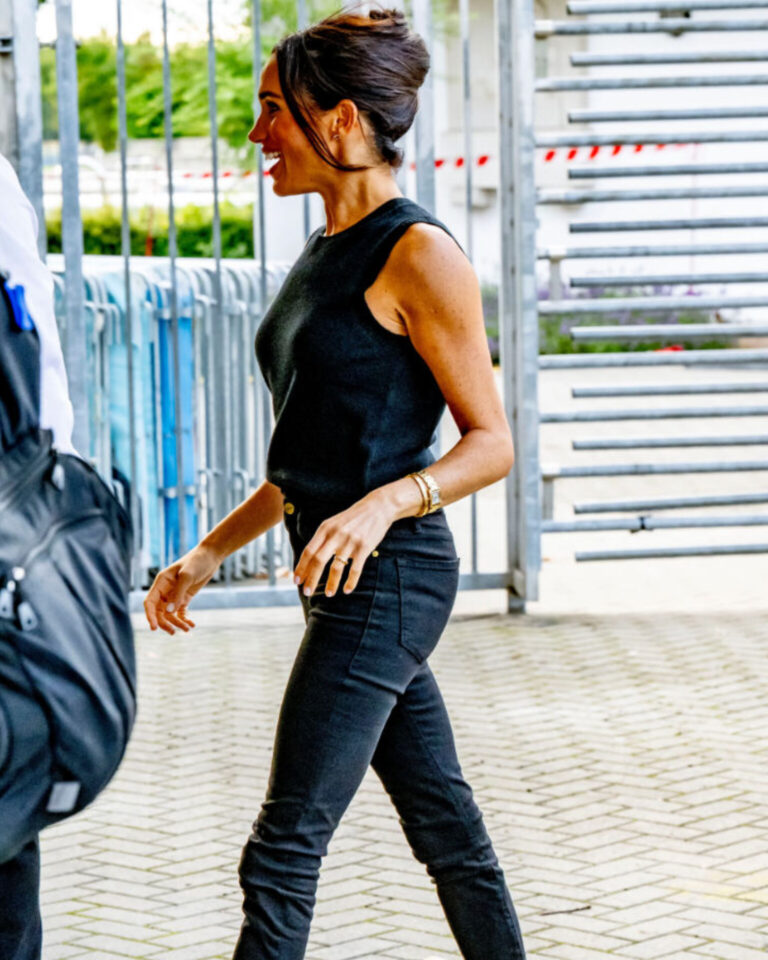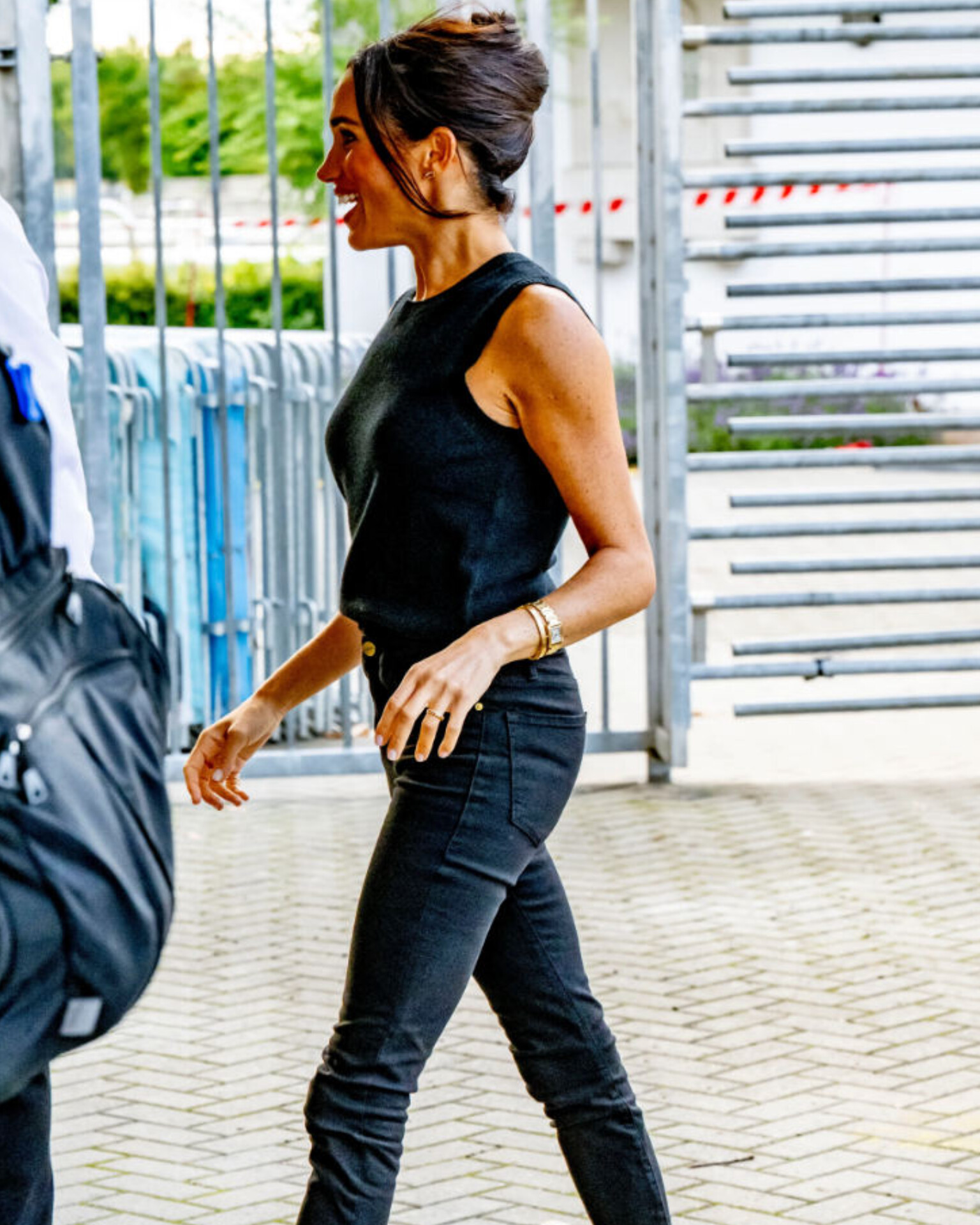
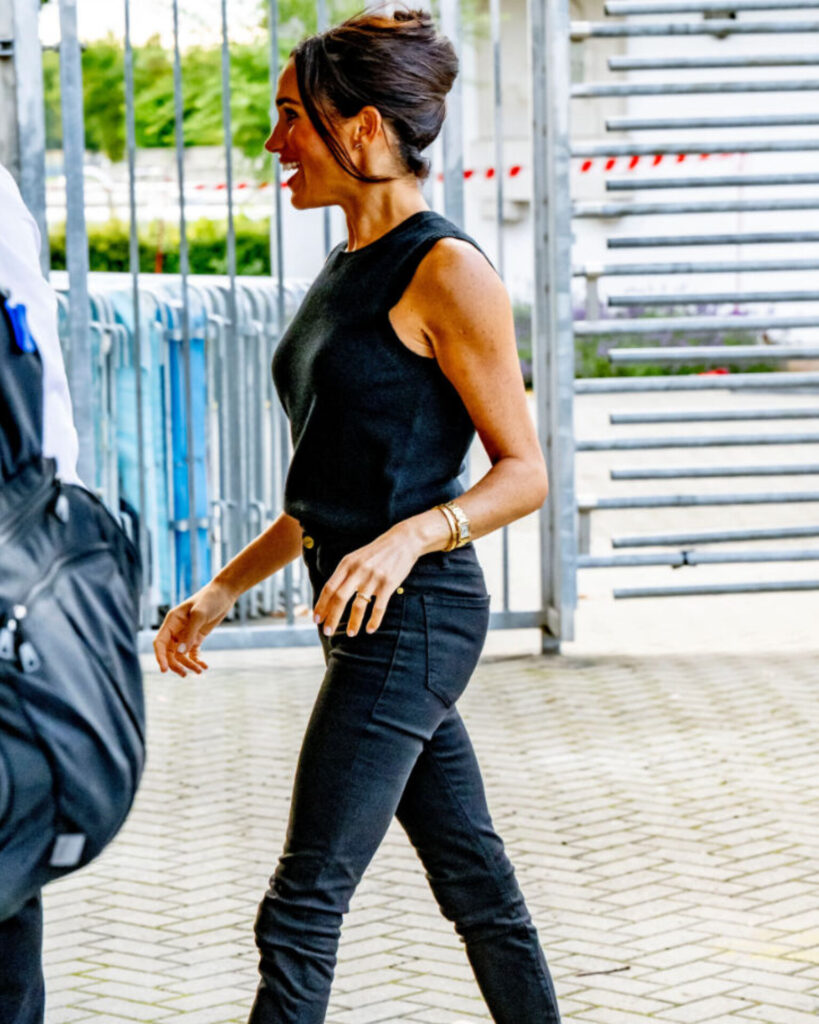
The latest candid of Meghan Markle — black sleeveless knit, painted-on skinny jeans, gray sneakers, and that familiar forced grin — is being passed around as proof she is some kind of supermodel whose closet designers are desperate to dress. Look again. The silhouette is harsh, the proportions unforgiving, and the whole thing reads like a woman still playing dress-up with other people’s clothes. The “orange popsicle” jab isn’t even about this particular black outfit. It is about the pattern: loud colors, awkward fits, and a habit of turning every borrowed or gifted look into a sales pitch.
That is the real story behind the photo. Fashion houses do not send Meghan Markle free clothes because she is a muse. They send them — when they still bother — because she has spent years treating other people’s product as her personal merch pipeline. Then she and Prince Harry cash in while wrapping it in lectures about “credit where credit is due.”
The Free-Clothes Habit That Started Before the Palace
When Meghan was still dating Harry, designer packages poured into Kensington Palace. Palace aides sent them back. Royal protocol does not allow working members of the family to keep unsolicited gifts that look like endorsements. Meghan was reportedly furious. An actress can live on freebies. A royal cannot. She never got over the distinction.
Years later the same pattern reappeared. A $1,695 Galvan gown from a 2022 Variety shoot turned up on her Netflix special. Her team said keeping pieces from shoots is “standard practice” to stop memorabilia hunters. Fashion people who actually work those sets called the excuse thin. Multiple reports described a woman who simply wanted the dress and kept it. The same questions followed a Chanel look from another magazine sitting.
Victoria Beckham once supplied thousands of pounds of clothes. The financial return, according to a biography of the Beckhams, was “nil.” Other houses have quietly reached the same conclusion: association with Meghan carries more controversy than sales. A PR veteran recently spelled it out — luxury labels want brand elevation. Right now Meghan delivers risk.
Merching the Look, Including the Charity Ones
The modern version of the old freebie habit is OneOff, the AI shopping platform in which Meghan is both participant and investor. She lists the outfits she wears — then takes a commission. That includes looks from Invictus Games events created by her husband. Critics noted that none of the money goes back to the veterans’ charity or to a competitor injured at one of those Games. It also included the outfit she wore while meeting Bondi Beach attack survivors. The listing went up, the backlash hit, and the page quietly disappeared. Royal commentators called it the starkest example yet of the couple commercializing their remaining royal brand.
This is why designers send clothes “so she can merch.” She does not just wear them. She turns the appearance into an affiliate opportunity, then acts surprised when people notice the timing or the taste.
Harry’s Role in the Same Script
Prince Harry did not invent the wardrobe-as-business model, but he has spent six years defending it, amplifying it, and living off the same fame machine. Their Netflix deals shrank. The Spotify deal ended. The lifestyle brand As Ever has struggled. The return to Britain this month was not a victory lap; it was a retreat after the California project stalled, accompanied by reports of family tension, security fights, and a brother and sister-in-law who did not ask for another round of the Sussex soap opera.
Harry’s public posture is still grievance and moral superiority. The private pattern looks like a couple that left the institution, kept the titles for leverage, and now treats every public moment — garden clips, memorial visits, charity sidelines — as content that can be sold. The “supermodel” framing is part of the same performance. It is not how the industry actually talks about her.
The Photo Does Not Lie
The attached image is not high fashion. It is a woman in tight black jeans and a sleeveless top walking past barriers in sneakers. Compare it with the structured coats, capes, and evening gowns of her brief working-royal period and the drop is obvious. Compare it with actual supermodels and the joke writes itself. The orange looks — the rib-knit Gabriela Hearst dress on her show, earlier bright gowns — have drawn the same comments: color that fights her complexion, cuts that do not flatter, styling that screams effort rather than ease.
Designers are not fighting over her. Some still play along because a mention is a mention. Others have calculated that the Meghan Effect no longer pays and the Meghan Drama always does. That is not jealousy. It is arithmetic.
Meghan Markle and Prince Harry built a brand on being the victims of a cruel institution. The clothes tell a different story: a former actress who never stopped expecting the world to dress her for free, a prince who never stopped enabling it, and a couple now back in Britain still trying to sell the same act. The photo is not evidence of a fashion icon. It is evidence that the act is wearing thin.