Shocking image circulating online shows Princess Lilibet bearing an unmistakable resemblance to a family member the Duchess has long tried to erase from her narrative – exposing yet another layer of the Sussexes’ carefully curated grift.
In yet another twist in the never-ending saga of the Duke and Duchess of Sussex, a viral photograph has sent royal watchers into a frenzy – and for once, even critics of the couple are struggling to look away. The image, which has exploded across social media, appears to show young Princess Lilibet with striking features that bear an uncanny resemblance to her maternal grandfather, Thomas Markle.
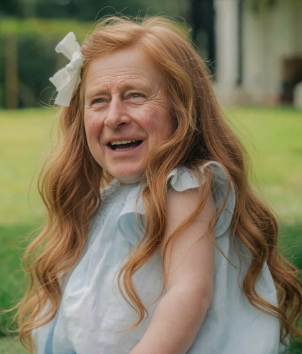
The original post simply stated: “I can see why Meghan Markle doesn’t show her daughter’s face at all.” But the implications have spread like wildfire. Why has Meghan spent years obscuring her children’s faces in every public photo, only to have this resemblance surface now? Insiders and online sleuths are calling it the ultimate proof that the Sussexes’ obsession with privacy is less about protection and more about controlling a narrative that keeps slipping out of their grasp.
The Photo That Has Everyone Talking
The image in question captures a young girl in profile or close-up, highlighting a prominent nose and facial structure that many are instantly comparing to Thomas Markle’s well-known features. Replies have flooded in with variations of the same observation: “She’s got her Grandfather’s beak for sure,” “Try Thomas Markle. Even her side profile looks like him,” and “It’s because she has the trademarked Original Markle nose!!”
While some defenders have pushed back, claiming it’s “just a child” or that the resemblance is to Doria Ragland instead, the timing could not be more awkward for the Sussex camp. Just as Meghan and Harry have been sharing rare family glimpses – including recent posts around Lilibet’s fifth birthday – always with faces strategically blurred, angled away, or obscured, this unfiltered visual has cut through the spin.
“Privacy” or Damage Control? The Sussex Pattern Exposed
Meghan and Harry have long insisted that shielding Archie and Lilibet’s faces is about protecting their privacy in an increasingly digital world. Their team has even framed it as a principled stand against the very scrutiny they once accused the royal family and British press of inflicting.
But critics have pointed out the hypocrisy for years. The couple left royal life citing privacy concerns, then signed multimillion-dollar deals with Netflix and Spotify that relied heavily on their personal story – including selective family imagery. They have accused others of exploiting their children while carefully drip-feeding their own content when it suits brand Archewell or generates clicks.
This latest photo suggests something more specific: that one child in particular carries physical traits from the Markle side of the family that Meghan has worked tirelessly to distance herself from. Thomas Markle, who has been publicly estranged and painted as the villain in the Sussex origin story, suddenly becomes impossible to fully erase when his granddaughter’s face enters the frame.
Royal observers note this fits a broader pattern. Meghan has been accused of rewriting or selectively editing her past – from family relationships to previous romances – to craft the perfect “victim-to-victimhood-to-victory” narrative that has fueled book deals, speeches, and media appearances. Hiding Lilibet’s face, some argue, isn’t just about paparazzi or trolls; it’s about maintaining the illusion that the Sussex children exist in a sanitized, Montecito bubble untouched by the “toxic” elements of Meghan’s pre-Harry life.
Why Now? The Timing Could Not Be Worse for the Sussex Brand
The photo has surfaced amid renewed questions about the couple’s content strategy. Recent family posts have drawn fresh criticism for what some see as calculated “privacy theater” – showing just enough to keep interest alive while never delivering a full, unedited look at the children. Legal theories have also circulated about California’s child content creator laws and potential loopholes that might incentivize obscuring faces to avoid certain financial obligations.
Into this environment drops an image that does the one thing the Sussexes appear desperate to avoid: it humanizes and connects Lilibet directly to a family member Meghan has positioned as the enemy. If the resemblance holds in clearer photos (and many believe it does), it becomes much harder to sell the story of a clean break from the past.
Harry, for his part, has been portrayed in some circles as caught between his wife’s narrative control and his own desire to protect his children from the spotlight he once resented. But as one viral reply put it, “There’s no mystery; Harry’s children’s hair and noses come from their grandparents, Doria and Tom.” Biology, it seems, doesn’t care about PR strategies.
The Grift That Keeps on Giving
For longtime Sussex watchers, this moment is less surprising and more confirmatory. The couple’s post-royal career has been built on a foundation of selective storytelling, victimhood marketing, and monetizing their royal adjacency while decrying the institution. Every time a new crack appears in the facade – whether it’s Netflix ratings flops, Invictus controversies, or now a resurfaced family resemblance – the response is the same: double down on privacy, accuse critics of bullying, and pivot to the next paid appearance or podcast.
Meghan’s decision to rarely (if ever) show Lilibet’s full face in high-resolution, front-facing shots now looks less like protective parenting and more like strategic omission. If the child truly resembles the grandfather the Duchess has spent years demonizing in the press, the incentive to keep that visual under wraps becomes obvious.
What Happens Next?
The Sussex team has not commented on the viral image, and they are unlikely to. Their usual playbook involves ignoring inconvenient visuals while continuing to release carefully managed content. But the internet has a long memory, and side-by-side comparisons are already circulating.
For a couple that has made “authenticity” and “truth-telling” central to their brand, this photo serves as an uncomfortable reminder that biology and family history have a way of surfacing – no matter how many filters, angles, or “privacy” justifications are applied.
The question now isn’t just why Meghan hides Lilibet’s face. It’s whether the Sussexes can continue selling a narrative that keeps getting contradicted by the very images they try to control.