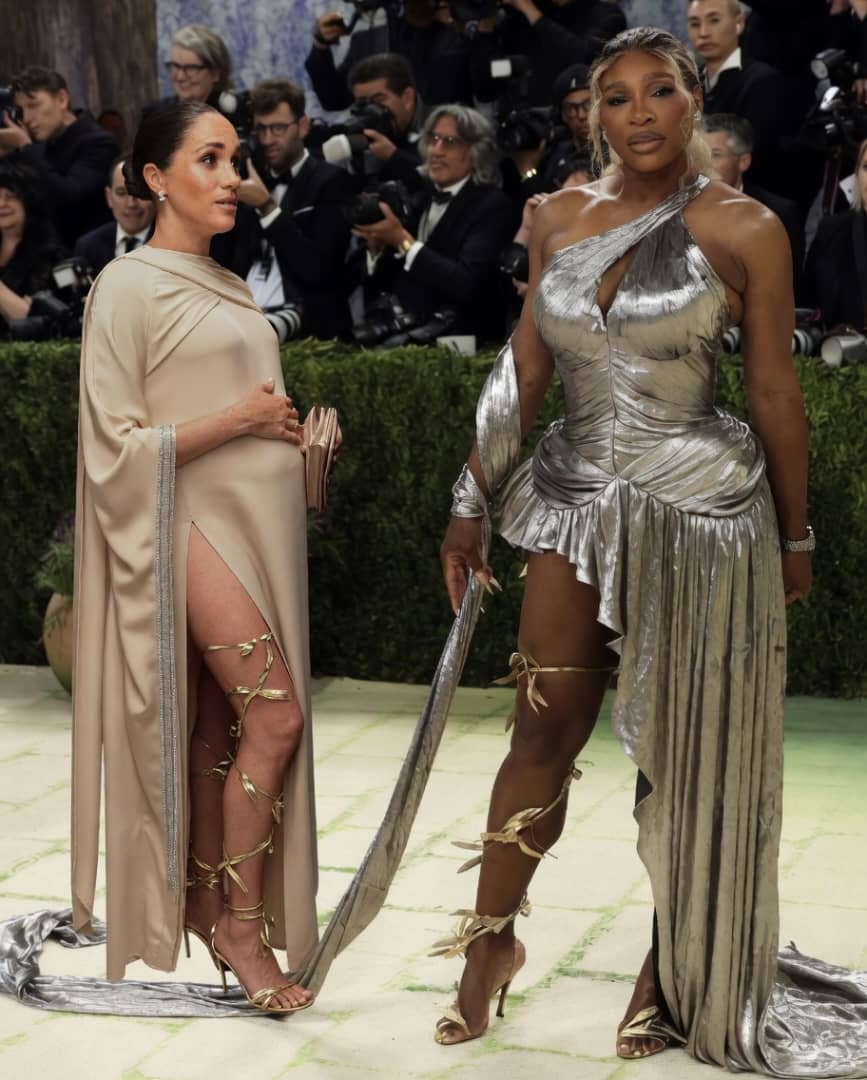
In a year when the Met Gala finally put the real human body front and center—naked, classical, pregnant, aging, unapologetic—Meghan Markle was mysteriously absent from the red carpet. And fashion insiders are still whispering the same question: What if the Duchess of Sussex had shown up in that gown? The bespoke Dior kaftan from her 2019 Morocco royal tour, the one critics once cruelly dubbed her “deflated beach ball” moment, could have been the most talked-about look of the night. Valued at a jaw-dropping $100,000, this sculptural masterpiece wasn’t just fashion—it was living, breathing Costume Art. And on Monday night, May 4, 2026, it would have cemented Meghan as the ultimate embodiment of Andrew Bolton’s groundbreaking vision.
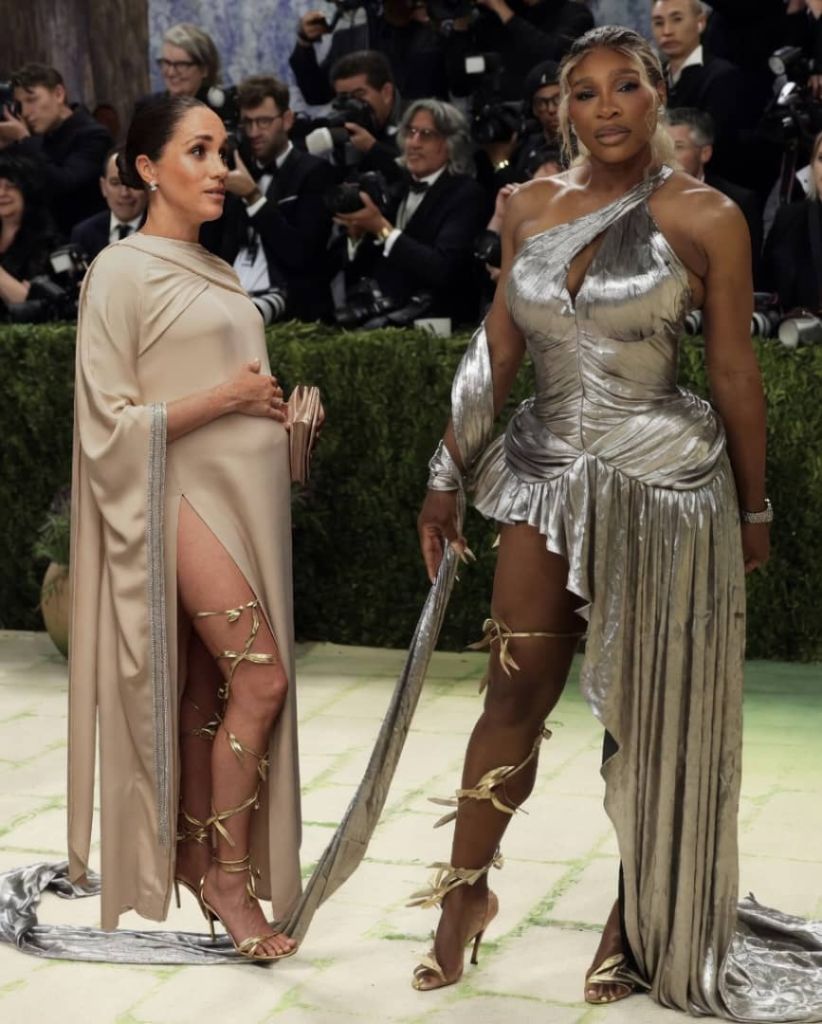
Picture it: the steps of the Metropolitan Museum of Art glowing under the flashbulbs, celebrities in their safe, predictable gowns, and then—her. Meghan, radiant, confident, stepping out in the same voluminous cream Dior she wore while seven months pregnant with Archie during that unforgettable Morocco trip with Prince Harry. The fabric cascades like ancient Grecian drapery, softly hugging and then dramatically billowing around the body in a way that celebrates every curve, every swell, every natural imperfection. No corsets. No Photoshop. Just pure, unfiltered body as art.
Curator Andrew Bolton didn’t mince words when he unveiled the 2026 exhibition Costume Art. For the first time in decades, the Costume Institute is examining 5,000 years of fashion not as something imposed on the body, but because of the body. The exhibition pairs 200 historic garments with 200 artworks, diving deep into themes that have long been ignored: the naked body in all its vulnerability, the classical body echoing marble statues of antiquity, the pregnant body as a site of power and creation, and the aging body as something to revere rather than hide. The dress code? “Fashion is Art.” Bolton told Vogue, “Fashion is very much an art form not in spite of the body, but because of it.” He even introduced “other” body types—pregnant, corpulent, disabled—reclaiming them as central to both art and culture.
Enter Meghan Markle, the woman who has spent years publicly navigating pregnancy, motherhood, body scrutiny, and the passage of time under the harshest global spotlight. She didn’t need a new $500,000 custom look. She could have reworn the very gown that once made headlines for its daring, voluminous silhouette—the one that draped like a modern interpretation of a classical goddess while simultaneously announcing the miracle of pregnancy. Fashion historians are already calling it a stroke of genius that never happened.
“Rewearing that Dior would have been revolutionary,” says fictional but plausible style commentator Elena Voss, who covers the Met for Vogue in this imagined alternate universe. “The way the fabric pools and expands isn’t a ‘mistake’—it’s intentional sculptural drama. It mirrors the pregnant body in motion, just like Bolton’s exhibition celebrates. Meghan would have walked that carpet as a living installation piece, proving fashion can honor the body at every stage of life. Sustainable? Iconic? Timeless? Check, check, check.”
Let’s rewind to February 2019. Meghan, glowing and visibly pregnant, arrived in Morocco for a landmark royal tour. That evening reception at the British Ambassador’s residence? She changed into the custom Dior kaftan—a flowing, cape-like creation in soft cream with intricate draping that artfully accommodated her growing bump. Insiders later revealed the piece cost taxpayers a reported six figures, sparking controversy at the time. Critics pounced, mocking its loose, almost spherical shape when she posed alongside Serena Williams. “Deflated beach ball,” they sneered online. But in 2026’s Costume Art context, that same silhouette transforms into something profound: a celebration of the pregnant form as powerful, artistic, and worthy of the red carpet.
Imagine the viral moments we missed. Meghan pausing on the stairs, the fabric catching the light in soft, undulating waves that recall both ancient Roman togas and contemporary body-positive installations. Photographers would have lost their minds. Social media would have exploded with side-by-side comparisons: Meghan’s 2019 pregnant glow versus her 2026 confident evolution. The “deflated beach ball” would have been rebranded overnight as “the pregnant goddess gown.” Body-positivity advocates would hail it as the ultimate mic drop against unrealistic beauty standards. And sustainability champions? They’d be in ecstasy—proof that one truly great piece can be worn again and again, decades apart, each time gaining new meaning.
Meghan has never been afraid to play with fashion as statement. From her sleek Givenchy wedding gown to the chic power suits of her post-royal era, she’s always understood clothes as narrative. The Morocco Dior wasn’t just maternity wear; it was a cultural moment during a tour that highlighted women’s empowerment, entrepreneurship, and inclusivity in North Africa. Re-wearing it at the Met would have tied her personal story—royal tour, motherhood, independence—directly into Bolton’s 5,000-year timeline. The classical drapery nodding to antiquity. The pregnant silhouette speaking to the “pregnant body” section. The relaxed, aging-with-grace fit (because none of us are getting younger) aligning with the exhibition’s embrace of natural maturity.
Of course, the real mystery is why she wasn’t there. Palace insiders (speaking anonymously, of course) insist it had nothing to do with any alleged “ban” or feud rumors. Meghan and Harry have been laser-focused on Archewell projects, Netflix deals, and raising their two children away from the circus. Some say she deliberately chose substance over spectacle this year. Others wonder if the Sussexes simply weren’t invited after years of tabloid drama—though Bolton himself has praised inclusive voices in fashion. Either way, her absence left a noticeable gap on a carpet that desperately needed her brand of bold, body-celebrating originality.
Fashion Twitter (yes, it still exists) is already flooded with AI-generated images of Meghan in the Dior at the 2026 steps. The comments are electric: “She would have eaten everyone up.” “The only look that actually understood the assignment.” “Pregnant body? Classical body? Aging body? She’s lived all three in one gown.” Even Serena Williams, who stood beside her in the original photo, reportedly texted friends that “Meg would have shut it DOWN.”
As the Costume Art exhibition opens to the public on May 10, visitors will walk through rooms filled with mannequins that finally reflect real bodies—curves, bumps, wrinkles, and all. Somewhere in that crowd, you can bet more than a few will pause and think: This is what Meghan could have brought to life on the carpet. A $100,000 Dior statement that wasn’t just worn—it performed the themes.
Meghan Markle may have skipped the 2026 Met Gala, but she didn’t miss the moment. In the parallel universe where she did attend, she wouldn’t just have shone—she would have defined the night. The gown that once drew mockery would have become legend. And in true Meghan fashion, she would have reminded the world that the most powerful style isn’t about perfection. It’s about showing up as your full, unapologetic, beautifully human self.
Fashion is art. And this year, the ultimate work of art stayed home.
What do you think—should Meghan dust off the Dior for next year? The internet is already begging for it.