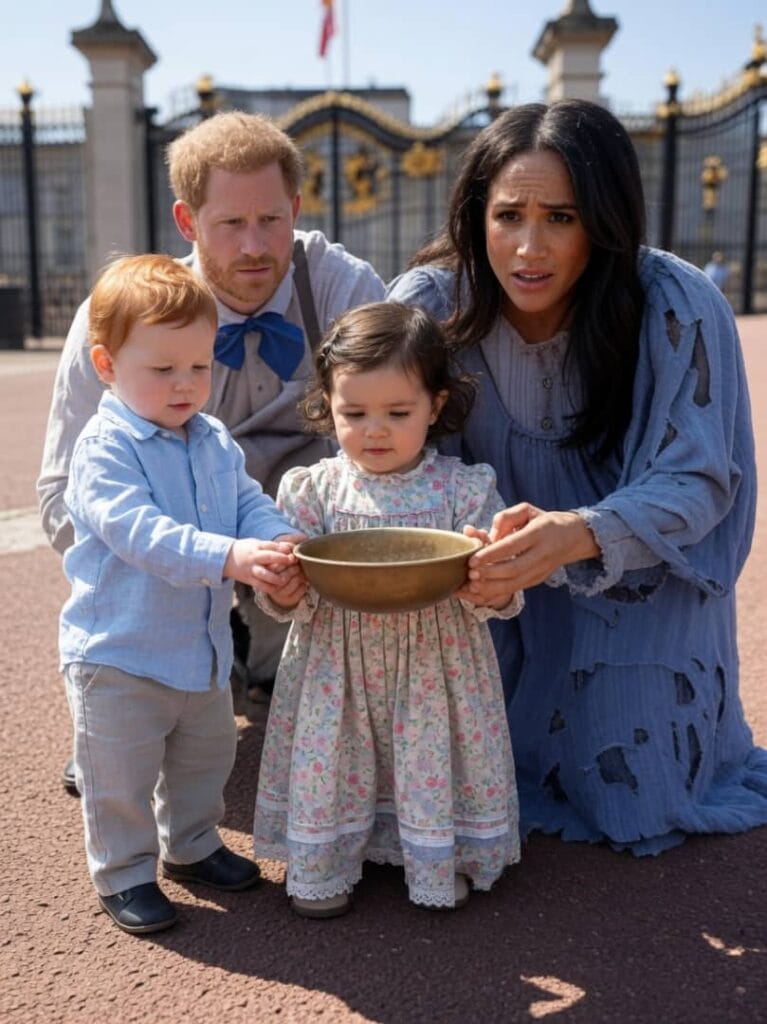
Viral images show the Sussexes in rags clutching a begging bowl outside palace gates as the real motive behind the July visit emerges
In a move dressed up as emotional homecoming and family healing, Prince Harry and Meghan Markle are reportedly preparing to fly their two children to Britain next month for the first time in over four years. The official reason? A one-year countdown event for the 2027 Invictus Games in Birmingham. The real reason, according to palace insiders and royal observers who have watched this pattern for years? A calculated, cynical operation to exploit King Charles’s grandfatherly softness, generate maximum sympathy, and fill the Sussexes’ ever-empty begging bowls.
The couple’s Montecito-based operation has faced mounting questions over relevance, revenue, and reputation. Multiple high-profile deals have underperformed. Public fatigue with their endless narrative of victimhood has grown. Now, with Harry’s Invictus-related appearance providing the perfect cover story, the family is being positioned as the emotional centrepiece of the trip. But make no mistake: this is not about heritage, healing, or wounded veterans. This is about leverage.
The Children Card – Deployed on Schedule
Archie, 7, and Lilibet, 5, have spent their entire lives in California. They have no living memory of Britain. Yet their sudden inclusion in a short promotional visit is being sold as a touching reconnection with roots. Insiders see something far more transactional.
For years the Sussexes have hidden the children’s faces behind privacy claims while simultaneously using them as occasional props in carefully managed content. Now the same children are apparently being readied for their first UK photo opportunities since 2022. The timing is not coincidental. King Charles has shown repeated willingness to keep private channels open despite public attacks. Bringing the grandchildren into the equation raises the emotional stakes dramatically.
One source close to the royal household put it bluntly: “It’s emotional blackmail with a smile. They know exactly which buttons to press with the King. The children are the latest prop in a very old game.”
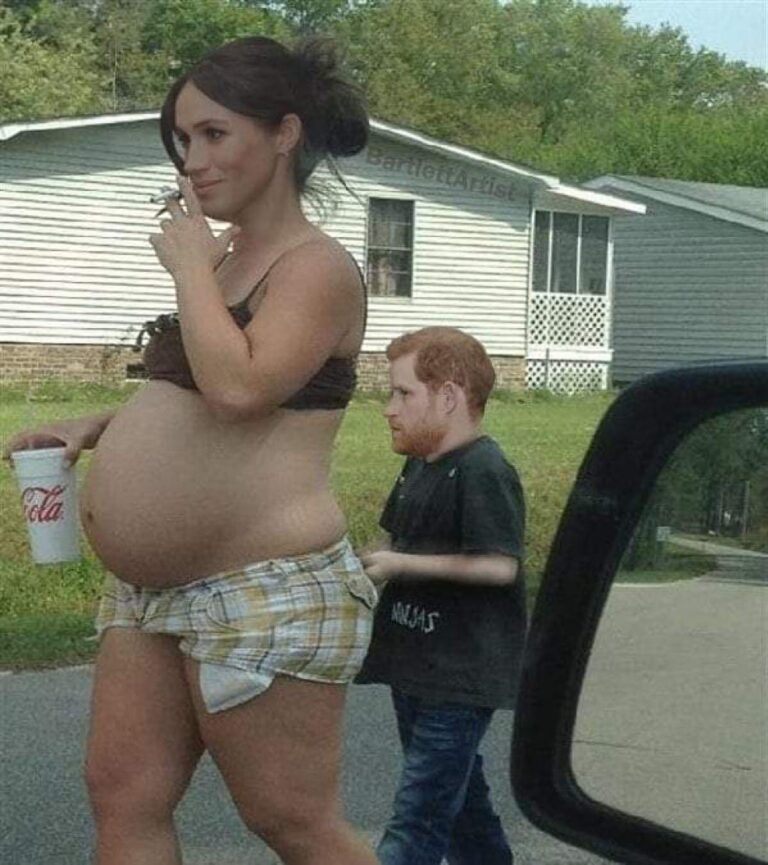
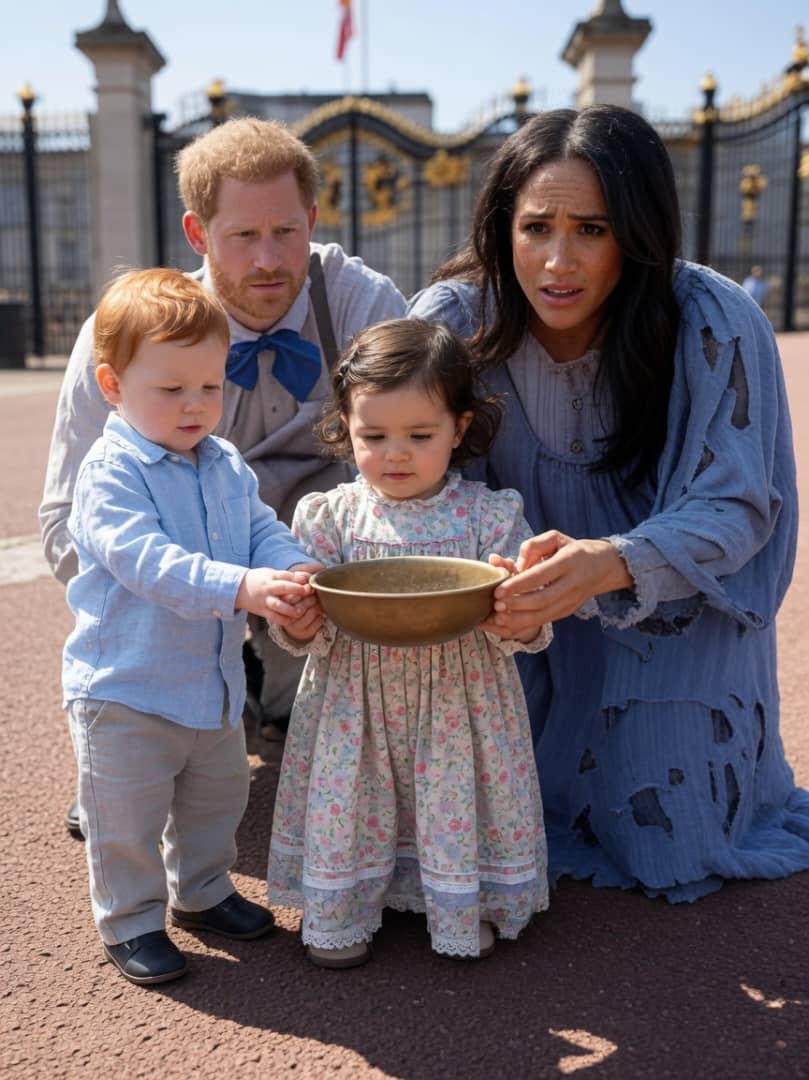
Viral images now circulating online capture the cynicism with brutal clarity. They show the couple depicted in tattered clothing, standing outside palace gates with a large begging bowl. The children appear as eerie, doll-like figures beside them – a savage visual metaphor that has resonated powerfully with those who believe the visit has nothing to do with family and everything to do with filling pockets and narrative control.
A Familiar Playbook
This would not be the first time the Sussexes have used public or family events as vehicles for personal positioning. From photo opportunities at disaster sites to veterans’ gatherings that somehow always centred the couple, the pattern of leveraging others’ suffering or service for their own spotlight has been well documented.
Invictus itself – an event created to honour wounded service personnel – now risks becoming another backdrop for Sussex spectacle. Critics argue the veterans deserve the focus, not another chapter of the Montecito soap opera. The decision to bring the children adds another layer of emotional theatre while conveniently allowing demands for enhanced security arrangements to be framed as protective parenting rather than financial calculation.
Previous UK visits by Harry alone have been tightly controlled, low-profile affairs that carefully avoided certain family members. Reports suggest Meghan has faced practical and protocol barriers on multiple occasions, leading some observers to question whether she will even set foot on British soil this time or whether the children will be used as the sympathetic front line while she manages optics from a distance.
The Palace Reads the Room
Senior royals are understood to be watching developments with weary familiarity. Prince William and Princess Catherine have maintained a deliberate distance from the drama, protecting their own young family and focusing on duty. Other extended family members have reportedly experienced similar froideur when attempting to insert themselves into official moments.
King Charles, despite ongoing health challenges and the pain of family estrangement, has historically leaned toward private reconciliation. That very instinct is now being targeted. Sources indicate the broader household and public mood have hardened significantly since the early days of the rift. Another round of carefully staged sympathy plays is unlikely to produce the financial or status dividends the Sussexes appear to be seeking.
What Happens Next
As July approaches, expect a carefully orchestrated media rollout: hints of “private” family moments, selective leaks about the children’s excitement at seeing “Grandpa King,” and the usual complaints about security costs framed as royal neglect. The goal is clear – generate enough public and private pressure that concessions follow, whether continued security funding, renewed access, or simply a narrative reset that buys more time and relevance.
Yet the same public that once gave the couple the benefit of the doubt has grown far more sceptical. Memes like the begging-bowl image outside the palace gates spread rapidly precisely because they articulate what many already suspect: this is not a family returning home in good faith. This is a grift dressed in children’s clothing.
The Duke and Duchess of Sussex may arrive with suitcases and security demands. They are unlikely to leave with the warm, unquestioning embrace or financial oxygen they appear to crave. The palace has learned hard lessons. The public has seen the pattern too many times.
This July visit will be watched not for heartwarming reunions, but for the next act in a long-running performance that grows more transparent with every passing year. The begging bowls are out. The audience is no longer buying tickets.