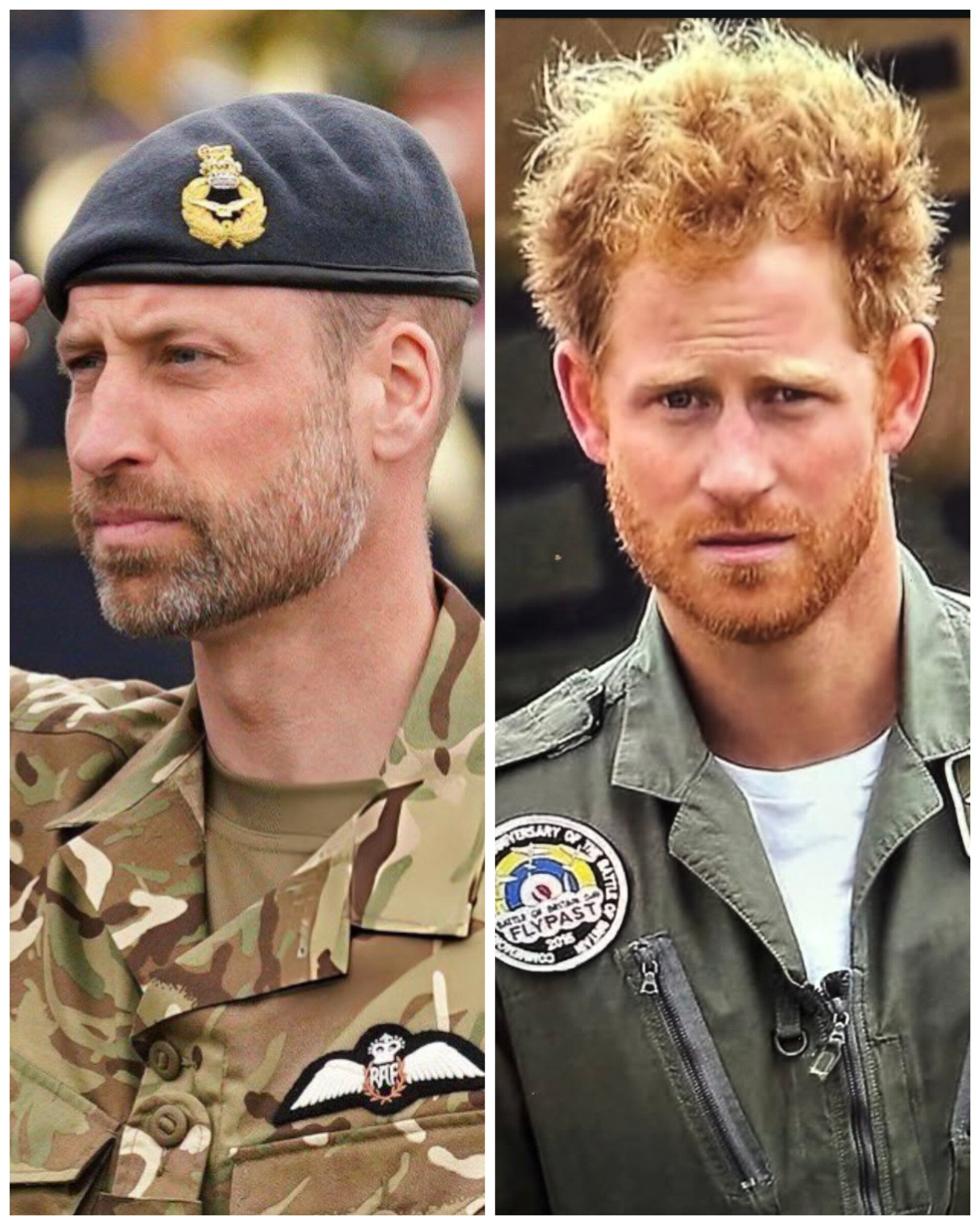
In the annals of royal history, few tales have captured the public’s imagination quite like the military journeys of Princes William and Harry. One brother quietly embodied duty, bravery, and selfless service. The other? Well, let’s just say he started strong but ended up on the receiving end of a very public reckoning. As insiders whisper and veterans weigh in, the assertion rings truer than ever: In the military, Prince William served… but Prince Harry got served.
Picture this: two princes, both Sandhurst graduates, both stepping into uniform amid global scrutiny. But while William’s path was marked by humble professionalism and life-saving heroics, Harry’s trajectory veered into controversy, special treatment claims, and ultimately, a humiliating stripping of honors that left him stripped bare in the eyes of the establishment. This isn’t just sibling rivalry—it’s a tale of legacy, loss, and the raw reality of what “service” truly means. Buckle up as we dive deep into the explosive details no one in Buckingham Palace wants aired out.
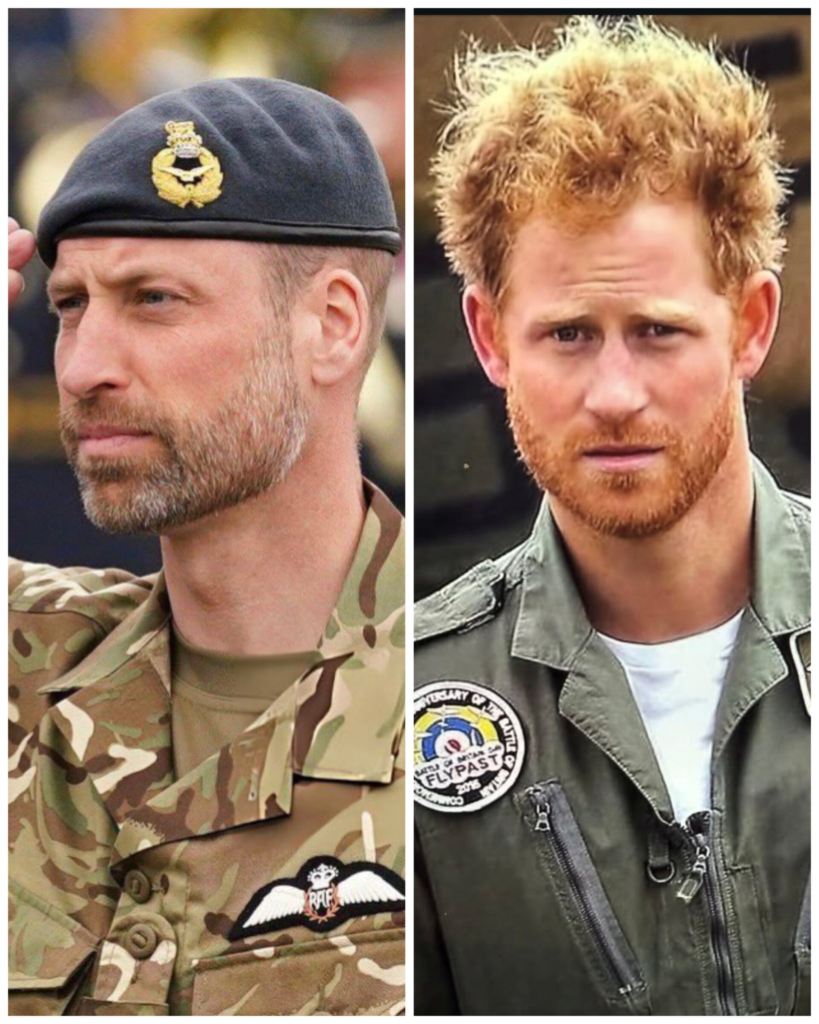
Prince William: The Quiet Hero Who Actually Served His Country
Prince William’s military career wasn’t about glory or headlines—it was about genuine commitment. Commissioned into the Blues and Royals in December 2006 after Sandhurst, he commanded a troop of Scimitar armored vehicles as a second lieutenant. But it was his 2009 transfer to the Royal Air Force that defined him. Trained as a helicopter pilot, he became a fully operational Search and Rescue (SAR) pilot with 22 Squadron at RAF Valley in Anglesey, Wales. Flying Sea King helicopters, William didn’t just clock hours—he conducted 156 search-and-rescue operations, saving an astonishing 149 lives from the treacherous waters and mountains of the UK.
Imagine it: howling gales off the Welsh coast, a distressed yacht in peril, or hikers lost in the Snowdonia mountains. William was there, rotor blades slicing through the storm, no fanfare, just pure focus. “He was one of the team,” a former RAF colleague reportedly told insiders. “No special treatment, no drama—just got on with saving lives.” His service spanned the Royal Navy too, with a brief stint on HMS Iron Duke, making him one of the few royals to serve across all three branches. By the time he wrapped active duty in 2013, William had logged years of real, unglamorous work that directly benefited civilians.
Even after transitioning to royal duties and later air ambulance flights, William never abandoned that ethos. He continues to champion veterans and military families through initiatives that feel authentic, not performative. No tell-all books. No Netflix deals capitalizing on his time in uniform. Just steady, honorable service that earned him quiet respect from the armed forces community. As one military analyst put it off the record: “William didn’t play the hero. He was the hero—in the most understated way possible.”
Prince Harry: Combat Tours, But Then the Brutal Reality Check
Now contrast that with Prince Harry. Joining the Army in 2005, he too graduated Sandhurst and served with the Blues and Royals. His deployments to Afghanistan were real: a 10-week stint as a Joint Terminal Attack Controller (JTAC) in Helmand Province in 2007-2008, followed by a 20-week Apache helicopter pilot tour in 2012-2013. He saw combat, fired on Taliban targets, and earned the Operational Service Medal for Afghanistan. For a time, it looked like Harry was carving out a warrior prince image.
But here’s where the narrative cracks. Insiders and critics have long pointed to the palace’s protective hand: a media blackout during his first tour (until a German newspaper leaked it, forcing an early extraction), and questions about whether his status afforded luxuries unavailable to ordinary soldiers. Harry himself later admitted in his memoir Spare to killing 25 Taliban fighters, a revelation that drew both praise and backlash for its candor—or recklessness, depending on who you ask.
His active service ended in 2015 after 10 years, but the real drama unfolded post-Megxit. In February 2021, the Palace confirmed Harry would relinquish his honorary military titles: Captain General of the Royal Marines, Honorary Air Commandant of RAF Honington, and Commodore-in-Chief of the Small Ships and Diving for the Royal Navy. He was banned from wearing his uniform at royal events, even as he clung to his earned ranks as a retired captain.
Ouch. That’s not just leaving the service—that’s getting served. Stripped of the very honors that tied him to the institution he once loved. Reports from 2024 even suggested Harry was left “in tears” when King Charles bestowed new military honors on William, underscoring the “brutal reality” of his new life in Montecito. Despite boasting in interviews about “never leaving the military community,” Harry has leaned heavily on Invictus Games and veteran advocacy—but always with a commercial, Hollywood sheen that some veterans find off-putting. “He served, sure,” one anonymous Army pal told outlets, “but the way it ended? It feels like he got served a dose of accountability.”
The Royal Rift, Insider Whispers, and the Monarchy’s Future
What makes this contrast so intriguing isn’t just the service logs—it’s the deeper family fracture it exposes. Palace sources (speaking anonymously, of course) paint William as the steady heir who understands the weight of the crown, using his military years to build quiet credibility. Harry? The spare who chafed under scrutiny, left for a new life, and paid the price in lost prestige. Veterans’ forums buzz with the divide: admiration for William’s low-key rescues versus eye-rolls at Harry’s high-profile pivot.
Public reaction has been telling. Polls and social media storms show shifting support toward the Prince of Wales, especially as King Charles’s health keeps the succession spotlight burning. One royal commentator noted: “William’s service was about the nation. Harry’s post-service journey has been about him—and the military establishment noticed.”
The intrigue deepens with ongoing legal battles over Harry’s UK security and whispers of reconciliation attempts. Will Harry ever reclaim any military footing? Or is this “got served” moment permanent, a cautionary tale for any royal who steps off the script? As the brothers navigate fatherhood, headlines, and the inevitable handover of the throne, their military legacies stand in stark relief: one of enduring service, the other of service cut short by self-inflicted drama.
The Verdict: Service vs. Served
In the end, the assertion holds: Prince William served—with grit, humility, and measurable impact. Prince Harry got served—a stark reminder that even princes aren’t above the consequences of their choices. It’s a story ripped from the pages of a modern royal saga, blending heroism, heartbreak, and hard truths. Whether you’re a die-hard monarchist or a skeptic of the firm, one thing’s clear: the military chapter of these two princes reveals more about the future of the House of Windsor than any coronation ever could.
What do you think—does this prove the ultimate royal divide? Drop your thoughts below. The palace may stay silent, but the truth? It’s flying higher than any helicopter.