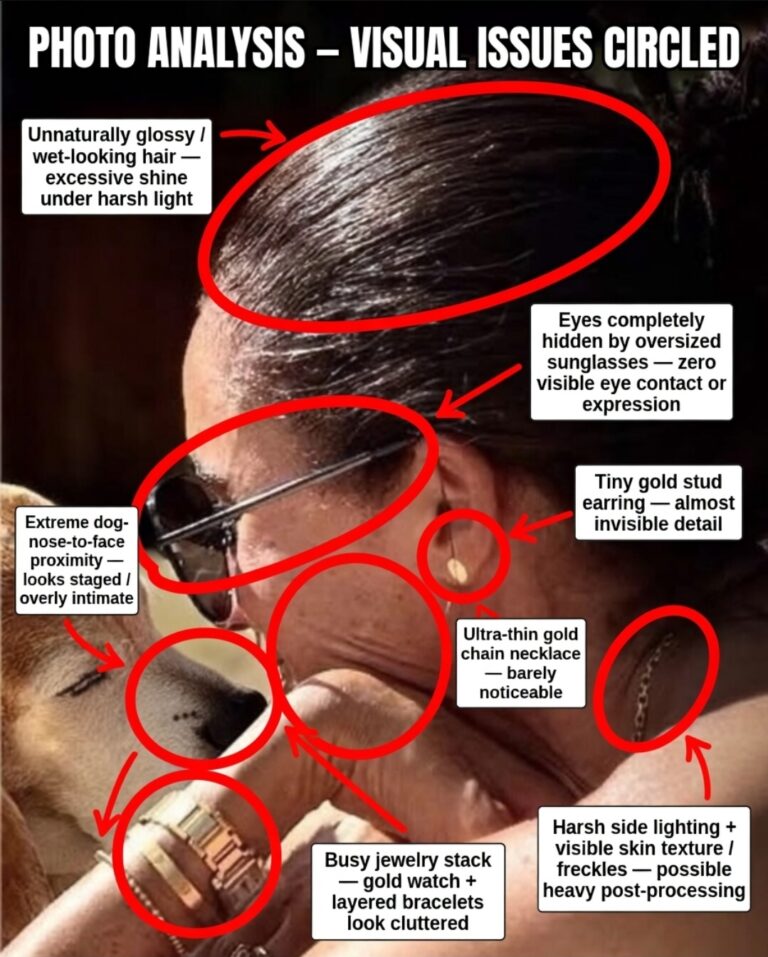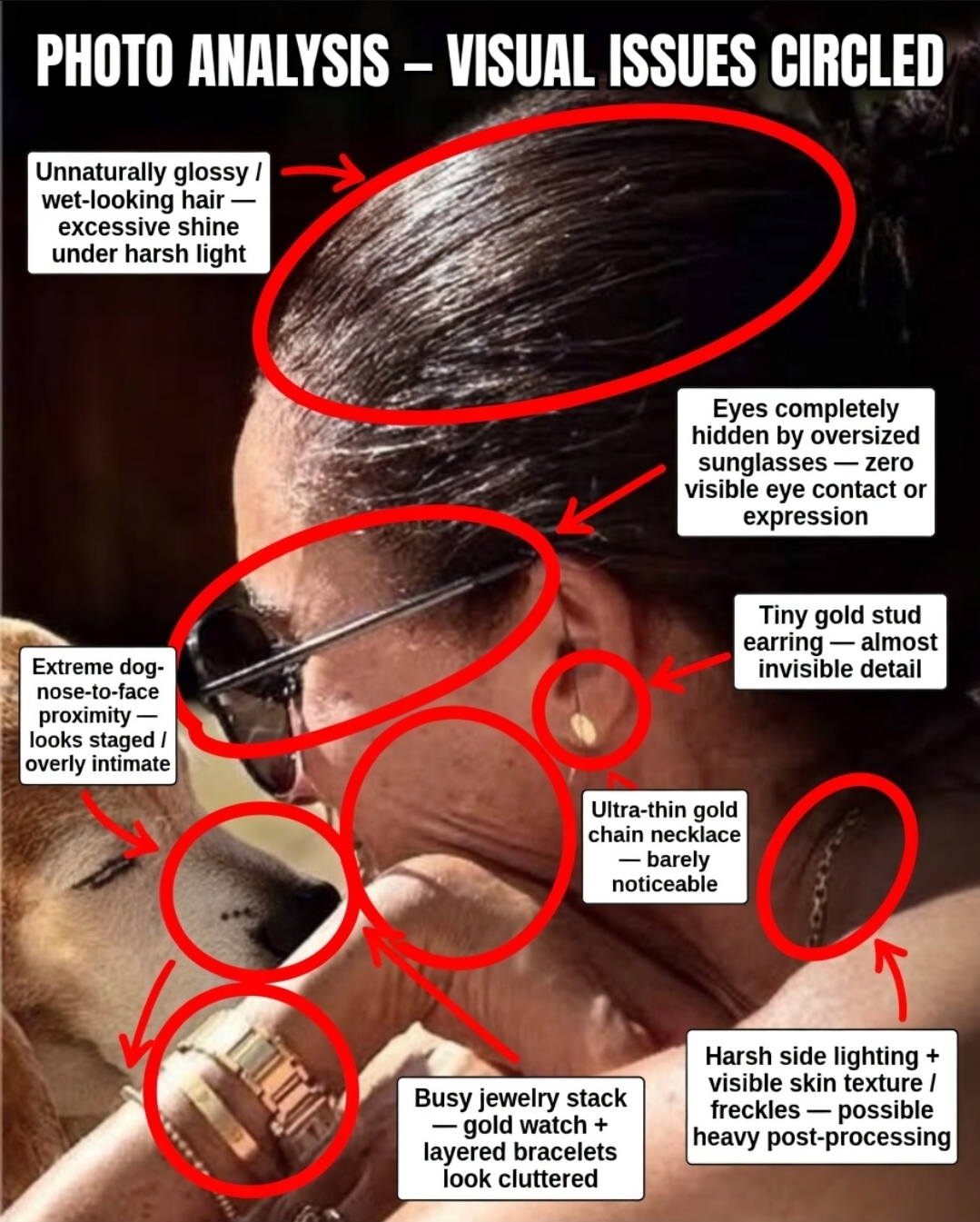
A recently circulated close-up photo of Meghan Markle leaning into an extreme dog-nose-to-face pose has triggered a wave of scrutiny after a detailed visual breakdown highlighted multiple red flags. The image—showing Markle in oversized sunglasses, slicked-back glossy hair, stacked gold jewelry, and an almost comically close canine encounter—has been dissected with circles and annotations pointing out unnatural shine, hidden eyes, cluttered accessories, harsh lighting, and an intimacy that feels forced rather than spontaneous.
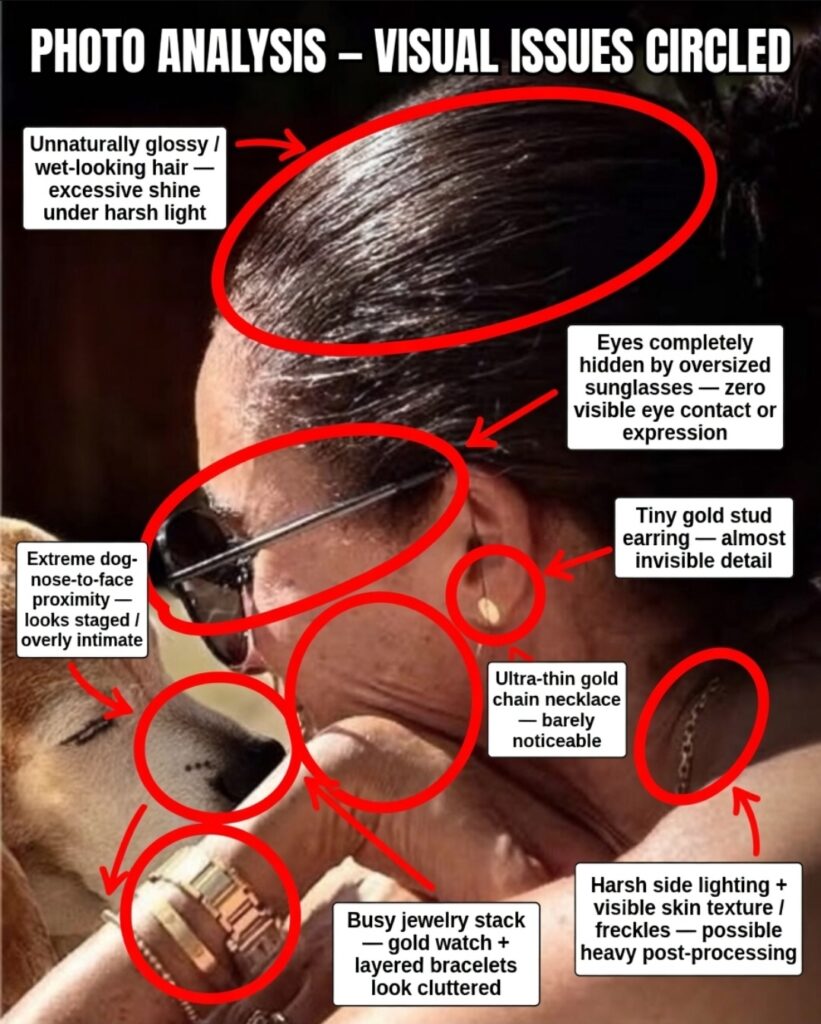
Critics examining the frame noted the unnaturally wet-looking, overly glossy hair under harsh side light; eyes completely obscured by large sunglasses that erase any genuine expression; an extreme dog-nose-to-face proximity that reads as staged rather than organic; a tiny gold stud earring and ultra-thin chain necklace that are nearly invisible; a busy wrist stack of gold watch plus layered bracelets that looks cluttered; and visible skin texture/freckles combined with the lighting that suggests heavy post-processing. These are not minor quibbles—they form a pattern of visual artificiality that has long dogged Markle’s carefully curated public images.
This is classic Meghan: every “candid” moment is engineered for maximum emotional manipulation and brand value. Whether promoting her lifestyle venture As Ever (with its repeated use of dogs, backyard Montecito settings, and soft-focus family-adjacent imagery) or recycling personal moments involving her late rescue beagle Guy or current dogs Pula and Mia, the Duchess of Sussex has turned pets into props. The extreme closeness in this photo does not read as genuine affection; it reads as a calculated attempt to project warmth and relatability while shielding her face and eyes—the very features that would reveal authentic emotion.
Prince Harry’s role in enabling this endless performance cannot be ignored. Since their 2020 departure from royal duties—framed as an escape from “the Firm” and media intrusion—the couple has built an entire California existence on the very publicity machine they claimed to reject. Harry’s memoir Spare, the Netflix series, Oprah interview claims, and subsequent lifestyle branding have repeatedly positioned them as victims while they monetize intimacy, trauma narratives, and selective family access. Using animals for soft PR is simply the latest iteration. The same couple that lectures about privacy, mental health, and authenticity produces images so polished and posed that independent observers feel compelled to circle the inconsistencies.
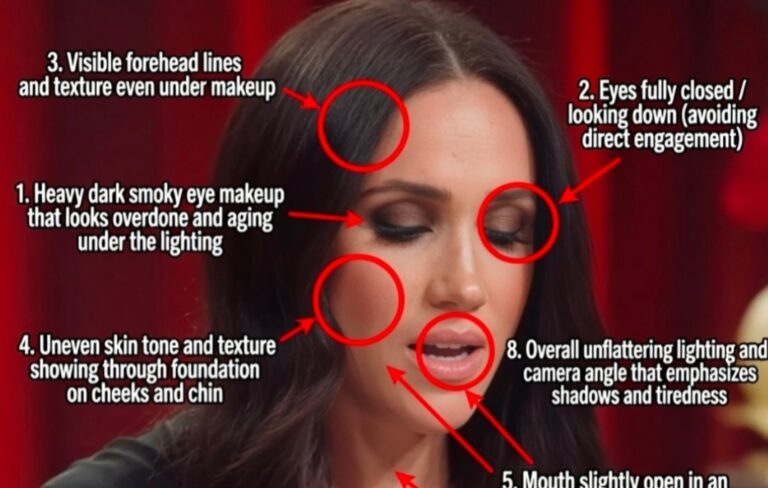
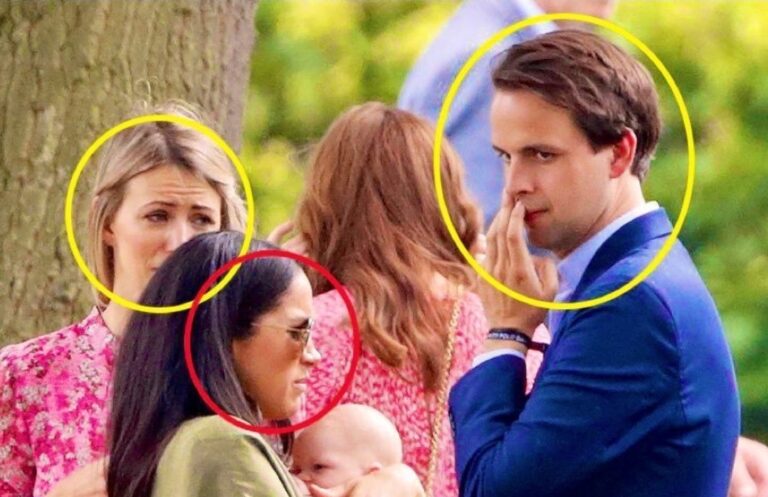
The broader pattern is damning. Markle and Harry have faced repeated accusations of heavy photo editing and staging across family shots, brand campaigns, and social media posts. Critics have pointed to odd lighting, unnatural skin, awkward compositions, and timing that conveniently aligns with product launches or reputation management. In an era when AI and advanced post-processing make fakery easier, these visual tells matter. When a photo of a supposed tender moment with a dog requires annotations to highlight how unnatural it appears, the authenticity claim collapses.
Harry and Meghan continue to demand sympathy and relevance while living in luxury, leveraging royal connections when convenient (as seen in their recent carefully managed UK visit and family meetings), and turning every personal detail—including pets—into content. The glossy hair, hidden eyes, cluttered gold, and forced dog intimacy in this image are not accidents. They are symptoms of a carefully managed image that prioritizes optics over reality.
The public is not obligated to accept every staged “intimate” moment at face value. When the visual evidence itself screams artificiality, condemnation is not cruelty—it is pattern recognition. Meghan Markle and Prince Harry have spent years perfecting the art of looking authentic. This photo analysis simply shows how poorly the mask sometimes fits.