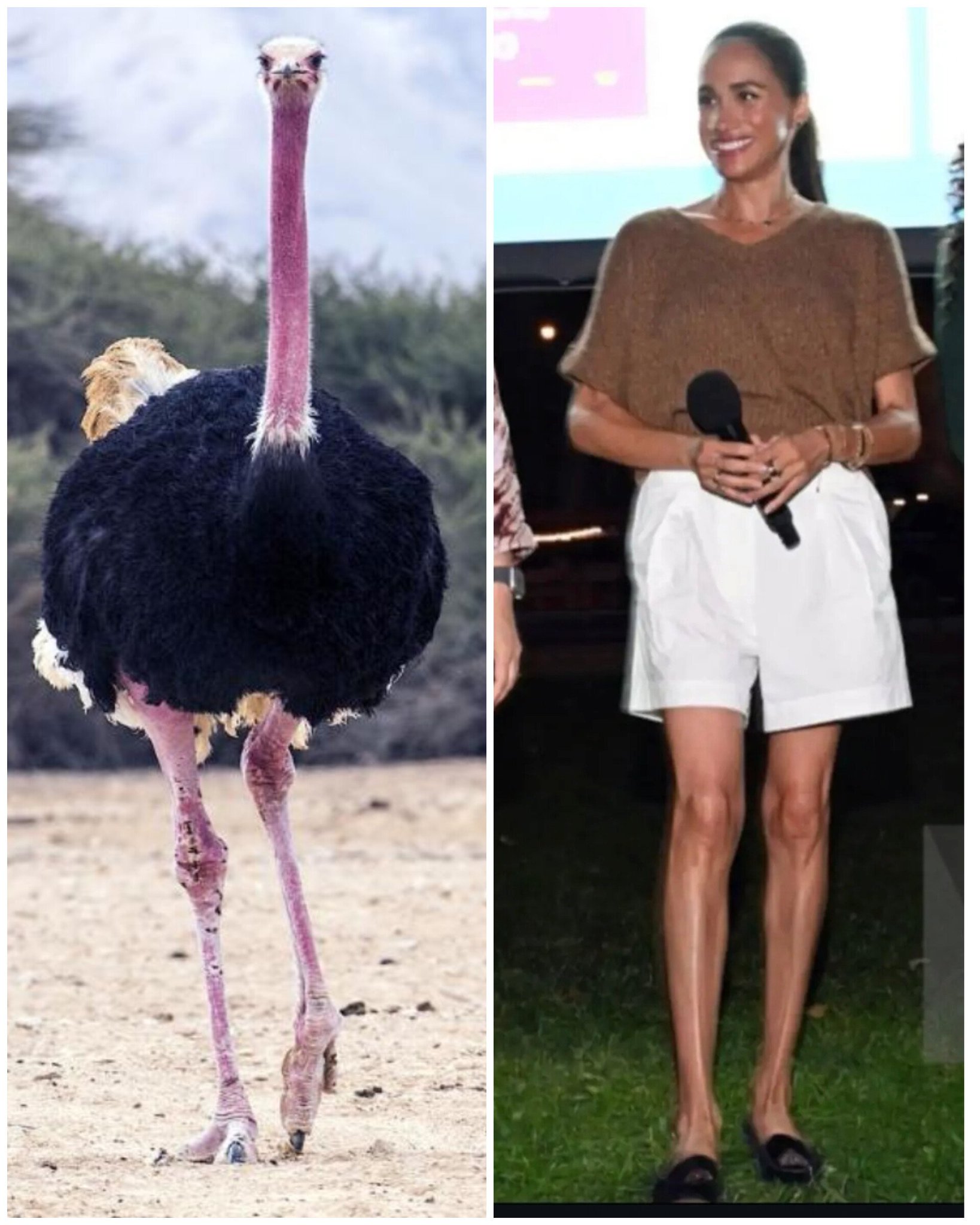
Social media erupted in laughter this week after photos surfaced of Meghan Markle at a low-key outdoor screening of the Girl Scouts documentary Cookie Queens in Ojai, California. Dressed in a baggy brown V-neck top, high-waisted white shorts that left little to the imagination, and flat black loafers while clutching a microphone, the Duchess of Sussex struck a pose that millions immediately compared to a startled ostrich. The side-by-side memes practically wrote themselves: long neck, awkward stance, fluffy midsection, and those spindly legs. The internet’s verdict was unanimous — the bird wore it better.
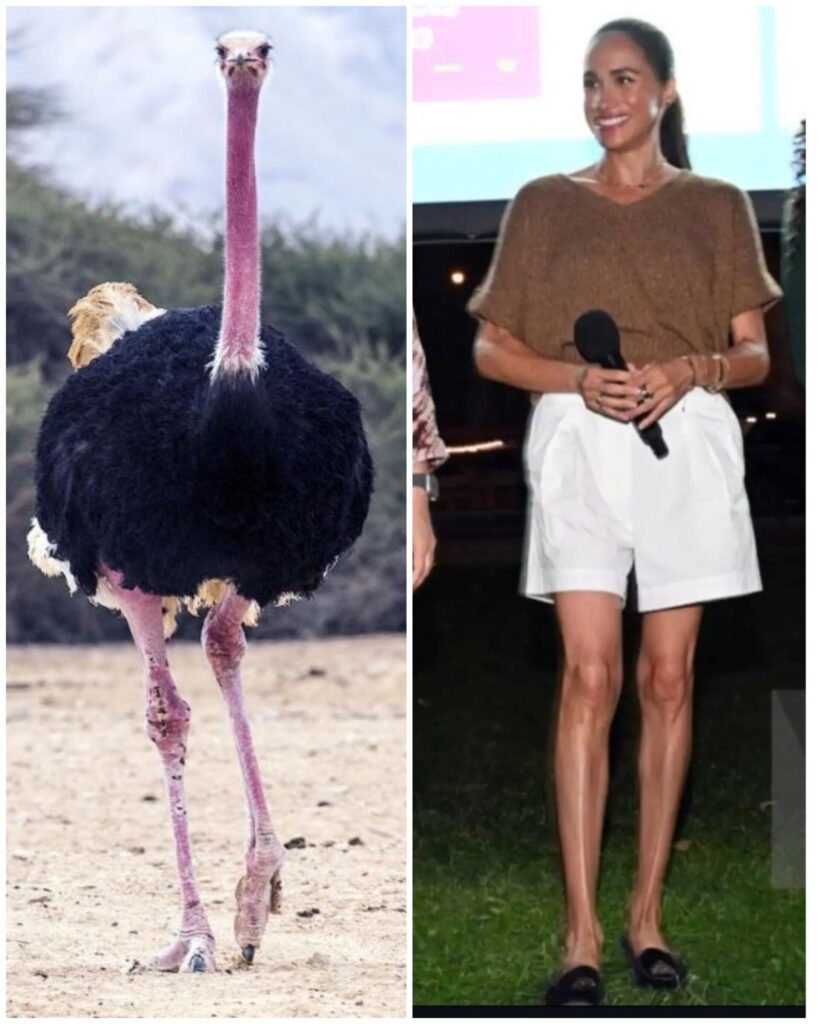
This latest fashion fiasco is merely the most visible symptom of a deeper problem. Once again, Meghan Markle has managed to turn a simple public appearance into a national punchline. The event itself was meant to burnish her image as a champion of young girls and entrepreneurship. Instead, it became another reminder that the former Suits actress and her husband, Prince Harry, have perfected the art of self-inflicted humiliation.
Just weeks earlier, the couple’s much-hyped return to Britain collapsed into farce. Harry’s desperate campaign for taxpayer-funded security — after he and Meghan walked away from royal duties and the protection that came with them — left him looking weak and entitled. Reports confirmed Meghan and the children largely stayed away or cut the trip short amid the ongoing security row. The carefully staged family reunion with King Charles that royal watchers had hoped might signal a thaw never fully materialized. Harry returned to California with little more than another round of negative headlines and further proof that the British public has long since tired of the Sussex soap opera.
Meanwhile, their Archewell Foundation (recently rebranded Archewell Philanthropies in a transparent attempt to reset the narrative) continues to face pointed questions about transparency and financial efficiency. Charity watchdogs have repeatedly noted that the organization has struggled to demonstrate that its fundraising translates into meaningful, proportional impact. Donors and observers are left wondering whether the primary beneficiaries of the Sussex brand remain the Sussexes themselves.
Meghan’s latest appearance fits a familiar pattern: step into the spotlight, court praise for “authenticity,” then watch as the carefully curated image crumbles under the weight of public scrutiny. The ostrich comparison is cruel, yes — but it is also revealing. There is something unmistakably strained about the constant performance, the need to be seen “doing the work” while the actual substance keeps evaporating. Harry, once a popular working royal, now appears reduced to trailing behind his wife’s media strategy, defending their choices long after most of the world has moved on.
The couple’s defenders will inevitably claim this is just another example of “toxic” online pile-ons. Yet the mockery is not random cruelty. It is the accumulated frustration of years of lectures about privilege and media ethics from two people who have monetized every grievance, played the victim while living in a Montecito mansion, and treated the institution that gave them global platforms as disposable once it no longer served their ambitions.
In the end, the ostrich meme is only funny because it captures something true. Meghan Markle keeps presenting herself as a style icon and moral authority. The public keeps seeing something else: a woman increasingly out of step with the very audiences she claims to inspire, propped up by a husband who traded duty for Hollywood optics and has little left to show for it. The bird, at least, doesn’t pretend to be anything other than what it is.
The Sussex experiment continues. The laughter, it seems, only grows louder.