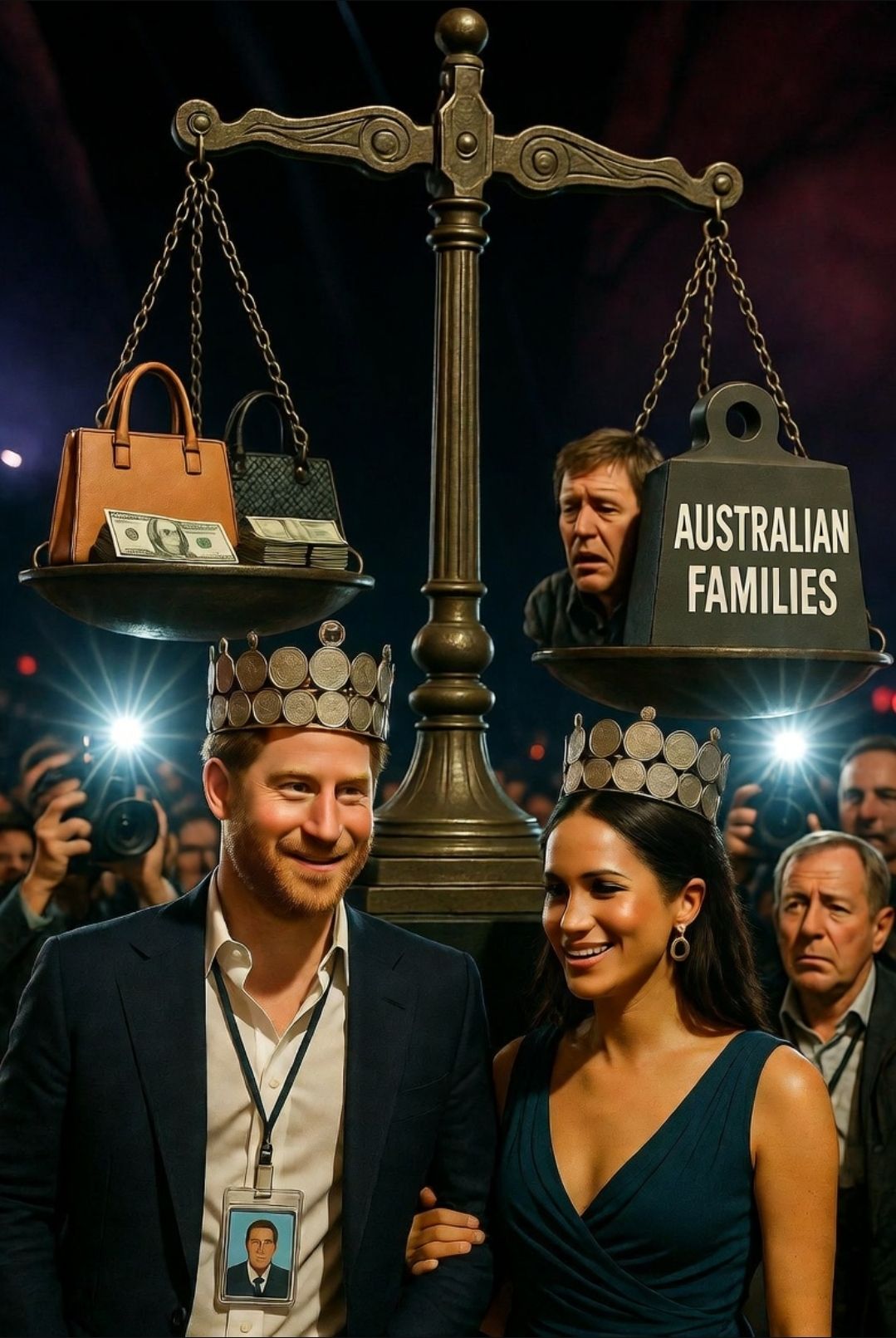
Shocking new revelations expose the ultimate royal hypocrisy Down Under – as the Duke and Duchess of Sussex swan into Australia for a cash-grab “private” tour, everyday Aussies are left holding the bill for their high-security lifestyle. You won’t believe how they’re spinning this one.
In a move that’s left ordinary Australians fuming amid a brutal cost-of-living crisis, Prince Harry and Meghan Markle are jetting into Sydney, Melbourne, and beyond for what their team insists is a fully “privately funded” whirlwind of paid appearances and luxury events. But hold onto your wallets, folks – fresh reports confirm that Australian taxpayers are still on the hook for policing and public safety operations tied to the visit. Yes, you read that right. The very couple who ditched royal duties years ago, branded themselves as independent trailblazers in Montecito, and built a multimillion-dollar empire on tell-all books, Netflix deals, and Spotify podcasts are once again leaning on public funds for the one thing they can’t seem to live without: top-tier security.
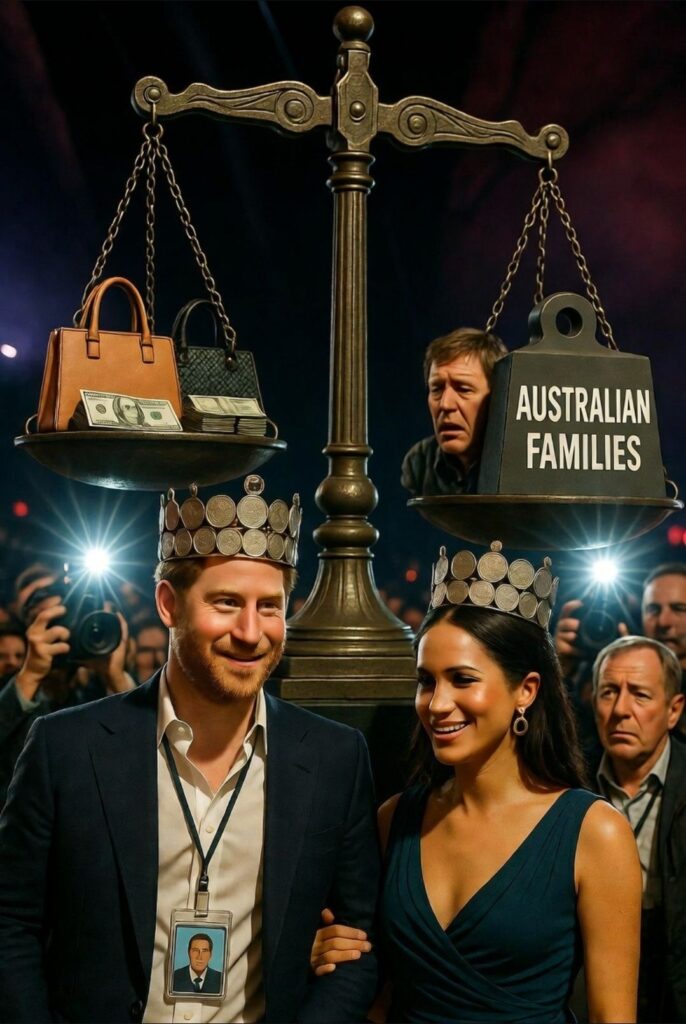
It’s the kind of plot twist that sounds too outrageous to be true – but the numbers don’t lie. According to leaks and official operational notes circulating in Australian media, police forces in New South Wales and Victoria are ramping up operations for crowd control, transport escorts, and incidentals during the Sussexes’ April 2026 swing. The total tab? Hundreds of thousands in taxpayer dollars, even as the couple’s new PR boss, Liam Maguire, doubles down on the “privately funded” mantra. Translation: Harry and Meghan get to play the celebrity circuit, rake in eye-watering speaking and appearance fees, and quietly let the public pick up the tab for keeping them safe from the very “threats” they love to hype.
And the arrogance? Off the charts. Remember that Change.org petition titled “No Taxpayer-Funding or Official Support for Harry & Meghan’s Private Visit to Australia”? It exploded past 35,000 signatures in record time, with everyday Aussies demanding the couple foot their own bill like any other high-profile celebrity. The response from the Sussex camp? A smug spokesperson clapback that essentially sneered, “99.9% of Australians didn’t sign it.” As if dismissing the concerns of tens of thousands with basic arithmetic makes the outrage vanish. Newsflash: When you’re profiting off your faded royal glow, the public has every right to question why they’re subsidizing your red-carpet comeback.
Let’s cut through the spin and get real about what’s happening here. Harry is slated to headline the InterEdge Psychological Safety Summit in Melbourne – a paid gig where he’ll no doubt trot out his well-worn trauma narratives for a hefty fee. Meanwhile, Meghan is fronting an ultra-exclusive “Her Best Life” luxury retreat in Sydney, with tickets reportedly hitting a jaw-dropping $3,000 a pop. Attendees get the full Montecito glamour treatment: wellness workshops, “authentic” storytelling sessions, and that signature Sussex sparkle. It’s not a royal tour. It’s not state business. It’s a straight-up commercial hustle dressed up in the tattered remnants of their Windsor past.
So here’s the million-dollar question that’s got critics raging: If they’re screaming “security risk” every time a camera flashes or a crowd gathers, why are they happily selling access to strangers for premium prices? The couple has built their post-royal brand on claims of constant danger – from paparazzi chases to online trolls – yet they’re more than happy to monetize meet-and-greets and VIP experiences. Which is it? Are they vulnerable public figures who need taxpayer protection, or savvy entrepreneurs cashing in on their notoriety? You can’t have it both ways, and the Australian public is calling the bluff.
One viral X post summed up the national fury perfectly, going nuclear on the “shameless grifters” narrative. It laid it out raw: “Surprise, surprise: so Australian taxpayers are still being forced to cover security costs for Harry and Meghan Markle… They scream ‘security risk’ whenever it’s convenient, yet in the same breath they’re happily selling access to strangers for eye-watering sums. So which is it? Dangerous or profitable?” The post didn’t stop there, hammering home the entitlement angle – pointing out that Harry and Meghan are no longer working royals, this isn’t official business, and they’re raking in cash while ordinary families struggle with skyrocketing rents, groceries, and energy bills. “While people are struggling to get by, these two are swanning around at luxury events, quietly passing the real costs onto the public and pretending it’s all ‘private.’ It’s not just hypocritical, it’s shameless entitlement.”
The backlash isn’t coming from fringe corners either. Aussie newspapers have reportedly turned off comments sections on Harry and Meghan stories because the vitriol was so intense. Social media is ablaze with memes, petitions, and calls for the government to draw a hard line: “Not a single tax dollar.” One frustrated local summed it up online: “They want the half-in, half-out lifestyle – the perks without the paperwork. But security isn’t a royal leftover you get to keep when it suits you.” Another added, “Every other A-list celeb pays for their own detail. Why do these two get a free pass?”
This isn’t just about one trip. It’s the latest chapter in a saga of selective independence that’s grated on taxpayers worldwide. Back in the UK, Harry famously lost his automatic security funding after stepping back as a senior royal in 2020 – a decision upheld in courts despite his high-profile legal battles. The couple relocated to California, built a sprawling mansion, and launched Archewell, their “philanthropic” venture that somehow always circles back to paid appearances and media deals. They’ve pocketed tens of millions from Spotify (before it fizzled), Netflix documentaries, and Harry’s memoir Spare. Yet whenever the spotlight turns uncomfortable, the “security risk” card gets played like a get-out-of-jail-free trump.
Australian officials have walked a careful line, confirming the policing costs are “operational” and tied to public safety rather than personal protection. But let’s be honest: Without the Sussexes’ presence, those extra officers and logistics wouldn’t be needed. It’s a distinction without a difference for cash-strapped families watching their tax dollars evaporate on what amounts to a celebrity vacation.
What makes this particularly galling is the timing. Australia, like much of the world, is grappling with inflation, housing shortages, and wage stagnation. While Harry and Meghan jet in for five-star treatment and high-ticket events, pensioners are choosing between heating and eating. The Sussexes’ team insists no walkabouts or public engagements will happen “due to the security costs of keeping public order” – conveniently sidestepping the very optics that would expose their low turnout and dwindling popularity Down Under. Instead, it’s closed-door profiteering, with the public safety net quietly extended anyway.
Critics are drawing uncomfortable parallels to past tours. Remember the Colombia and Nigeria trips? Similar private jaunts where security costs sparked outrage, yet the couple leaned on local resources while promoting their brand. It’s a pattern: Demand the trappings of royalty without the accountability, then act shocked when the public pushes back.
As one commentator put it in the wake of the petition uproar, “They’re not entitled to taxpayer-funded security on what possible basis? This is a paid private hustle dressed up in royal leftovers. They’re making money off this, so they can pay for their own security. End of story.”
The audacity doesn’t stop at the finances. When the petition hit critical mass, the Sussex camp’s dismissive tone – that “99.9% didn’t sign” line – landed like a slap in the face to those who did. It reeks of the same tone-deaf elitism that’s dogged them since Megxit: the belief that public scrutiny is just noise to be swatted away with PR spin. But in 2026, with royal relevance fading and public patience wearing thin, that strategy is backfiring spectacularly.
Will Harry and Meghan pay any heed to the growing chorus? Or will they touch down in Sydney, deliver their polished talks, collect their cheques, and jet off while the real costs linger on Australian balance sheets? The petition may not have hit majority status, but it’s a loud, unmistakable signal: The era of unaccountable royal-adjacent grifting is over. Taxpayers aren’t buying the “private” label when the security bill says otherwise.
In the end, this Australian escapade isn’t just a trip – it’s a litmus test. If the Sussexes truly believe their own hype about independence and self-funding, now’s the time to prove it. Fork over the security costs yourselves. Skip the taxpayer subsidy. Or keep proving the critics right: that behind the wellness retreats and inspirational summits lies the same old entitlement, just with better branding.
Aussies aren’t holding their breath. And neither should the rest of us. The grift, it seems, continues – one taxpayer-funded police escort at a time.