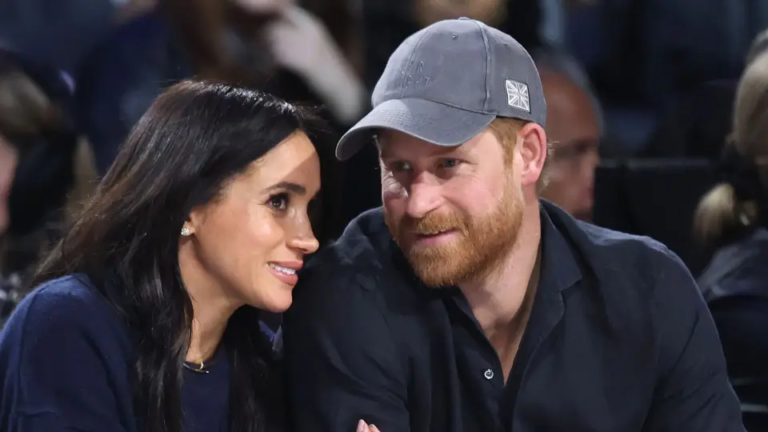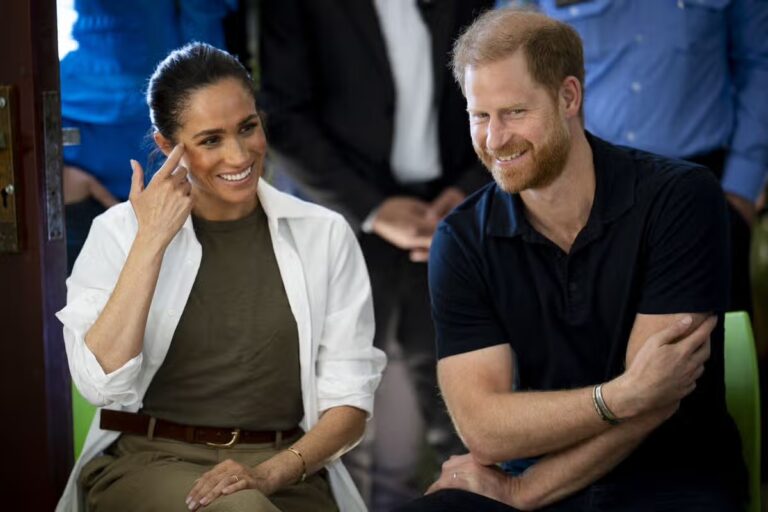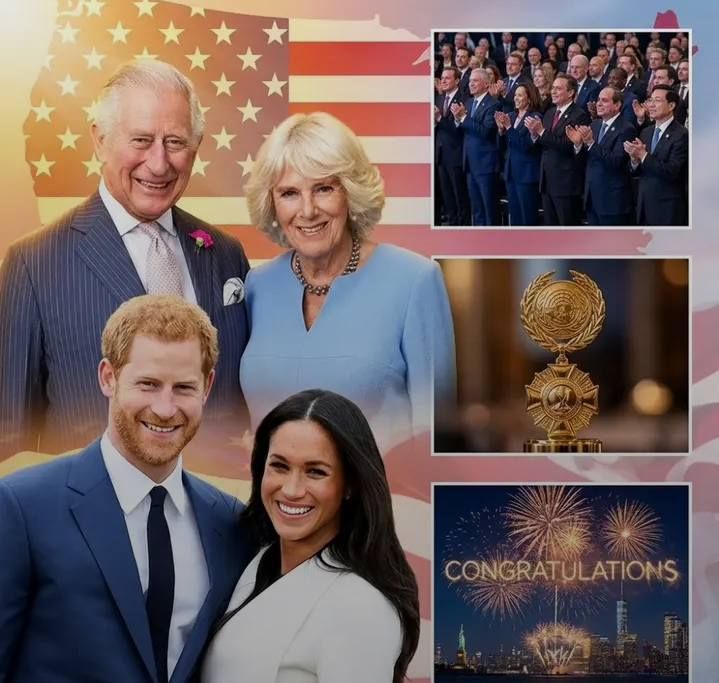
As King Charles prepares for his upcoming state visit to the United States, what might have been a symbolic moment of reconciliation within the royal family has instead become another chapter in an ongoing and very public divide. Behind the scenes, Prince Harry and Meghan Markle were reportedly hoping to arrange a private meeting with the King during his time on American soil—a meeting that, in their view, could have reshaped not only family dynamics but also their increasingly fragile public image.
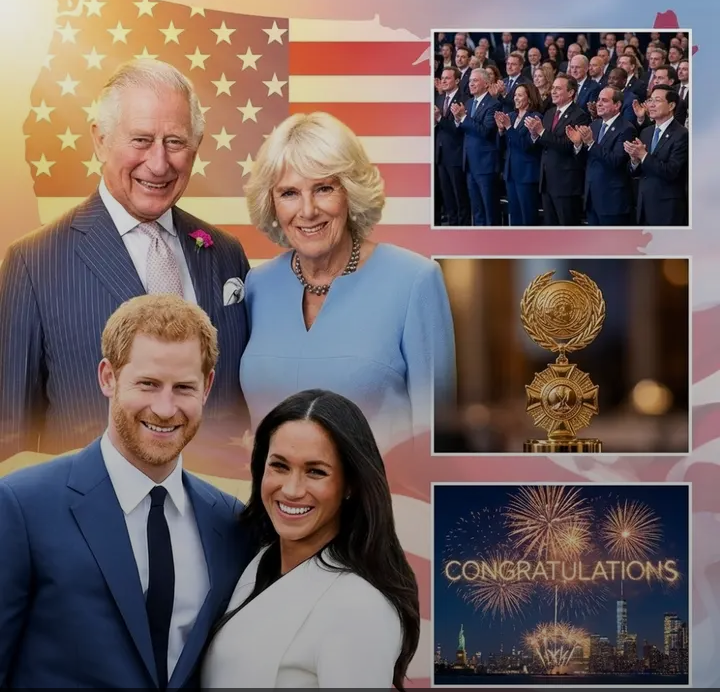
Prince Harry and Meghan Markle’s Plan to Conquer America
The timing of such an effort is not coincidental. In recent months, the Duke and Duchess of Sussex have faced mounting scrutiny from multiple directions. Questions surrounding their media ventures, including the future of their partnership with Netflix, have intensified. At the same time, Harry’s legal battles in the UK have drawn attention to inconsistencies that critics argue could undermine his credibility. For the couple, a carefully staged reunion with King Charles could have offered a powerful counter-narrative—one of healing, stability, and renewed legitimacy.
Meghan Markle and Prince Harry Return to U.S. After Official Tour
However, sources close to the situation suggest that no such meeting will take place. The official explanation is rooted in protocol: a state visit is meticulously scheduled, with every moment accounted for, leaving little room for personal engagements. Yet observers note that such reasoning, while technically valid, does little to quiet speculation about deeper tensions. As one royal commentator remarked, “When there is genuine will on both sides, even the tightest schedules can be adjusted. The absence of a meeting speaks louder than the explanation.”
10 Revelations from Meghan Markle and Prince Harry’s 2017 Engagement Interview
For Harry, the implications are significant. Having relocated to the United States and stepped back from royal duties, he now finds himself in a position where access to the institution he once represented is increasingly limited. Reports suggest that he had hoped to use the occasion not only to reconnect with his father but also to discuss future possibilities, including a more defined role or even a pathway to spending more time in the United Kingdom. The refusal—or inability—to secure even a brief meeting may be interpreted as a clear signal that such prospects remain distant.
Public reaction has been mixed, reflecting the broader divide in how audiences perceive the Sussexes. Some view Harry’s situation with sympathy, seeing a son unable to bridge the gap with his father despite being geographically closer than ever. Others take a more critical stance. A London-based observer commented, “You can’t walk away from the institution, criticize it publicly, and then expect to step back in when it suits you. That’s not how it works.” This sentiment, increasingly echoed across media platforms, underscores the challenge Harry faces in redefining his relationship with both the monarchy and the public.
Meanwhile, Meghan’s role in this evolving narrative remains a point of discussion. While she has been central to the couple’s post-royal identity, recent developments suggest that their joint brand is under pressure. Industry insiders have questioned the effectiveness of their content strategy, noting that audiences may be losing interest in narratives centered primarily on their departure from royal life. In this context, a royal reconciliation could have served as a strategic reset—something that now appears unlikely.
The broader picture reveals a convergence of pressures. Harry’s courtroom disclosures, including past communications that contradict earlier claims, have raised doubts about his legal arguments. Their professional partnerships are being reassessed. Key members of their team have reportedly moved on. And now, even a moment that seemed to offer personal and symbolic significance—a father visiting the country where his son resides—has passed without connection.
It is within this convergence that the latest decision by King Charles takes on added weight. Whether driven purely by scheduling constraints or by a more deliberate stance, the outcome is the same: the gap remains. And for Harry, that gap may represent more than physical distance. It reflects a reality in which the choices made over the past several years continue to shape the present in ways that are difficult to reverse.
There is, of course, still the possibility of change. Royal relationships have weathered tensions before, and public narratives can shift unexpectedly. But for now, the image is a stark one: a King fulfilling his duties on the world stage, and a son watching from afar, unable to secure even a private moment. As one commentator quietly observed, “Sometimes it’s not the arguments that define a relationship, but the silences.”
In the end, the story is less about a single missed meeting and more about what it represents. For Harry and Meghan, it highlights the ongoing challenge of balancing independence with connection, reinvention with legacy. And for the public, it offers a reminder that even the most visible lives can be shaped by decisions that carry consequences far beyond the moment in which they are made.