California kids’ clothing company at center of fresh scandal as viral side-by-side images fuel theories of stolen identity, surrogate secrets, and a panicked cover-up
A seemingly sweet California children’s clothing brand has become the latest flashpoint in the never-ending saga of Meghan Markle’s carefully curated family image — and the questions now being asked are explosive.
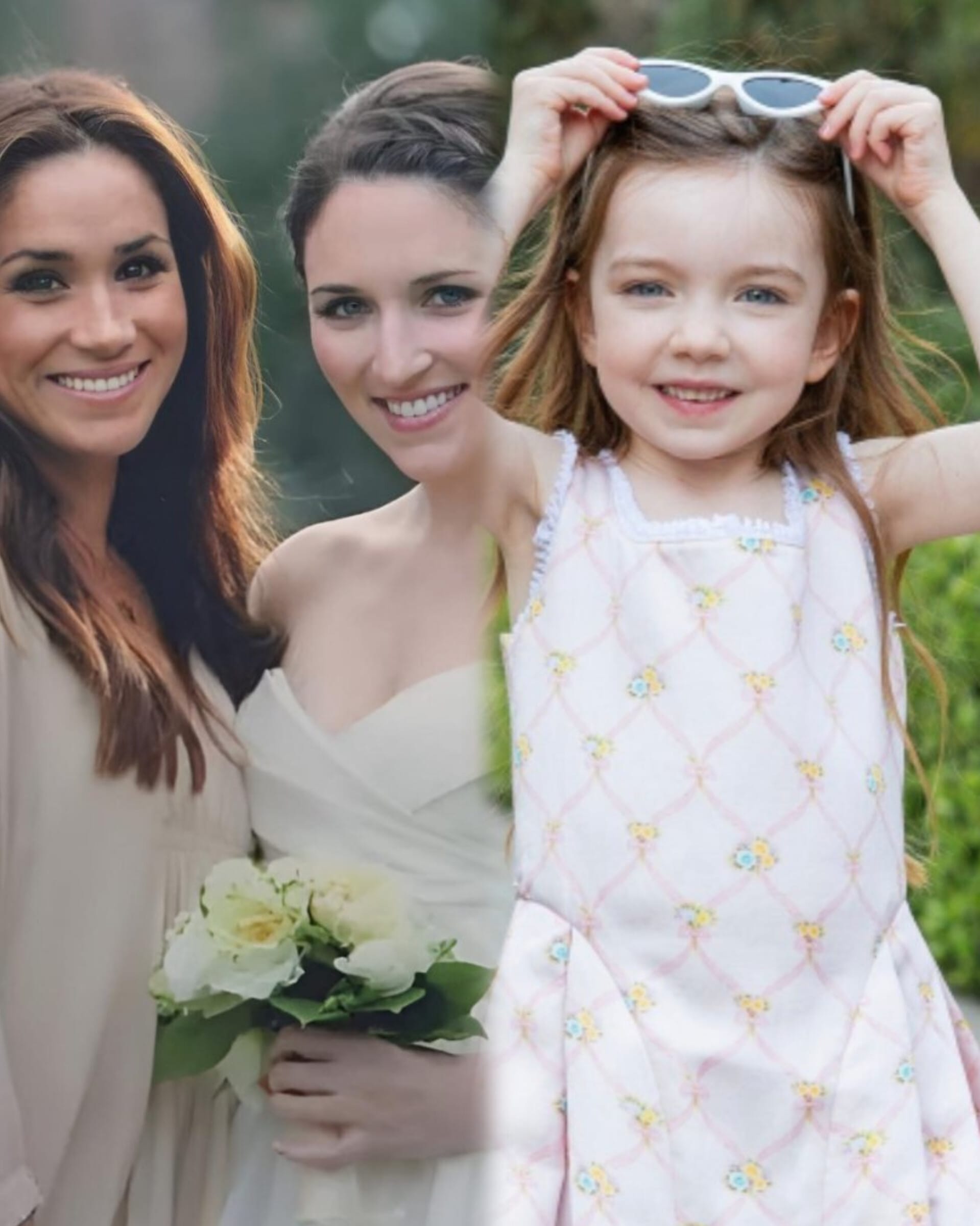
Lil Olives, a small luxury occasion-wear label based in the San Francisco Bay Area and selling heirloom-style dresses “made in India,” recently removed a striking photo of a young red-haired girl modeling one of its frocks from its website. The timing has set royal watchers ablaze: the deletion came amid growing online scrutiny that the child bore an uncanny resemblance to the girl the Duke and Duchess of Sussex have long presented to the world as their daughter, Princess Lilibet “Lili” Mountbatten-Windsor.
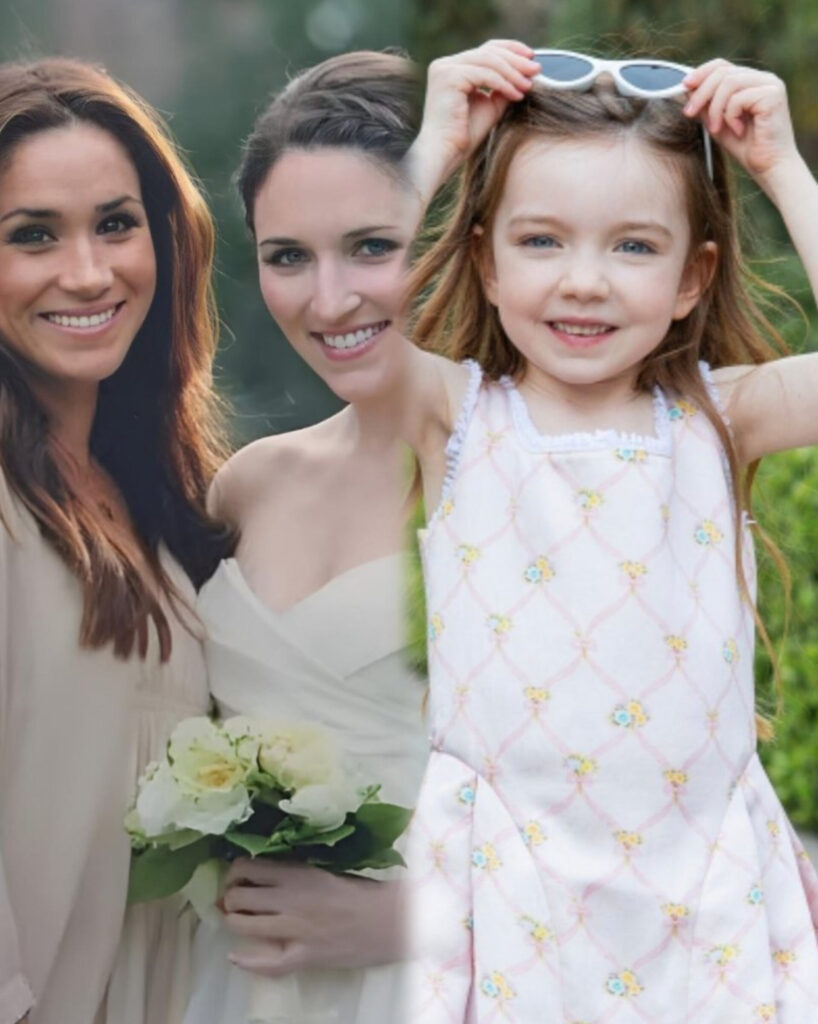
But the real firestorm erupted when a viral comparison image began circulating, showing the same child model next to side-by-side photographs that many say bear a startling resemblance to a woman named Ashley Hale — a figure who has appeared in Sussex-adjacent circles. The post, which quickly gained traction among royal commentators, posed blunt questions that the Sussex camp has so far refused to address:
Why was the red-headed model suddenly erased from the Lil Olives site? Is this brand one in which Meghan Markle or her associates hold any financial interest? Did the Duchess use this child’s likeness — through AI generation or digital manipulation — to fabricate or bolster images of her “daughter”? Or has the Sussexes’ own child already been quietly positioned as a child model without public knowledge?
The brand itself describes its pieces as timeless, handcrafted treasures inspired by European summers and whimsical childhood moments. Yet sharp-eyed observers noted the dresses are manufactured in India, prompting uncomfortable questions about labor practices in the informal sector — the very kind of exploitative conditions critics say clash with Meghan’s long-standing public persona as a champion of women’s rights and ethical causes.
The Ashley Hale angle has turned the story from curious coincidence into full-blown conspiracy fuel.
In the viral composite now making rounds, the young girl in the pink floral lattice dress — smiling brightly, sunglasses perched on her head — is placed alongside images that highlight facial similarities some viewers say point directly to Ashley Hale. Commentators have pointed to matching chin structure, smile, and overall features. Others have gone further, noting that Ashley Hale has both a daughter and a son, and recirculating older photographs in which some claim she appeared to be carrying “baby weight” around the same period Lilibet was said to have been born.
Speculation has run rampant: Was Ashley Hale the surrogate? Did she donate eggs? Is the child modeling for Lil Olives actually the one being presented to the world as “Princess Lilibet”? Or was a real child’s image simply lifted and fed into AI systems to create the handful of heavily filtered, rarely updated photos the Sussexes have released of their daughter over the years?
This latest fire comes on the heels of separate but related scrutiny of Meghan’s lifestyle brand As Ever. Multiple commentators, including Substack writers and YouTube investigators, have highlighted near-identical marketing language between As Ever’s fluffy, “slow living,” “heirloom,” “quiet luxury” copy and the wording used by Lil Olives — language widely accused of being AI-generated filler. The overlap in aesthetic, tone, and even specific phrases raised eyebrows about possible shared creative pipelines or, more cynically, coordinated image laundering.
When the child model photo vanished from the Lil Olives website shortly after these comparisons surfaced, the removal was interpreted by skeptics not as routine website maintenance, but as a classic damage-control scrub. In the age of screenshots and internet archives, such moves rarely erase the questions — they only amplify them.
For years, the Sussexes have weaponized “privacy” as both shield and sword.
They have granted selective access to photographers for carefully staged “candid” moments, sold the narrative of a fiercely protective family life in Montecito, and simultaneously complained bitterly about media intrusion. Yet the visual record of Archie and Lilibet has remained oddly sparse, heavily edited, and frequently questioned for inconsistencies in lighting, proportions, and even basic continuity.
The Lil Olives episode has poured gasoline on those long-simmering doubts. If a real child model from a small California brand can be so easily compared to the girl marketed as “Princess Lilibet,” what does that say about the authenticity of the images the couple has chosen to release — and the ones they have chosen to withhold?
Royal watchers who have followed the couple since Megxit point to a pattern: bold claims of privacy followed by strategic photo drops; accusations of racism and bullying leveled at the institution and family followed by silence when inconvenient questions arise about their own conduct; and now, a children’s clothing brand with California ties and India manufacturing quietly deleting a model who looks far too much like the child at the center of the Sussex “family brand.”
The internet is not letting this one go quietly.
Clips and threads dissecting the side-by-side images, the timing of the website changes, and the Ashley Hale connection are spreading rapidly. Some are demanding full transparency on any business relationships between the Sussexes or their inner circle and Lil Olives or similar ventures. Others are simply asking the most basic question that has dogged this couple for years: Why does everything surrounding their children feel so carefully constructed, so heavily filtered, and so quick to disappear the moment scrutiny arrives?
Meghan Markle’s representatives have not issued a statement on the Lil Olives controversy or the Ashley Hale comparisons as of this writing. The brand itself has also remained silent beyond the quiet removal of the disputed imagery.
In the meantime, the questions continue to mount — and the pattern of evasion, deletion, and deflection only feeds the very speculation the Sussexes claim to despise.
Is this another case of desperate image management from a couple whose carefully polished narrative is cracking under the weight of its own contradictions? Or is there a simpler, more innocent explanation that has yet to be offered?
Either way, the red-headed child model from Lil Olives has done what years of palace silence and PR spin could not: she has forced the conversation back into the open. And this time, the resemblance to Ashley Hale — and the speed with which the photo vanished — has made the questions impossible to ignore.
The Montecito curtain has been pulled back once again. What’s left behind is looking more staged, more manipulated, and more suspicious by the day.
Royal watchers are waiting. The court of public opinion is already rendering its verdict.