The confirmation has sent shockwaves through royal circles and beyond: Meghan Markle and Prince Harry are bringing Prince Archie, 7, and Princess Lilibet, 5, to the United Kingdom next month for the first time since 2022.
What was once presented as an irreparably toxic environment — filled with alleged racism, institutional bullying, and a level of emotional distress so severe it reportedly led the Duchess to contemplate ending her life — now appears to be a destination worth revisiting with the very children she once claimed needed protection from it.
The glaring contradiction has ignited fierce debate: If the UK and the Royal Family were truly as horrific as repeatedly claimed, why willingly return and expose the children to it? Many are concluding the only logical explanation is financial.
The 2021 Oprah Bombshell That Defined the Narrative
In the March 2021 Oprah Winfrey interview, Meghan painted a devastating picture. She alleged concerns within the Royal Family about Archie’s skin color before his birth, claimed she was denied the title of HRH or proper security, and described feeling so isolated and hopeless that she had “thoughts of not wanting to be alive anymore.” She spoke of a lack of support, cultural clashes, and a system that left her broken.
That interview became the cornerstone of the Sussex brand. It fueled the Netflix docuseries Harry & Meghan, the book Spare, podcast deals, and a narrative of escape from a “racist” institution. The couple positioned themselves as victims who had no choice but to flee to California for the safety of their family.
Fast-forward to 2026. Reports confirm the Sussexes will spend several days in the UK in July, timed around Invictus Games commitments and possibly other engagements. King Charles is expected to see his grandchildren. The family has reportedly been offered royal accommodation, though sources indicate they plan to bring their own high-cost private security team.
No reunion with Prince George, Princess Charlotte, and Prince Louis is currently planned.
The Hypocrisy That Stings the Most
The core question burning across social media and royal commentary is simple and devastating in its logic: If everything Meghan said was true — if the in-laws were racists, if the culture was suffocating, if the environment was so poisonous it nearly cost her life — why on earth would any mother willingly bring her young children back into that same environment?
One widely circulated analysis put it bluntly: If your own mother-in-law allegedly hated your spouse so much that the family cut all contact, you wouldn’t suddenly decide it was fine to reintroduce your kids years later. The same standard, critics argue, should apply here.
The sudden willingness to return suggests the “trauma” narrative may have been strategically useful for sympathy, media deals, and public positioning — but is now flexible when financial or PR incentives arise.
Follow the Money: The Mercenary Explanation
Financial pressures offer the most straightforward explanation. The couple’s post-royal ventures have faced well-documented struggles. Netflix projects underperformed relative to expectations. Spotify parted ways. High overheads in their Montecito mansion, combined with expensive private security and lifestyle costs, have created ongoing questions about sustainability.
A UK visit generates massive free media coverage. Paparazzi shots, speculation about meetings with King Charles, and the inherent drama of a “return” provide content that can be monetized across platforms. There is also the lingering possibility of renewed quiet financial support or access to resources tied to the monarchy — something that would be impossible without at least a surface-level thaw.
Critics point out the pattern: When deals dry up or public interest wanes, the couple often leans back into royal-adjacent visibility. This trip fits the template perfectly.
What the Viral Photos Reveal
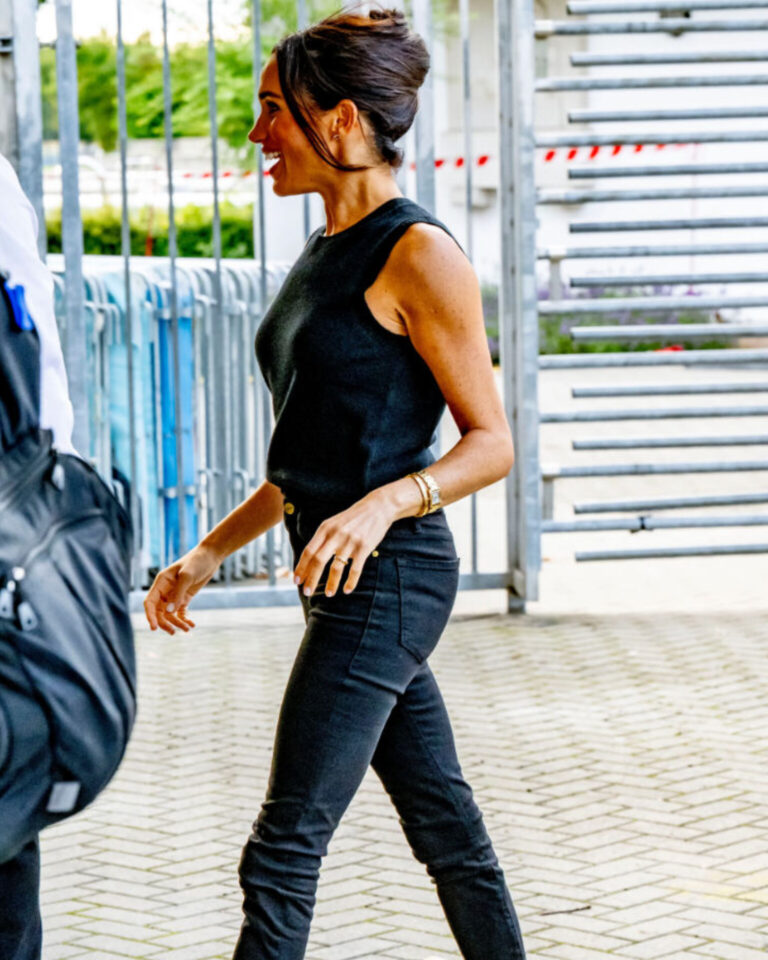
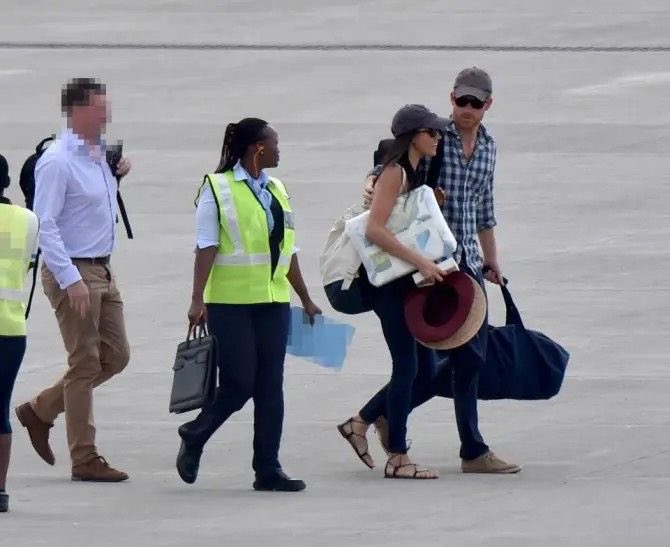
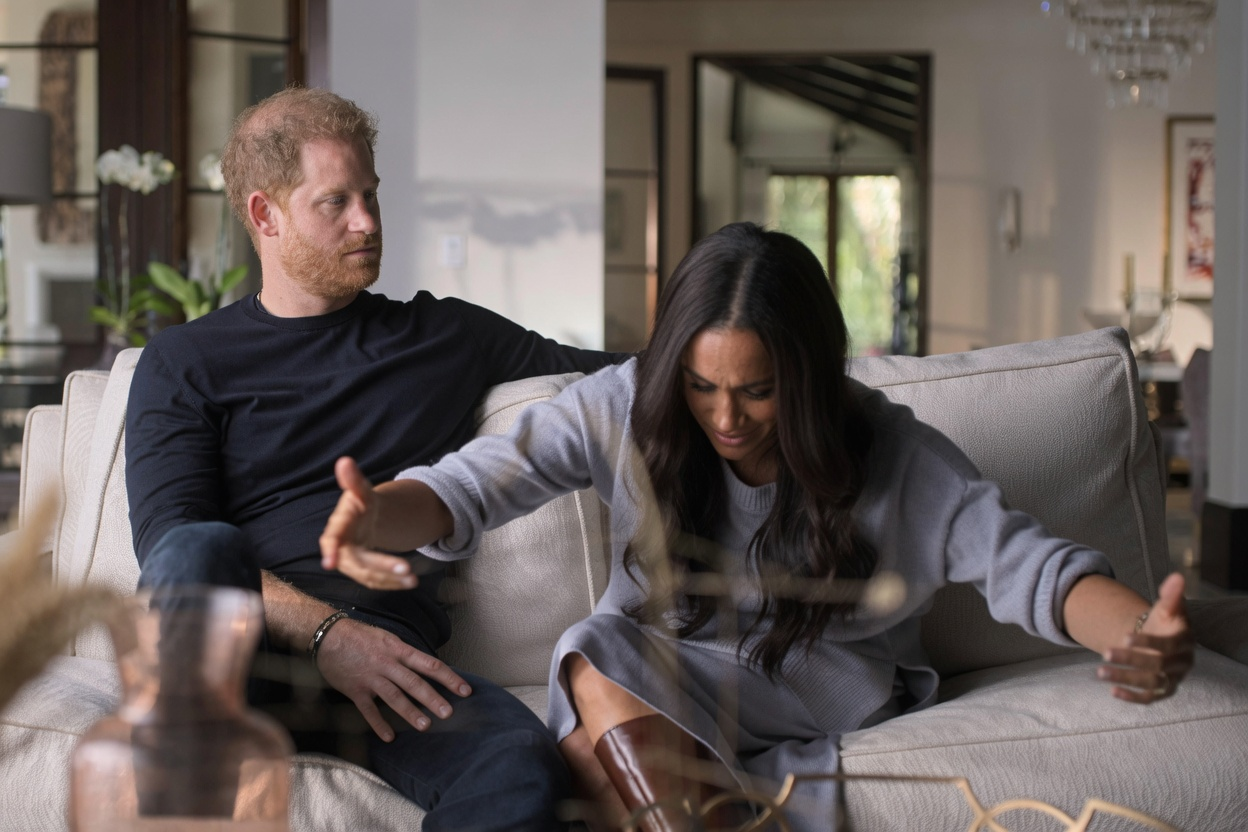
Two images circulating widely online have crystallized the cognitive dissonance for many observers.
One shows Meghan in a striking black dress with white abstract patterns, seated outdoors during what appears to be a serious, high-stakes interview. Her expression is somber, hands clasped, embodying the victim narrative that dominated 2021 coverage. The setting and styling evoke the era of the Oprah sit-down and the immediate aftermath — the height of the “escape from the palace” storytelling.
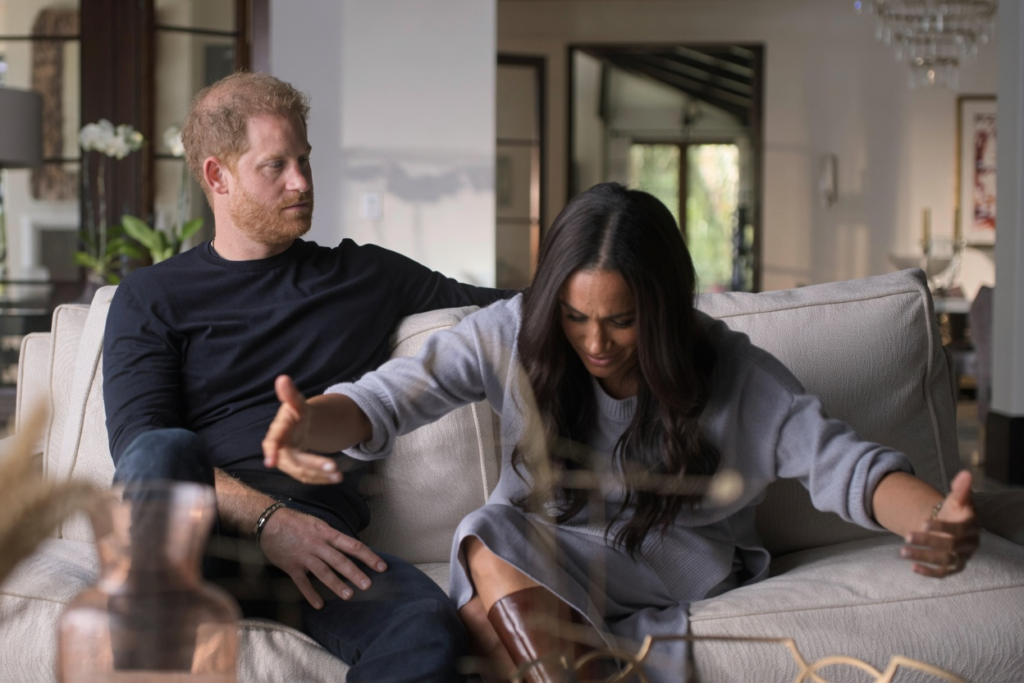
The second image depicts Harry and Meghan in a relaxed domestic setting on a large light-colored sofa inside their California home. Harry watches her as she leans forward, gesturing animatedly. The mood is casual, modern, and comfortable — far removed from the “prison” she once described the royal system as being.
Side by side, the contrast is jarring. The woman who claimed the Royal Family and British culture were so damaging she feared for her life is now reportedly preparing to re-enter that world with her children in tow. The domestic calm of the second photo undercuts the narrative of ongoing trauma.
Public and Insider Reaction: “It’s All About the Cash”
Reactions have been swift and unforgiving.
Many have drawn personal parallels: People who have genuinely cut toxic family members out of their lives for serious reasons rarely reverse course for photo opportunities or vague “reconciliation” optics — especially not with young children involved. The willingness to do so here, they argue, exposes the original claims as exaggerated or situational rather than absolute.
Others have been more direct: “They’re going to try and bum money,” one commenter noted. Another observed that Meghan “won’t let Harry take them on his own,” suggesting control over the narrative and access remains paramount.
Royal watchers have noted the limited window before any potential changes to titles or status under a future reign. With the children approaching school age and the California experiment showing cracks, the UK trip may represent a calculated hedge — keeping options open while generating headlines.
The Unanswered Questions Meghan Must Face
The July visit will inevitably raise uncomfortable questions that no amount of curated imagery or PR can fully deflect:
- If the Royal Family’s alleged racism was so severe it threatened her children’s future, why expose them to it now?
- If British culture and traditions were so “bothersome,” what has changed?
- If the institution offered no support and actively harmed her mental health, why seek proximity again — even temporarily?
- And perhaps most pointedly: Was the original narrative primarily about genuine suffering, or was it a highly effective tool for building a new brand and income stream that has since lost momentum?
The answers may never come directly. But actions, as the saying goes, speak louder than carefully rehearsed interviews.
As the Sussex family prepares to touch down in Britain next month, the optics of reconciliation will be everywhere. The subtext of financial pragmatism and narrative flexibility will be impossible to ignore for anyone paying attention.
Meghan Markle once asked the world to believe her version of events was so painful it nearly destroyed her. Now she appears ready to test whether that version still holds — or whether it was always negotiable when the price was right.
The world will be watching. And this time, the skepticism may be louder than the sympathy.