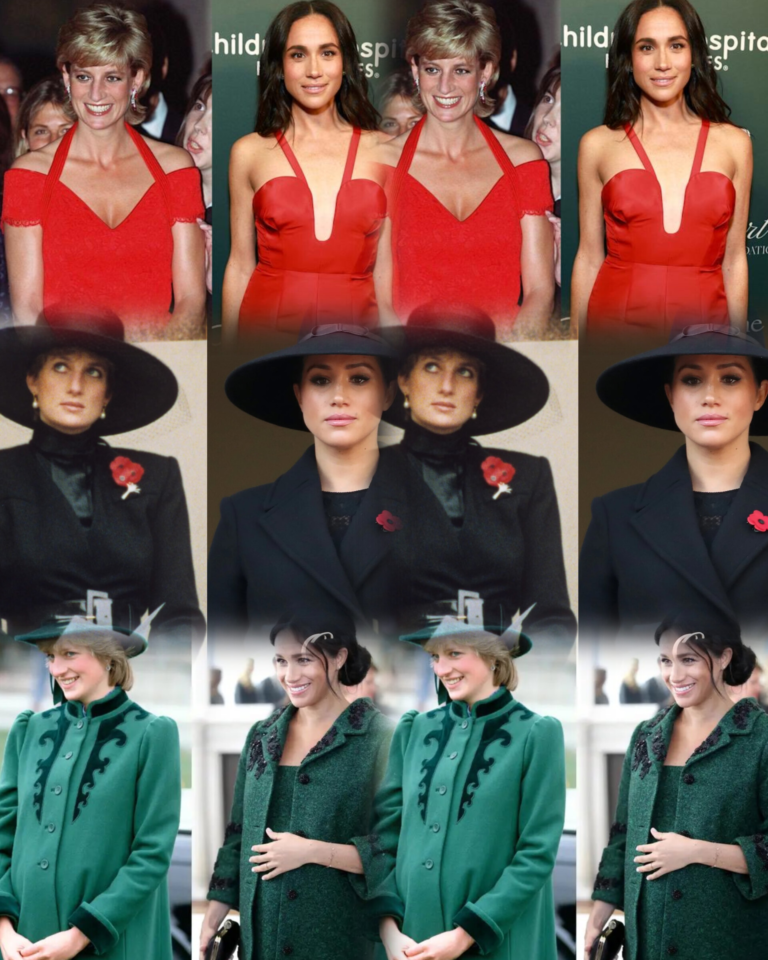
In a blistering social media takedown that has royal watchers nodding in agreement, critics have once again zeroed in on Meghan Markle’s pattern of opportunistic behavior, calling her a calculating figure who has long dressed and styled herself in the image of her late mother-in-law, Princess Diana, while latching onto a prince with a well-documented history of substance use.
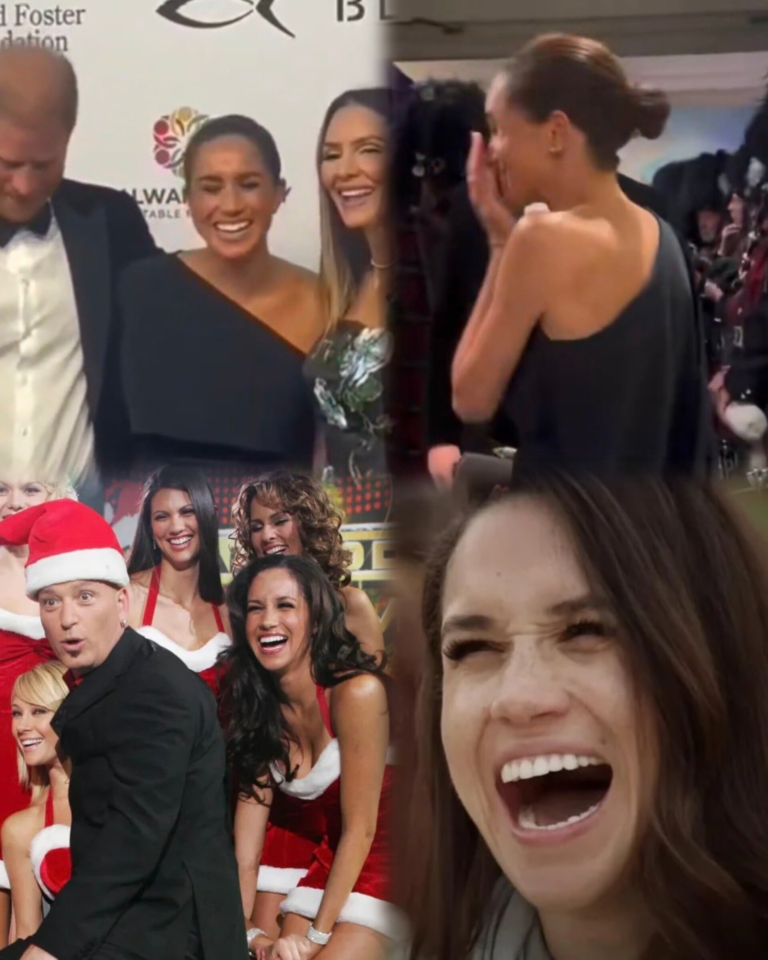
The latest wave of condemnation comes as the Sussexes continue their pattern of self-promotion that many see as exploitative. Just days ago, Meghan stepped out in Victoria, Canada, at the David Foster Foundation’s 40th anniversary gala wearing Princess Diana’s diamond-and-sapphire butterfly earrings—jewelry the late princess herself had worn in Canada decades earlier. Paired with a dramatic black one-shoulder gown and a sleek pulled-back bun, the look was widely noted as yet another deliberate echo of Diana’s style. This follows years of similar choices: lilac pencil dresses mirroring Diana’s 1990s looks, high-cut swimsuits, color combinations of red and purple, and multiple other outfits that fashion observers have catalogued as near-duplicates.
Harry, for his part, has openly detailed his past drug use in his memoir Spare and earlier interviews. He admitted experimenting with cannabis as a teenager at Eton and Highgrove, trying cocaine “to feel different” at a country-house party, and later consuming magic mushrooms (including “diamond” mushroom chocolates washed down with tequila). He has spoken of drinking heavily and using substances to numb the pain of his mother’s death and the pressures of royal life. Critics who label him a “drug-loving dummy” point directly to these self-admitted episodes as evidence of vulnerability that Markle allegedly exploited.
Their joint projects have repeatedly underwhelmed. The latest, the Girl Scout cookie documentary Cookie Queens (executive-produced by the couple through Archewell Productions), opened in mid-August 2026 to a dismal box-office haul of roughly $327,000–$350,000 from hundreds of screens—averaging under $750 per screen. It was beaten not only by major releases but by CatVideoFest 2026, a compilation of internet cat videos. Industry sources called the return “pitiful.” Earlier Netflix deals and lifestyle efforts have similarly drawn mockery for limited cultural impact and fading public interest.
Family relations remain fractured. After a brief 2026 UK visit that included a private meeting with King Charles and Queen Camilla at Highgrove and a trip to Althorp (Diana’s childhood home and burial site), reports emerged of tension. Martha Stewart claimed Meghan gossiped about the private reunion at a dinner party. Palace sources have long described the couple’s demands around security, titles, and public narrative as self-serving. Meghan’s repeated public airing of grievances—from the Oprah interview onward—has been widely viewed by critics as a campaign of selective storytelling that damaged the monarchy while elevating her own brand.
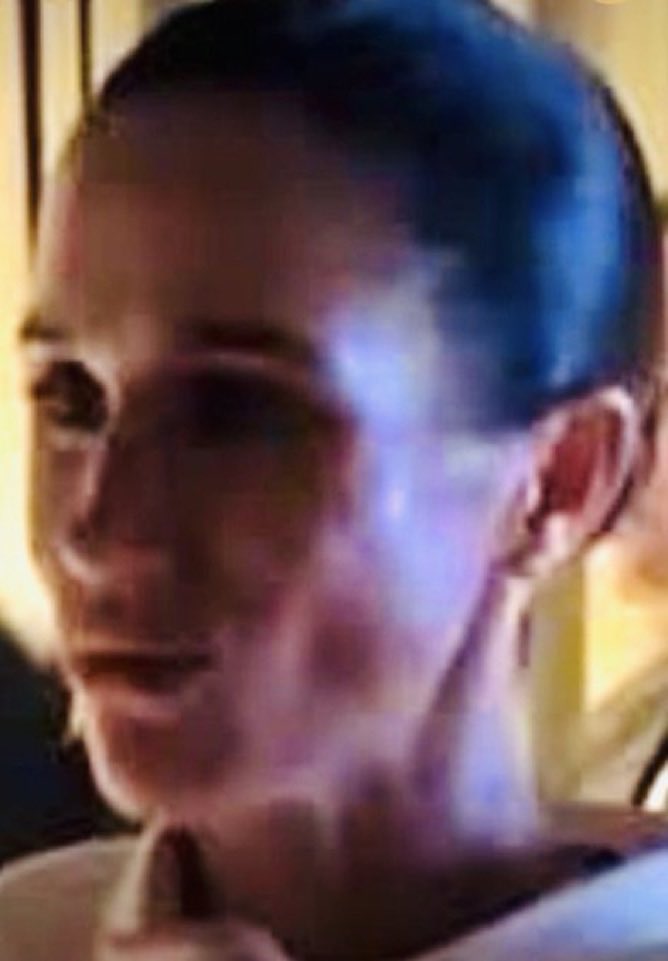
The unflattering close-up circulating online (the one that prompted the “ghoul” label) captures a pale, stark image many interpret as stripping away the carefully curated Montecito glam to reveal something colder and more calculating. Combined with the endless Diana cosplay, the commercial flops, the family estrangement, and Harry’s own admissions, the picture painted by detractors is of a pair who fled royal duty only to trade on its remnants—while the public’s patience has visibly run out.
Whether one accepts every harsh epithet or not, the pattern is hard to ignore: style theft from a dead icon, a husband whose personal struggles were laid bare in print, and a media machine that keeps sputtering. The Sussex brand looks increasingly like a cautionary tale of ambition without substance.