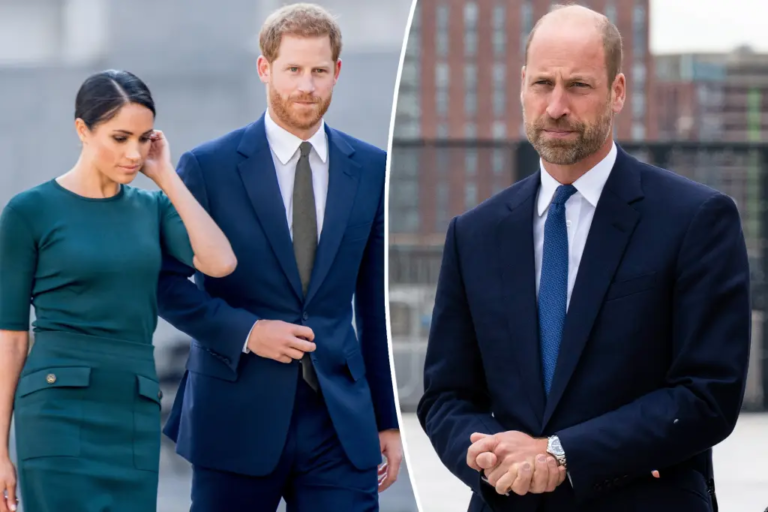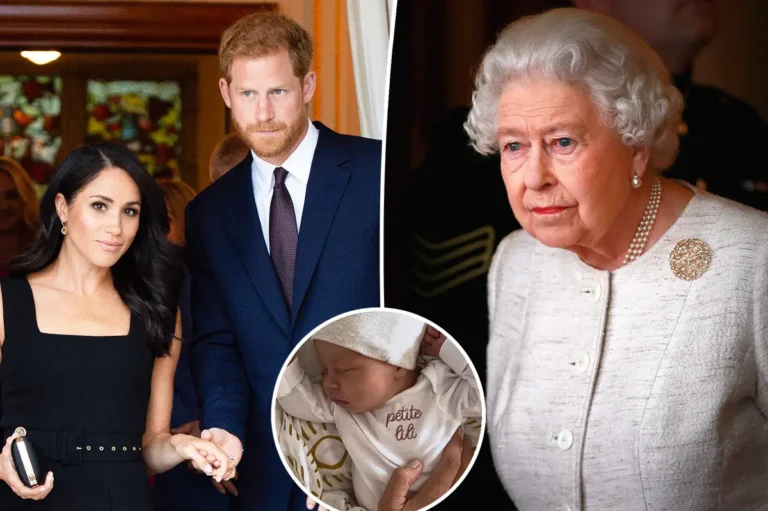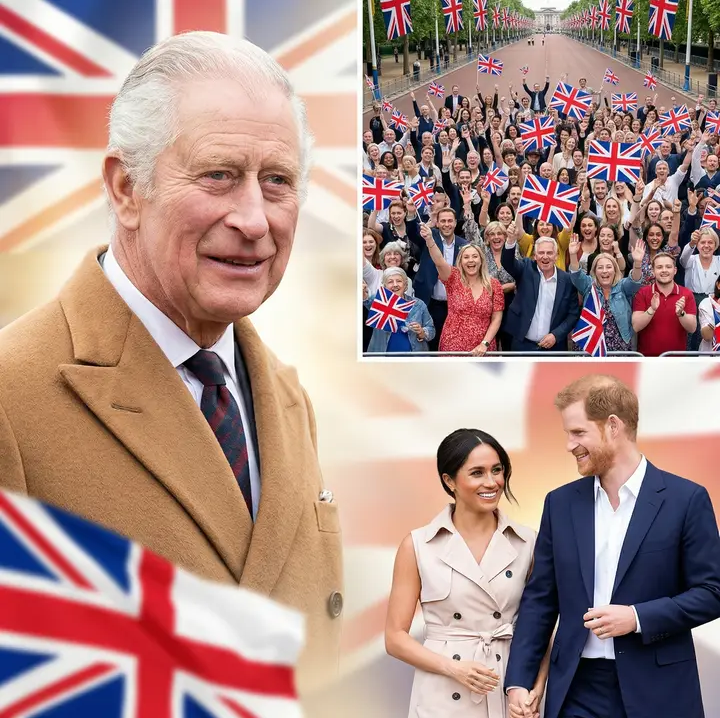
Efforts by Prince Harry and Meghan Markle to reconnect with the British royal family appear to have reached a quiet but unmistakable impasse. While there have been subtle signals suggesting a willingness—perhaps even a desire—to rebuild bridges, the response from within palace walls has reportedly been consistent: silence. For many observers, this lack of engagement speaks louder than any official statement ever could.
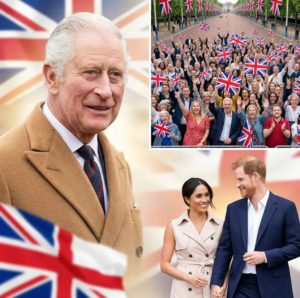
Royal Family Have Put Mending Rift With Prince Harry & Meghan Markle ‘On The Backburner’ — Here’s Why!
The situation is particularly striking given that there were signs of progress not long ago. In late 2025, Prince Harry and King Charles III reportedly held their first in-person meeting in nearly two years, sparking cautious optimism that a reconciliation might be possible. At the time, royal watchers described it as a “breakthrough moment,” one that hinted at a thaw in what had been a deeply strained relationship.
Prince Harry & Meghan Markle Divorce Rumors Get an Update
However, that momentum has since stalled. According to insiders, the royal family has effectively placed any reconciliation efforts “on the back burner.” The reason, it seems, has little to do with a lack of personal concern and more to do with a shift in priorities. The monarchy is currently facing a far more pressing issue—one that has consumed its attention and resources.
Meghan Markle Wears Gift from Prince Harry While Shopping in Montecito
At the center of this shift is the ongoing controversy surrounding Prince Andrew and his long-standing association with Jeffrey Epstein. Recent developments, including renewed scrutiny and legal complications, have placed Andrew firmly back in the spotlight, creating a crisis that many describe as one of the most serious challenges to the monarchy in recent years. In such a climate, the royal family has had little choice but to focus its energy on managing the fallout.
A royal commentator explained, “When an institution is under that level of pressure, everything else becomes secondary. It’s not about ignoring Harry—it’s about survival.” This perspective highlights the broader context in which decisions are being made. The monarchy, as an institution, must prioritize stability and public trust, even if it means postponing sensitive family matters.
For Harry and Meghan, this silence can be interpreted in multiple ways. On one hand, it may feel like rejection—a sign that their attempts to reconnect are not being welcomed. On the other hand, it may simply reflect the reality that the royal family is currently overwhelmed. As one observer noted, “Silence doesn’t always mean indifference. Sometimes it means there’s no room to deal with anything else.”
Public opinion on the matter is divided. Some sympathize with the Sussexes, arguing that family reconciliation should not be indefinitely delayed, regardless of external circumstances. Others believe the royal family’s approach is both practical and necessary. “You can’t fix everything at once,” a media analyst remarked. “Right now, they’re dealing with a crisis that affects the entire institution, not just one relationship.”
There is also an underlying tension in how Harry and Meghan are perceived within this dynamic. While they are undeniably part of the family, they are also seen by some as external figures—particularly after stepping back from royal duties and establishing independent careers abroad. This dual identity complicates the process of reconciliation, as it raises questions about boundaries, expectations, and mutual trust.
Adding to the complexity is the nature of the Sussexes’ public presence. Their interviews, documentaries, and public statements have, at times, been critical of the royal family, making any path to reconciliation more delicate. For some within the institution, rebuilding trust may require more than just private conversations—it may require a fundamental shift in how both sides engage with each other publicly.
At the same time, there are indications that King Charles remains mindful of his role not just as a monarch, but as a father. While official engagements and institutional responsibilities may take precedence, the personal dimension of the situation cannot be entirely dismissed. Yet even here, practical considerations come into play. Reports suggest that during upcoming visits to the United States, Charles has no plans to meet Harry, citing both scheduling constraints and the appropriateness of using public funds for private matters.
This decision has further reinforced the perception that reconciliation is not an immediate priority. Whether this is a temporary pause or a longer-term shift remains unclear. What is evident, however, is that the current circumstances have created a kind of stalemate—one where neither side appears ready or able to move forward.
For some observers, this moment represents a turning point. “If this continues,” one commentator suggested, “the distance could become permanent—not because anyone wants it to, but because time and circumstances make it so.” It is a sobering thought, one that underscores the fragile nature of relationships within such a high-profile and high-pressure environment.
Ultimately, the silence surrounding Harry and Meghan’s outreach efforts is not just about personal dynamics—it is about priorities, perception, and the realities of an institution under strain. While the door to reconciliation may not be closed, it is, for now, firmly on hold.
And in the world of royalty, where every gesture is scrutinized, sometimes the absence of a response is the most telling response of all.