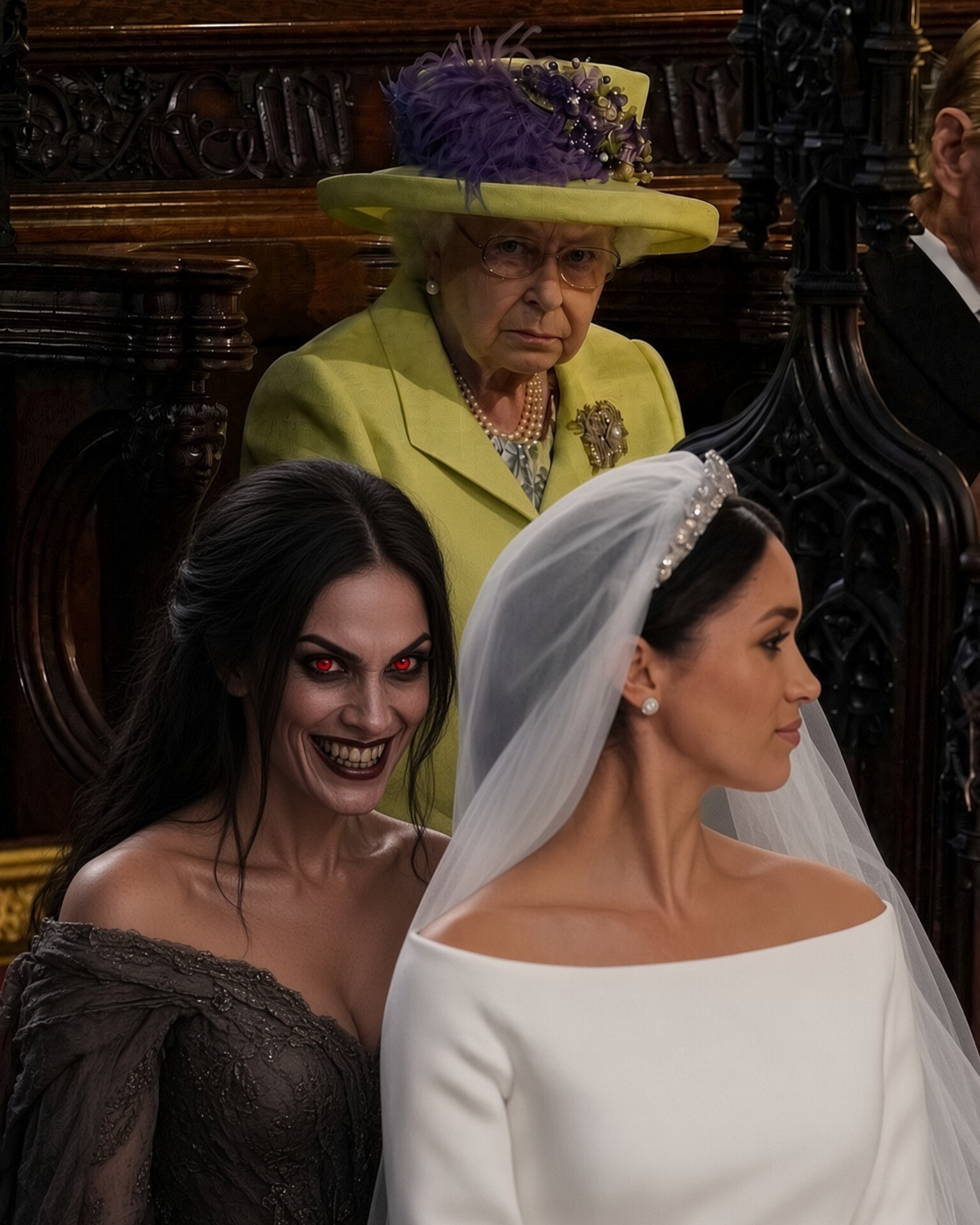
A single photograph from St. George’s Chapel on 19 May 2018 has resurfaced with new force. Queen Elizabeth II, in lime-green and a purple-feathered hat, stands above her grandson’s bride and looks down with an expression that is not celebration. It is tight, watchful, and unmistakably unhappy. Meghan Markle sits in profile in the white Givenchy gown, veil trailing, as if the most important person in the room is not even in the frame.
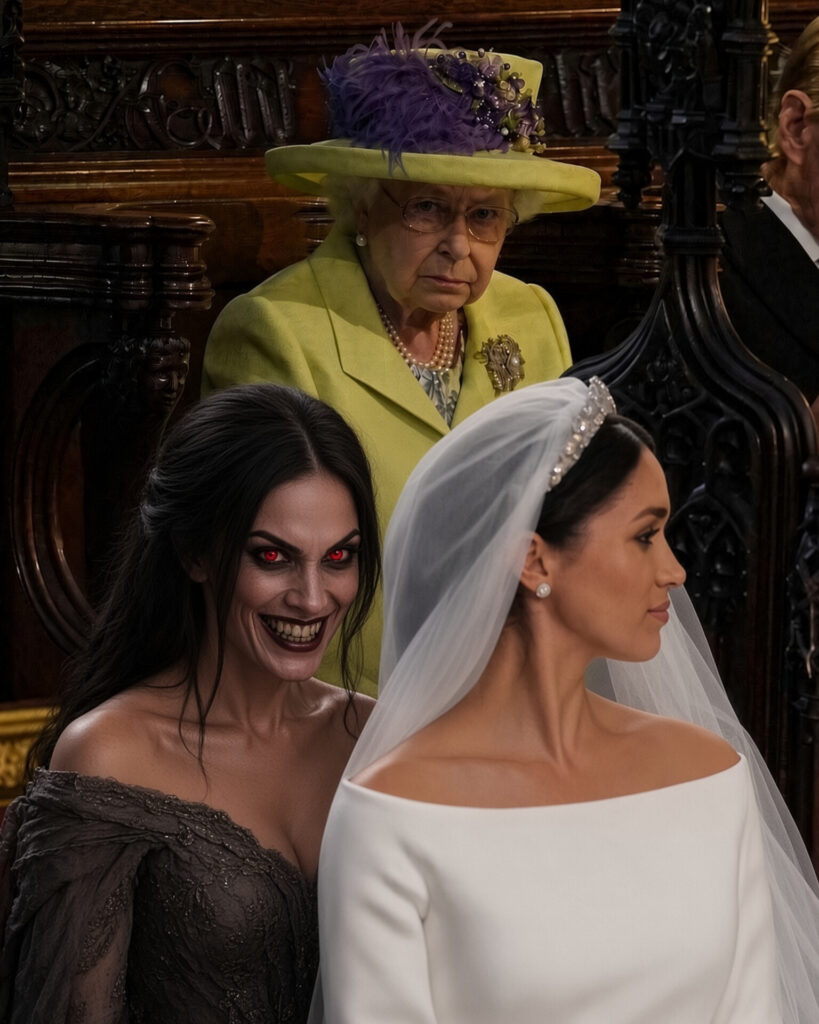
Hindsight has turned the picture into an accusation.
Royal watchers have long argued over that look. Body-language commentators have called it a glower. Online commenters now call it prophecy. The late Queen did not live to see every sequel — the Oprah special, the Netflix series, Spare, the monetised grievance tour — but she lived long enough to feel the first shocks. And those who were close to her have been unusually blunt about what that period did to her.
She asked him to wait. He did not.
Biographer Hugo Vickers has written that the Queen suggested Prince Harry wait a year before marrying. He went ahead six months after the engagement anyway. Vickers also records a colder detail from the final years: when Harry telephoned his grandmother, she asked a lady-in-waiting to stay in the room. “The distress the Sussexes caused the Queen in the last years of her life cannot be overestimated,” he wrote. In a later interview he went further, calling the strain they placed on her “unforgivable.”
That is not tabloid colour. That is a historian describing an elderly monarch who no longer felt she could take her grandson’s calls alone.
Other published accounts of the wedding itself add texture to the photograph. Ingrid Seward has reported that the Queen found Meghan’s dress “too white” and “quite so flamboyantly virginal” for a divorcée remarrying in church, and that she was uncomfortable with then-Prince Charles walking the bride down the aisle in place of Thomas Markle. None of that proves the Queen “knew” what was coming. It does prove she was not the beaming grandmother of the official fairy tale.
Then came the wrecking ball.
In January 2020, Harry and Meghan announced they would step back from working royal life. They left Britain, settled in Montecito, and built a brand on the claim that the institution had failed them. In March 2021 they sat with Oprah Winfrey and aired the most damaging charges a junior royal couple could make: that Meghan had been left suicidal, that the household would not help her, and that there had been “concerns and conversations about how dark” their unborn son’s skin might be. Buckingham Palace’s response, issued in the Queen’s name, was ice-cold and exact: the family was saddened, the issues of race were “concerning,” and “some recollections may vary.” Prince William later said the family was “very much not a racist family.”
Harry followed with Spare, a memoir that turned private family pain — grief, rows, even bodily details — into a commercial product. Netflix followed with more of the same. The couple kept the titles, the Duke and Duchess of Sussex, while treating the people who gave them those titles as the villains of a prestige documentary.
This is the core of the indictment. Meghan Markle did not merely leave an institution she found stifling. She and her husband converted departure into a years-long public prosecution of Harry’s father, brother, sister-in-law and, by implication, the grandmother who had tried to absorb a Hollywood actress into a 1,000-year-old court. Harry did not merely “stand by his wife.” He participated. He sat for the interviews. He published the book. He allowed the most intimate rooms of his childhood to be described for a global audience while his grandfather was dying and his grandmother was still carrying the Crown.
That is not courage. It is a man who took the protection, the platform and the prestige of the House of Windsor and then sold the wreckage.
The return does not wash it off.
This week the couple landed back in Britain for an “extended” stay, children enrolled in school, Montecito house retained, working-royal status still off the table. King Charles is said to welcome more time with his son’s family. That is his prerogative as a father. It is not an acquittal.
A return after six years of California branding does not rewrite 2021. It does not unsay Oprah. It does not unsell Spare. It does not restore the years the late Queen spent managing a rupture her grandson chose to internationalise. If the couple wanted a quiet life, they had it. What they wanted, and still want, is the moral high ground and the residual glow of the titles they refused to serve.
The wedding photograph is not evidence of supernatural foresight. It is something smaller and more damning: a grandmother looking at a new arrival and not smiling. Eight years later, after the interviews, the memoir, the streaming specials and the carefully timed homecoming, that unsmiling face is the part of the record that has aged best.
Meghan Markle walked into a family that bent rules to welcome her. Prince Harry walked out with her and then helped her narrate the family as the problem. The Queen is gone. The photograph is not. And the look on her face no longer needs a caption.