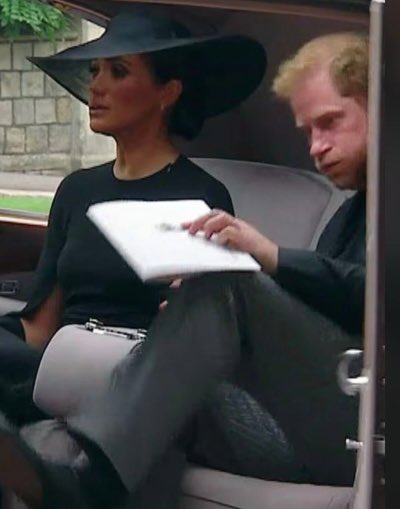
A recently recirculated photograph from the aftermath of Queen Elizabeth II’s state funeral has once again laid bare the hollow performance of Prince Harry and Meghan Markle. In the image, captured as the couple climbed into a car following the solemn proceedings, Harry appears to exhale in unmistakable relief — cheeks puffed, expression drained — while Meghan sits beside him in theatrical mourning attire, eyes fixed forward as if still performing for an audience.
Body language experts at the time noted Harry’s deep sigh and cheek-puff as a classic stress-release gesture after an exhausting day of forced proximity to the family he had spent years attacking. One analysis described it as a “cathartic release” after maintaining composure through the service and processions. Yet to many observers, it looked far less like grief and far more like a man finally free of the royal obligations he had so publicly rejected.
Meghan, meanwhile, has long been accused of turning every royal occasion into a stage. Critics pointed out her carefully composed posture and camera-aware presence during the mourning period, with some social media users and commentators describing her demeanor as that of a “grieving widow” playing to the lenses rather than a private family member in genuine sorrow. The pair’s history made any display of unity ring false.
Recall the context. After stepping back from royal duties in 2020 in a move widely seen as a calculated cash-and-control grab, Harry and Meghan launched a series of high-profile attacks on the institution and Harry’s own family. Their 2021 Oprah interview aired explosive claims of racism and neglect that left the late Queen “shocked by Harry’s disloyalty,” according to later reporting. Their Netflix series and Harry’s memoir Spare continued the pattern of grievance, airing private family details for profit while they lived in California luxury.
At the funeral itself, the couple were seated in the second row, denied military uniform for Harry in most of the ceremonies, and kept at a careful distance by protocol. Reports later claimed they privately complained of being “snubbed” and “mistreated” — an extraordinary display of entitlement from two people who had spent years denigrating the very family gathering to bury its matriarch. Body language observers noted Harry appeared angry as much as solemn, while the pair’s earlier hand-holding during mourning events had already drawn accusations of attention-seeking “lovesick teenager” behavior.
This resurfaced photo crystallizes the problem. Harry’s visible relief after the formalities ended suggests the entire appearance was an ordeal to be endured rather than a moment of shared national mourning. Meghan’s composed, camera-ready posture only reinforces the impression of performance. Together they form a portrait of two people who have repeatedly prioritized personal branding and financial opportunity over family duty, loyalty, or simple decency.
The late Queen reportedly expressed private relief that Meghan would not attend Prince Philip’s funeral years earlier. The awkward, strained presence of the Sussexes at her own farewell only underlined how thoroughly they had burned their bridges. Four years on, the image still rankles because it captures something essential: after years of public attacks, Harry looked glad to be done with the day, and Meghan looked ready for her close-up. These two truly deserve each other.