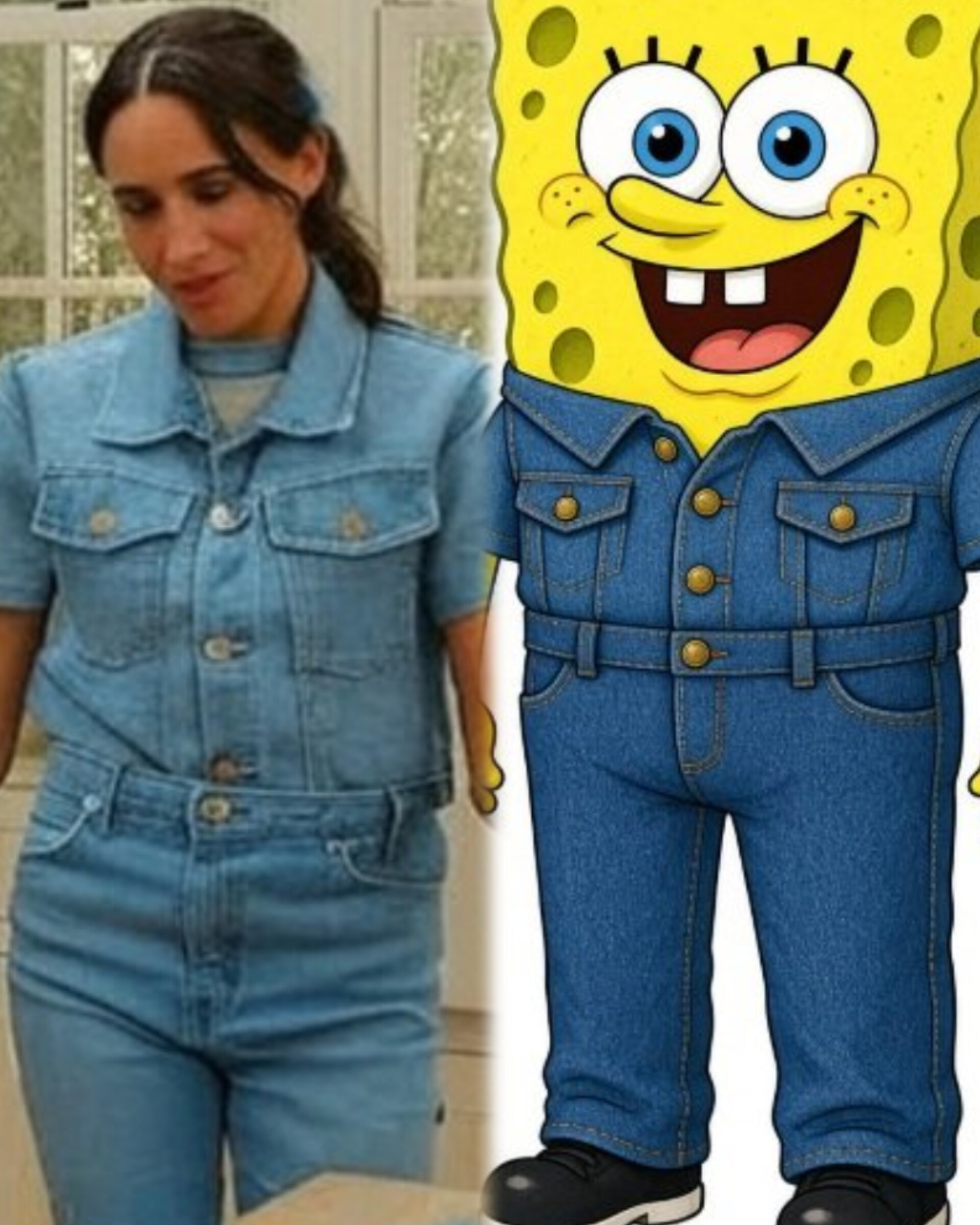
Meghan Markle is once again the butt of online jokes after a recent photo of her posing in a light-wash denim jumpsuit inside a bright kitchen sparked a wave of merciless comparisons to the cartoon character SpongeBob SquarePants. Side-by-side images circulating widely show the former actress in the boxy, short-sleeved, button-front denim one-piece that flattens her figure and creates an almost rectangular silhouette—eerily similar to the yellow sponge’s own denim work outfit.
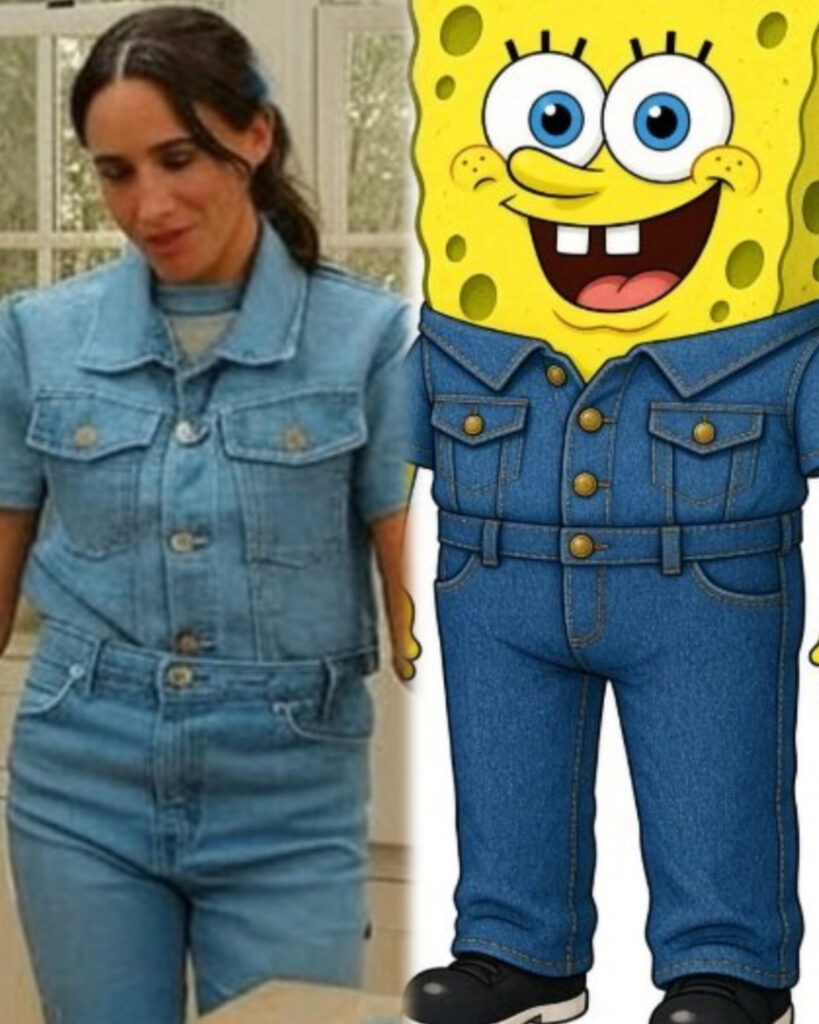
Social media users wasted no time piling on. One widely shared post asked bluntly, “Who wore it better – SpongeBob SquarePants or Meghan Markle?” followed by the observation that the look appeared to be a deliberate “gender neutral” choice. Commenters called the outfit unflattering, masculine in proportion, and yet another example of the Duchess’s baffling style decisions. Remarks about her lack of a defined waist and the overall “odd shape” the jumpsuit created dominated the discussion.
This is not an isolated incident. Meghan has a long track record of polarizing fashion moments that critics say reveal a fundamental disconnect between the image she tries to project and the reality of how she presents herself. From previous double-denim experiments that drew OnlyFans comparisons to wrinkled linen looks mocked as “grubby,” the pattern is consistent: calculated casualness that frequently lands as awkward or try-hard. The latest denim jumpsuit fits squarely in that pattern—an attempt at effortless California cool that instead invites ridicule.
Prince Harry’s role in enabling this endless cycle of self-promotion cannot be ignored. Once a senior working royal, he has fully aligned himself with Meghan’s lifestyle-brand empire and media ventures, standing by as she turns their private home life into content. The kitchen setting in the photo is particularly telling. The couple’s Montecito mansion has repeatedly served as a backdrop for Meghan’s carefully staged domestic scenes—birthday dances in pajamas, cooking clips for her As Ever brand, and polished “everyday” moments that somehow always end up on Instagram or Netflix. Harry’s willingness to film and platform these performances, rather than curb the attention-seeking, only fuels the perception that the pair remain obsessed with relevance after walking away from royal duties and the associated responsibilities.
Critics have long argued that the Sussexes’ post-royal existence is defined by hypocrisy. They left the institution citing media intrusion and a desire for privacy, yet continue to monetize every aspect of their lives—from kitchen renovations and jam jars to carefully curated “relatable” outfits that then face public dissection. The denim jumpsuit episode is simply the latest illustration: a woman who once occupied a platform of global influence now reduced to viral punchlines about cartoon characters, while her husband remains a passive participant in the spectacle.
Fashion observers note that Meghan’s choices often appear designed for maximum online engagement rather than genuine style. The jumpsuit’s stiff, utilitarian cut and the kitchen staging feel less like authentic off-duty dressing and more like another chapter in the ongoing narrative of reinvention that has defined the couple’s California chapter. Instead of quiet elegance or understated polish, the public is handed yet another moment that invites mockery.
The online reaction has been swift and unforgiving precisely because it fits a larger pattern. Meghan Markle’s repeated fashion misfires, combined with Harry’s steadfast support of her content-driven lifestyle, continue to erode whatever remaining goodwill the pair once commanded. What was once sold as a modern fairytale has long since settled into a series of increasingly desperate attempts to stay in the spotlight—complete with denim jumpsuits that make the Duchess look more like a cartoon sponge than a style icon.
The photos speak for themselves. No amount of lifestyle branding or carefully worded captions can disguise another public image that has left observers asking the same question: what was she thinking?